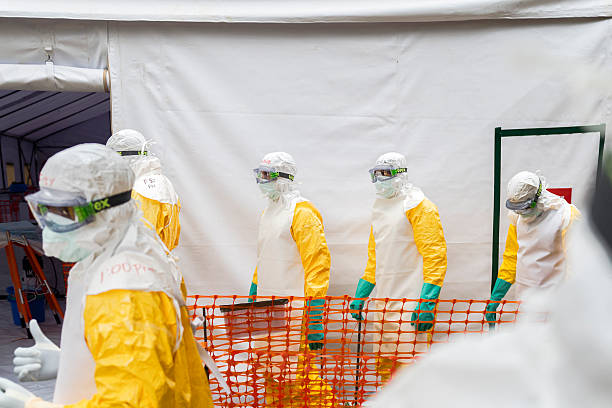
ABUJA — As the Bundibugyo strain of Ebola continues to spread across parts of the Democratic Republic of the Congo (DRC) and Uganda, Nigerian public health experts are calling for urgent caution. With health authorities confirming hundreds of cases in Central Africa, officials are warning that Nigeria must take proactive steps to prevent the virus from entering the country.
A Serious Warning for Travelers
Health professionals are strongly advising Nigerians to avoid unnecessary travel to the affected regions. Experts note that because Ebola is highly contagious and spreads through direct contact with bodily fluids, a single imported case could trigger a rapid and dangerous outbreak if it reaches Nigeria's densely populated cities.
Nigeria’s Current State of Readiness
The Nigeria Centre for Disease Control and Prevention (NCDC) has activated emergency surveillance measures in the Federal Capital Territory (FCT), Lagos, and eight other high-risk states.
NCDC Director-General, Dr. Jide Idris, recently reported that Nigeria’s preparedness level currently stands at about 59 per cent. While health authorities are working to strengthen isolation centers and improve surveillance, officials acknowledge that reaching full readiness is a continuous and challenging process. Recent reports also highlight that the House of Representatives is demanding urgent funding for the NCDC to help close these critical gaps in infrastructure and emergency response.
Expert Advice on Staying Safe
Medical professionals emphasize that the country’s strongest defense lies in a combination of government action and personal responsibility.
• Strict Border Surveillance: Experts are calling for much tighter controls at all points of entry, including airports, seaports, and the nation’s porous land borders.
• Environmental Hygiene: Professors of public health remind the public that proper waste management and keeping our surroundings clean are essential to stopping the breeding of organisms that can spread infectious diseases.
• Avoid Panic and Misinformation: Health officials warn that false information can lead to unnecessary fear and harmful practices. Nigerians are encouraged to rely only on official updates from the NCDC and the Federal Ministry of Health.
• Practice Good Hygiene: Basic actions, such as frequent handwashing and avoiding contact with the bodily fluids of sick individuals, remain the most reliable ways to protect yourself and your family.
The NCDC continues to monitor the situation closely, and the government has tasked port health authorities with increasing screenings for all international arrivals.