NEW YORK — As health authorities monitor a developing outbreak linked to the MV Hondius cruise ship, scientists are revisiting the haunting lessons of the 2018 Epuyen outbreak to understand the elusive Andes hantavirus. While most hantaviruses are "dead-end" infections meaning they do not spread between humans the Andes strain is a lethal exception, capable of jumping from person to person with a mortality rate that can reach 40%.
The Epuyen Lessons: Tracing the Path of a Killer
Much of what doctors currently know stems from a 2018 outbreak in a tiny Argentine village, where 34 people fell ill and 11 died. Dr. Gustavo Palacios, a microbiologist at the Icahn School of Medicine at Mount Sinai, noted that prior to this event, human-to-human transmission of the virus was poorly understood.
Research published in the New England Journal of Medicine revealed that the virus spreads through "superspreader" events. In Epuyen, a single 68-year-old man attending a birthday party infected five others in just 90 minutes. Highlighting the virus's potency, one victim was infected simply by crossing paths with the patient on the way to a restroom. Experts have determined that the window for transmission is incredibly short often just a single day peaking exactly when the patient first develops a fever.
The "Floating Outbreak" on the MV Hondius
The current situation aboard the MV Hondius, which is sailing toward the Canary Islands, has transfixed the scientific community. So far, eight cases have been linked to the vessel, including three confirmed and five suspected infections.
The outbreak has international dimensions:
• The Swiss Connection: A passenger who disembarked in Switzerland recently tested positive after flying home, sparking an urgent contact-tracing effort for fellow airline passengers.
• Medical Evacuations: One critically ill passenger was evacuated to Ascension Island and subsequently flown to South Africa, where he remains on a ventilator.
• Posthumous Diagnosis: Dr. Lucille Blumberg, an infectious disease specialist in South Africa, helped identify the virus after initial tests for avian influenza and Legionella came back negative. Posthumous testing of a passenger’s wife confirmed the presence of the Andes strain.
Challenges in Containment: Incubation and Environment
One of the most difficult aspects of managing an Andes virus outbreak is its exceptionally long incubation period. Victims may not show symptoms for 17 to 40 days after exposure. This delay makes traditional contact tracing a race against time, as infected individuals may travel across continents before realizing they are ill. For the passengers of the Hondius, a monitoring period of at least 45 days is now required.
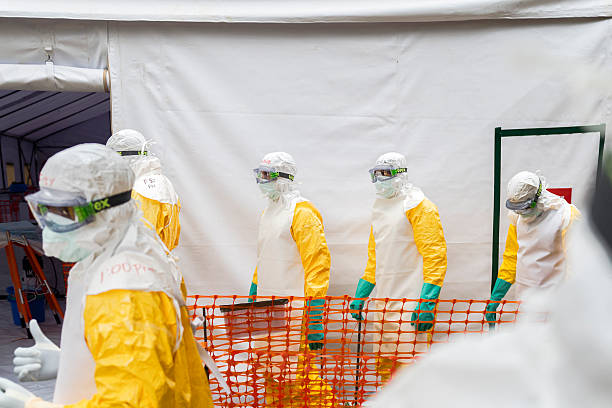
While the World Health Organization (WHO) currently classifies the risk to the general public as low, hantaviruses remain a "priority pathogen" due to their potential to spark international emergencies. Unlike COVID-19 or influenza, the Andes virus does not seem to spread easily in hospital settings zero healthcare workers were infected in the Epuyen outbreak despite limited PPE suggesting that transmission requires specific, close-contact conditions often found in confined environments like a cruise ship.
As scientists work to sequence the genome of the current variant, the focus remains on determining if the virus has mutated to become more transmissible. For now, the global medical community is watching the Atlantic with "scientific curiosity and urgency," as they manage one of the rarest and most dangerous communicable diseases on the high seas.