The road to Nigeria’s 2027 presidential election is already being paved with tarmac, steel, and a heavy dose of political theatrics.
At the center of this drama is Nyesom Wike, the Minister of the Federal Capital Territory (FCT). Known for his blunt rhetoric and combative political style, the former Rivers State Governor has once again drawn a battle line. During a high-profile project commissioning in Abuja, Wike sent a clear message to the opposition: securing the presidency is not achieved by noisy media campaigns or social media posturing.
Speaking to a crowd gathered for the commissioning of the Bwari Township Water Supply Network, Wike took direct aim at those eyeing President Bola Ahmed Tinubu’s job. Declaring that the presidency is "not chochocho" a local slang for empty, continuous chatter the Minister asserted that the ruling alliance is fully prepared to neutralize the opposition's tactics when the next election cycle begins.
The event, which marked the 50th major project commissioned in the FCT since Wike took office in May 2023, was more than just a local governance milestone. It served as a calculated display of political strength, showing how the Tinubu administration intends to use infrastructural development as its primary campaign leverage for 2027.
The "Chochocho" Doctrine: Wike’s Warning to Presidential Hopefuls
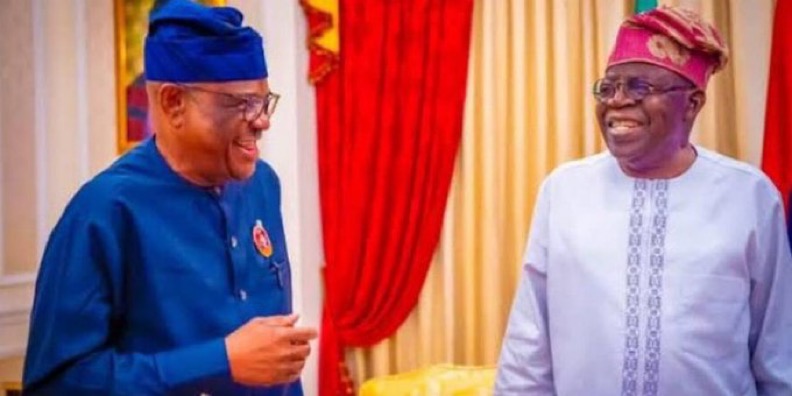
Nyesom Wike’s political strategy has always relied on a mix of grassroots mobilization, aggressive infrastructure delivery, and verbal warfare. In Bwari, he leaned heavily into these tactics. Accompanied by a live band, the Minister broke into his trademark song, "To be President no bi chochocho; no bi wowowo ooo,"much to the amusement of the dignitaries present, including First Lady Senator Oluremi Tinubu, who represented the President at the event.
Behind the entertainment lay a sharp political warning. Wike argued that many of those vying for the country's top office are deeply unprepared for the brutal realities of a national presidential campaign.
"I have told people who say that they want to be in power, you have heard it, it’s not ‘chochocho’," Wike declared. "To be president is not 'chochocho.' You don’t just wake up early in the morning and say that you want to be president—no, it doesn’t happen that way. We are prepared, the President is prepared, and everyone who has what it takes is prepared."
Wike’s remarks target a fragmented opposition. Over the past year, prominent figures like former Vice President Atiku Abubakar of the Peoples Democratic Party (PDP) and Peter Obi of the Labour Party (LP) have stepped up their public criticisms of the administration's economic policies, signaling early moves toward 2027. By dismissing these maneuvers as mere noise, Wike is positioning the incumbent administration as an organized, highly prepared force that cannot be easily dislodged by rhetorical campaigns.
Wike’s dual position also adds weight to his statements. Though serving in the cabinet of an APC President, he remains a card-carrying member of the PDP. This unique position allows him to act as an effective political enforcer, disrupting opposition unity from within while strengthening Tinubu's electoral prospects, particularly in the critical Federal Capital Territory.
Infrastructure as an Electoral Weapon: The 50th Commissioning Milestone
For the FCT Ministry, the strongest response to political rivals is tangible governance. The commissioning of the Bwari water project is the 50th official project launched in the territory under Wike’s leadership.
The Minister emphasized that the administration's scorecard is the ultimate defense against opposition criticisms.
"Today is the 50th day of commissioning of projects to mark the third-year anniversary of Mr. President," Wike explained. "It is important for us to do this by letting people know especially those who say they don’t have eyes—let them know that something is happening in the Federal Capital Territory."
Wike also laid out an ambitious timeline leading up to the formal start of the 2027 election campaigns. He revealed that the FCT Administration plans to commission at least ten more major projects before January 2027, ensuring the administration remains on the front foot. This aggressive focus on visible development is designed to build an undeniable record of performance, making it difficult for the opposition to challenge the administration's achievements.
Bridging the Gap: Bringing Utilities to Abuja's Satellite Towns
Historically, the Federal Capital Territory has faced criticism for uneven development. While central districts like Maitama, Wuse, and Asokoro boast world-class infrastructure, the outer satellite towns where the bulk of the FCT's workforce resides—have long struggled with basic amenities, particularly clean drinking water.
The Bwari Township Water Supply Network, constructed by China Geo-Engineering Construction (CGC) Nigeria Limited, is designed to correct this imbalance. The project extends the Greater Abuja Water Supply Scheme to outer communities, delivering clean, treated water directly to homes and businesses in Bwari and surrounding areas.
This launch follows the recent completion of a similar water supply project in Karu, which was commissioned by Vice President Kashim Shettima. By systematically targeting satellite towns, the administration is addressing a critical public health and economic issue.
In her remarks at the Bwari launch, First Lady Senator Oluremi Tinubu emphasized that access to clean water is a fundamental right. She noted that the "Renewed Hope" agenda is built on inclusive development, ensuring that communities outside the city center are not left behind.
Beyond water, the FCT Administration is also pushing key transportation links. Wike announced that several internal roads in Ushafa have been completed, and work is being accelerated on the 17-kilometer Bwari-to-Kubwa road, which is scheduled for commissioning before the end of the year. This road is expected to improve transit times, lower transportation costs for local traders, and boost economic activity within the Bwari Area Council.
The Political Stakes of FCT in 2027
Wike’s focus on the FCT is highly strategic. In the 2023 presidential election, the FCT proved to be a difficult battleground for the APC, with the opposition securing significant support in the territory. By transforming the FCT into a hub of rapid infrastructure development, Wike aims to reshape the political landscape in favor of President Tinubu ahead of 2027.
The Minister has repeatedly expressed confidence that the APC will sweep the FCT in the next election. His strategy relies on a simple premise: voters will reward performance. By delivering roads, clean water, and improved security to historically neglected satellite towns, the administration is building goodwill directly with the electorate.
However, this strategy also faces hurdles. While infrastructure projects are popular, the broader macroeconomic challenges facing the country including inflation and high living costs remain key vulnerabilities that the opposition will look to exploit.
Wike’s response to these challenges is clear. By framing the election as a choice between tangible achievements and empty rhetoric, he hopes to shift the debate away from macroeconomic anxieties and toward local, visible progress.
As the country moves closer to the next political cycle, the FCT will serve as a key testing ground for this strategy. If Wike can successfully convert infrastructure development into electoral support, he will not only secure a key victory for President Tinubu but also cement his own position as one of the most formidable political strategists in modern Nigerian history.