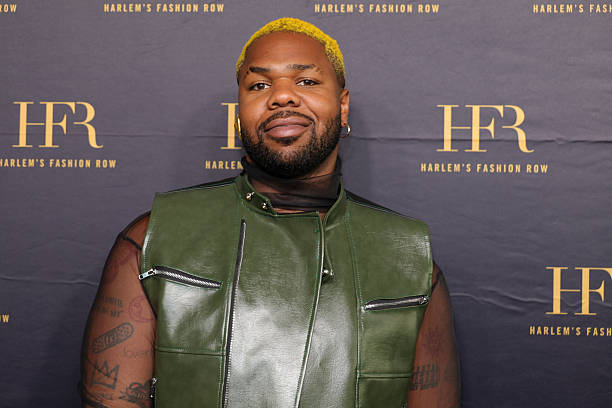
Music executive Ubi Franklin has opened up about his experience booking Nigerian music stars Davido and Kizz Daniel, revealing that he typically received a 10 per cent commission whenever he secured shows for the artistes.
Franklin made the revelation while discussing his time working with the artistes and the business relationships that shaped his career in Nigeria's entertainment industry.
According to comments attributed to the music executive in a recent social media post, Franklin said he would take a 10 per cent commission whenever he booked Davido or Kizz Daniel for a show.
He also recalled an incident involving Davido that put him in an uncomfortable position after he secured a performance for the singer without initially knowing that the event organisers had a personal connection to Davido's family.
Franklin said the organisers were friends of Davido's uncle.
The story, which has circulated across social media, has drawn attention because of what happened when Davido asked how much the organisers were paying for his performance.
Franklin said the amount Davido was told was exactly the same figure he had communicated to the organisers.
The anecdote provides a glimpse into the behind-the-scenes business arrangements involved in booking major Nigerian artistes and the role music executives and intermediaries can play in connecting performers with event organisers.
Ubi Franklin says he took 10% commission
Franklin's account centres on a straightforward arrangement.
When he booked Davido or Kizz Daniel for performances, he said he generally earned 10 per cent from the booking.
Artist booking is an important part of the Nigerian entertainment business because major artistes rarely handle every aspect of negotiations surrounding their performances personally.
Event organisers may approach an artiste's management team, booking agents, entertainment executives or other intermediaries to secure appearances.
Those intermediaries can help negotiate fees, dates, performance requirements, travel arrangements and other contractual details.
In Franklin's account, his role included helping to secure bookings for Davido and Kizz Daniel.
The 10 per cent commission he mentioned would therefore represent compensation for facilitating those deals.
Franklin did not publicly disclose the specific booking fee involved in the particular incident he recalled, meaning it is not possible to establish from his comments how much money his 10 per cent commission represented.
The Davido booking that became awkward
The most interesting part of Franklin's story involved a show he booked for Davido.
Franklin said he did not know at the time that the people organising the event were friends of Davido's uncle.
After securing the booking, Davido reportedly asked how much the organisers were paying for the performance.
Franklin said the figure Davido was given was exactly the same amount he had told the singer.
That meant there was no discrepancy between the amount Franklin had communicated to Davido and the amount the organisers were actually paying, despite Franklin receiving a commission from the booking.
The incident appears to have stood out to Franklin because of the personal connection between the event organisers and Davido's family.
Had the organisers been people with no prior relationship with Davido, the situation would have been a conventional artist-booking arrangement.
Instead, the discovery that they were friends of Davido's uncle meant the singer already had a connection to the people who had hired him.
Franklin's account suggests that the relationship could have created an opportunity for the artiste to question the intermediary arrangement or negotiate directly.
Instead, according to Franklin's recollection, the amount he had communicated remained consistent with what the organisers were paying.
What a 10% booking commission means
A commission-based booking arrangement is common in the entertainment industry.
An executive or booking representative may negotiate with an event organiser on behalf of an artiste and receive a percentage of the agreed performance fee.
The percentage can vary depending on the agreement between the artiste and representative.
Franklin's statement that he took 10 per cent from Davido and Kizz Daniel bookings therefore describes his own arrangement rather than establishing a universal industry rate.
The actual financial structure of an artist booking can be more complicated.
For a major performance, an organiser may have to pay not only the artiste's performance fee but also expenses associated with transportation, accommodation, logistics, technical requirements, security and production.
Depending on the contract, some of these costs may be included in the overall deal while others are handled separately.
The intermediary's commission may also be calculated according to the terms agreed with the artiste or management team.
For that reason, the 10 per cent figure mentioned by Franklin should be understood specifically as the arrangement he described.
Davido's position in Nigeria's music industry
Davido is one of Nigeria's most internationally recognised music stars and has built a career that extends beyond recording music into live performances, brand partnerships and other entertainment ventures.
His family background has also been widely discussed throughout his career.
His father, Adedeji Adeleke, is a Nigerian businessman and founder of Adeleke University, while Davido's uncle, Ademola Adeleke, is the Governor of Osun State.
The singer's extensive family and business connections have sometimes attracted public interest, but Franklin's story is specifically about an event booking involving friends of Davido's uncle.
It does not establish that Davido received preferential treatment or that the organisers received special treatment because of their relationship with his family.
The central point of Franklin's account is the unexpected discovery of the personal connection.
Kizz Daniel also featured in Franklin's bookings
Franklin also mentioned Kizz Daniel when describing his booking arrangements.
Kizz Daniel, whose real name is Oluwatobiloba Daniel Anidugbe, is one of Nigeria's established Afrobeats performers, with a catalogue of commercially successful songs and a significant live-performance presence.
Booking artistes at that level requires coordination between event organisers and the artiste's representatives.
Franklin's comments indicate that he worked on bookings for both Kizz Daniel and Davido and earned a commission from the deals.
The revelation offers a glimpse into an aspect of the music industry that audiences rarely see.
Fans typically see the final performance, but numerous negotiations can take place before an artiste arrives at an event.
The booking executive has to ensure that the event meets the artiste's requirements and that the commercial terms are acceptable.
The business behind live performances
Live performances represent an important source of income for many major artistes.
Concerts, festivals, private events, corporate functions and other appearances can involve significant sums, particularly when internationally recognised artistes are involved.
The booking process therefore requires a degree of trust between the artiste, management team, booking intermediary and event organiser.
An executive who successfully secures an appearance can earn a commission for facilitating the transaction.
That relationship can continue across multiple bookings if the artiste and executive develop a strong working relationship.
Franklin's reference to booking Davido and Kizz Daniel suggests that his involvement was not limited to a single event.
His statement that he would normally take 10 per cent indicates that commission arrangements formed part of his working relationship with the artistes.
Why the uncle's friends detail matters
The detail that the organisers were friends of Davido's uncle is what gives Franklin's story its unusual twist.
If Franklin had simply said he booked Davido for a show and earned a commission, it would have been a straightforward description of his work.
The discovery that the organisers already knew someone from Davido's family introduced another layer to the transaction.
It also highlights the importance of transparency in entertainment business dealings.
When an artiste knows an event organiser personally, questions can arise about whether an intermediary is necessary and what value the intermediary is adding to the transaction.
Franklin's story suggests that the arrangement remained transparent enough for Davido to ask about the payment and for the amount communicated to match what the organisers were paying.
Franklin's broader career in entertainment
Ubi Franklin has spent years working in Nigeria's entertainment industry and has been associated with artist management, music promotion and business ventures.
He was previously associated with Made Men Music Group, where he worked with artistes including Iyanya, Tekno and Emma Nyra during the label's prominent period in the Nigerian music industry.
His career has involved both the creative and commercial sides of entertainment.
That background gives context to his comments about booking artistes.
Music executives often operate between artistes and the business interests surrounding their careers.
Their responsibilities can include negotiating performance opportunities, developing commercial relationships, coordinating events and helping artistes manage professional engagements.
The role requires relationships across different parts of the entertainment ecosystem.
The importance of trust in artist management
The story also illustrates why trust is particularly important in artist-management relationships.
When an artiste allows an executive to negotiate bookings on their behalf, the executive has access to commercially sensitive information.
That can include performance fees, event details, contract terms and payment arrangements.
An artiste needs confidence that the intermediary is accurately communicating the terms of the deal.
Likewise, event organisers need confidence that the intermediary is authorised to represent the artiste.
Franklin's recollection of Davido asking about the payment highlights one of the simplest ways such arrangements can be tested: comparing the amount agreed with the organiser against the amount communicated to the artiste.
In the incident he described, those figures matched.
Commission arrangements are not necessarily unusual
The idea of an intermediary earning a percentage from a transaction is not unique to music.
Agents, managers, booking representatives and entertainment executives can receive commissions for facilitating commercial opportunities.
The exact percentage and payment structure depend on contracts.
Franklin's 10 per cent figure therefore provides insight into his particular business arrangement but should not be interpreted as the standard commission for every Nigerian artiste.
Different artistes may have different management structures, and some bookings may be handled directly by management teams, record labels, agencies or dedicated booking companies.
Major artistes can also have separate arrangements for domestic and international performances.
A story about the business side of Afrobeats
As Nigerian music has expanded into a global industry, the commercial infrastructure surrounding Afrobeats has become increasingly important.
The growth of international concerts, festivals and touring has created opportunities for managers, promoters, booking agents, event organisers, publicists and other professionals.
The success of an artiste's live career depends on more than music.
Performances have to be negotiated, scheduled and organised, while commercial agreements must be handled before the artiste takes the stage.
Franklin's story provides a small example of how that process works behind the scenes.
The audience at a concert may see only the artiste's performance, but the booking may have passed through several stages of negotiation before the event takes place.
Franklin's revelation sparks online discussion
The comments have generated discussion online, particularly because they reveal how commissions can operate behind major artist bookings.
Social media users have focused on the unusual coincidence that the organisers were friends of Davido's uncle and on the fact that the payment figure Franklin communicated was reportedly identical to what the organisers were paying.
However, Franklin's account does not provide enough information to determine the complete financial structure of the event.
He did not disclose the event's total budget, the artiste's actual performance fee or the precise amount of his commission from that particular booking.
It is therefore not possible to calculate how much Franklin earned from the transaction based solely on the available comments.
What the revelation tells us
Beyond the anecdote itself, Franklin's comments highlight the commercial relationships that underpin Nigeria's entertainment industry.
Booking a major artiste is not simply a matter of contacting the performer and agreeing on a date.
It can involve intermediaries who have established relationships with artistes and organisers and who help bring the two sides together.
For an executive such as Franklin, the commission represents payment for that role.
His account of booking Davido and Kizz Daniel for a 10 per cent commission offers an insight into how such arrangements can work.
The story also demonstrates why transparency can matter when multiple parties are involved in an entertainment transaction.
In the particular incident Franklin described, the fact that Davido independently asked about the payment created an opportunity to compare the figure with what had been agreed with the organisers.
According to Franklin, there was no difference.
His story has now become another glimpse into the business side of Nigeria's booming music industry, where relationships, negotiations and commissions can be just as important to securing a performance as the music itself.