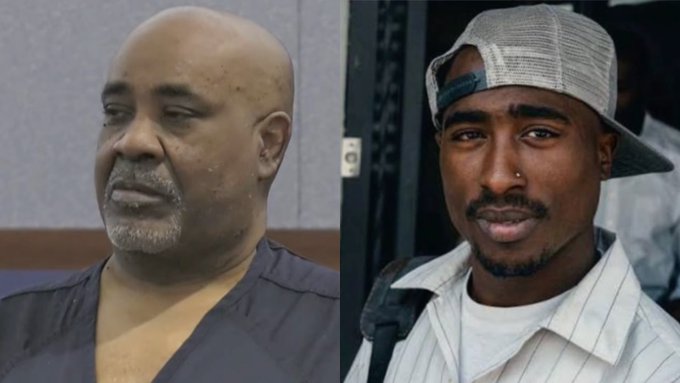
Duane “Keefe D” Davis has been sentenced to 40 years to life in prison for his role in orchestrating the 1996 murder of legendary rapper Tupac Shakur, bringing a decades-long chapter of one of hip-hop’s most famous unsolved cases to a major legal conclusion.
A Nevada judge handed down the sentence on Tuesday, October 13, 2026, more than 30 years after Shakur was fatally shot in a drive-by attack near the Las Vegas Strip. Davis, 63, had been convicted in August of murder involving the use of a deadly weapon.
The sentence consists of consecutive terms that amount to 40 years to life in prison. Davis received credit for time already served following his arrest in 2023, but he remains eligible for parole only after serving the required minimum period.
Tupac Shakur murder case finally reaches sentencing
Tupac Shakur was shot on September 7, 1996, shortly after attending a Mike Tyson boxing match in Las Vegas. He was riding in a BMW driven by Death Row Records founder Marion “Suge” Knight when another vehicle pulled alongside them and opened fire.
Shakur was struck multiple times and died six days later at the age of 25.
For decades, the killing remained one of the most closely watched mysteries in music. Although investigators had identified possible suspects over the years, no one was charged with Shakur’s murder until Davis was arrested in September 2023.
Davis ultimately became the only person charged and convicted in connection with Tupac’s killing.
His conviction followed a trial in which prosecutors argued that Davis helped organize the attack as retaliation following an altercation between Shakur's entourage and Davis' nephew, Orlando “Baby Lane” Anderson, earlier on the night of the shooting.
Prosecutors relied heavily on Keefe D's own words
One of the most significant elements of the prosecution's case was Davis' history of publicly discussing Tupac's murder.
Davis had previously described his involvement in interviews and in his 2019 memoir, Compton Street Legend. Prosecutors argued that his statements provided important details about how the attack was planned and carried out.
According to prosecutors, Davis was acting as a senior figure within the South Side Compton Crips and helped organize the retaliation against Shakur and those associated with Death Row Records.
The prosecution also pointed to statements Davis made during a 2008 interview with investigators. At the time, Davis had received a proffer agreement under which information he provided about criminal activity was subject to protections. Prosecutors later argued that Davis' subsequent public statements affected those protections.
The case was unusual because prosecutors did not need to establish that Davis personally fired the fatal shots. Their argument was that he played a central role in organizing the attack.
The actual identity of the person who fired the shots has remained a separate issue from Davis' conviction. Reuters reported that the shooter was not identified in the conviction, while prosecutors maintained that Davis orchestrated the attack.
Davis maintains his innocence and plans to appeal
Despite his conviction, Davis has continued to deny responsibility for Tupac's murder.
Following the verdict, his defense maintained that statements he had made over the years were exaggerated and that Davis had used his alleged connection to the killing to attract attention and generate money.
His attorney, Michael Sanft, also challenged the prosecution's reliance on Davis' previous statements and argued that authorities could have prosecuted him much earlier.
Davis reiterated during his sentencing that he intends to appeal the conviction.
The defense also pointed to the lack of physical evidence directly connecting Davis to the shooting, including the absence of a murder weapon tying him to the crime. Prosecutors, however, persuaded jurors that Davis' own accounts and other evidence established his role in orchestrating the killing.
Tupac's family speaks in court
Tupac's family addressed the court before Davis was sentenced.
His sister, Sekyiwa Shakur, delivered an emotional statement about the impact her brother's death had on their family and the lasting significance of his life and career.
She emphasized that Tupac was only 25 when he was killed and reflected on the possibilities that were lost with his death.
Tupac's stepbrother, Maurice “Mopreme” Shakur, also spoke during the hearing. Family members urged the court to impose the maximum available sentence.
The family's statements highlighted that the case was not simply about the death of a famous rapper but about the loss of a son, brother and family member whose life was cut short.
Judge delivers 40-year-to-life sentence
Judge Carli Kierny sentenced Davis in a Las Vegas courtroom on October 13.
During the hearing, the judge addressed Davis' repeated claims that he had changed his life since the events of 1996.
The judge told Davis that he could not take another person's life and simply move on from the consequences.
The sentence brings a formal legal conclusion to a case that had remained unresolved for nearly three decades.
Davis was convicted in August 2026 after prosecutors presented evidence they said demonstrated his role in organizing the attack. The jury found him guilty of first-degree murder involving a deadly weapon.
Why Tupac's murder remained unsolved for so long
Tupac's killing became one of the most enduring mysteries in popular culture partly because investigators struggled for years to secure cooperation from witnesses.
The shooting occurred amid a highly charged period in hip-hop history, when tensions between rival groups associated with the West Coast and East Coast rap scenes had become increasingly public.
Shakur was one of the biggest stars associated with Death Row Records, while the broader conflict involved figures and organizations connected to the rival Bad Boy Records camp.
However, investigators faced difficulties establishing a prosecutable case.
One of the people long associated with the investigation was Orlando Anderson, Davis' nephew. Anderson had been involved in the altercation with Shakur earlier on the night of the shooting and was subsequently considered a possible suspect.
Anderson was questioned by police but was never charged in connection with Tupac's death. He was killed in an unrelated shooting in Compton in 1998.
Davis eventually emerged as a key figure after repeatedly discussing his alleged knowledge of the shooting publicly.
His 2019 memoir and earlier interviews became particularly important as investigators revisited the case.
A major case in hip-hop history
Tupac Shakur's death has remained a defining moment in hip-hop history.
At only 25, Shakur had already established himself as a successful rapper, actor and cultural figure. His music frequently addressed poverty, violence, social inequality, family struggles and life in disadvantaged communities.
His death occurred at a time when his career was still developing, making the circumstances surrounding the shooting particularly significant to fans and the wider music industry.
Shakur was posthumously inducted into the Rock & Roll Hall of Fame in 2017, further cementing his long-term influence on popular culture.
The murder also became intertwined with the larger narrative surrounding the deaths of major hip-hop artists during the 1990s. The killing of The Notorious B.I.G., whose real name was Christopher Wallace, followed just months after Tupac's death in March 1997.
For years, the lack of arrests in Tupac's case fueled theories, documentaries, books and investigations from journalists and fans.
Davis' eventual arrest in 2023 changed the legal trajectory of the case.
What happens next for Keefe D?
Although Davis has now been sentenced, the case is not necessarily finished.
He and his legal team have said they intend to appeal his conviction.
The appeal could challenge aspects of the conviction, including the use of Davis' previous statements and the evidence presented during the trial.
For now, however, Davis remains sentenced to 40 years to life in prison.
His conviction marks the first time someone has been found guilty in court for Tupac Shakur's murder, more than three decades after the rapper was shot in Las Vegas.
The case that captivated hip-hop, true-crime audiences and popular culture for years has therefore entered a new phase: not with the mystery completely resolved, but with a conviction and prison sentence for the man prosecutors identified as the person who orchestrated the attack.