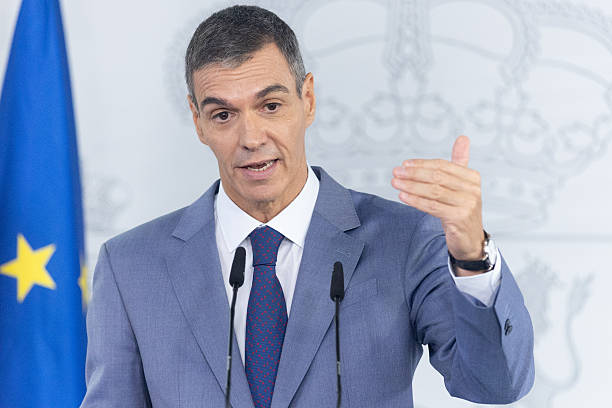
Spanish Prime Minister Pedro Sánchez has called a snap general election for November 29 after his minority government suffered a parliamentary defeat over housing measures as mass protests intensified across the country.
Sánchez announced the early election on Monday, October 5, bringing the vote forward by roughly eight months. His decision came after lawmakers rejected two government decrees aimed at addressing Spain’s worsening housing crisis.
The housing issue has rapidly become the central political concern in Spain, with tens of thousands of people taking to the streets in Madrid and other cities to demand cheaper and more secure housing.
Housing crisis sparks nationwide protests
Spain’s latest wave of protests was intensified by the eviction of 87-year-old Maricarmen Abascal from her Madrid home, where she had lived for about seven decades.
Her case became a symbol of the country's wider housing problems after the property was acquired by an investment company and her rent was reportedly increased by 230%. Her eviction triggered demonstrations that spread across more than 50 cities.
In Madrid, authorities estimated that about 70,000 people participated in Saturday's demonstration, while organisers claimed the number was substantially higher. Protesters demanded stronger protections for tenants, action against rising rents and increased availability of affordable homes.
The demonstrations have also included calls for tougher restrictions on institutional investors and what protesters describe as speculative property ownership.
Parliament rejects Sánchez’s housing measures
Sánchez’s government had proposed measures including stronger eviction protections, regulation of temporary and room rentals and restrictions aimed at curbing speculative purchases.
However, the measures were rejected in Congress last Friday after the conservative People's Party, the far-right Vox party and the Catalan pro-independence Junts party voted against them.
The defeat highlighted the difficulty Sánchez faces in governing with a minority administration.
Sánchez subsequently decided to take the issue directly to voters, calling the November 29 election earlier than originally scheduled.
In a televised address, he acknowledged that his government had made mistakes and said it was time to seek renewed public support.
Spain faces a major housing shortage
The political dispute comes as Spain struggles with a significant shortage of homes in areas where demand is strongest.
Reuters reported that Spain's housing deficit is estimated at about 750,000 homes and could reach one million by 2028. Rising demand in major cities, limited construction, labour shortages and the expansion of short-term rentals have contributed to the problem.
Young Spaniards have been particularly affected. Although around 73% of Spaniards own their homes, more than half of people aged 18 to 34 live with their parents or depend on them financially, according to data cited by Reuters.
Spain also has one of the smallest social-housing sectors in the European Union, with social housing accounting for about 1.7% of the housing stock.
Election will put housing at the centre
The November election is expected to make housing one of the defining issues of the campaign.
Sánchez’s Socialist government has advocated measures including rent controls and restrictions on corporate purchases of real estate. The opposition People's Party, meanwhile, has argued that Spain needs to dramatically increase construction.
People's Party leader Alberto Núñez Feijóo has proposed building 250,000 homes annually and easing planning regulations to accelerate development.
The election will therefore present Spanish voters with competing approaches to the housing shortage, including greater regulation on one side and increased housing supply and construction on the other.
Meanwhile, the protests continued after Sánchez announced the election. On Monday night, tens of thousands demonstrated in Barcelona, where clashes later broke out between some protesters and police.
The Spanish government has since approved urgent housing measures similar to those rejected by Parliament, including extended protections for vulnerable tenants and new rules affecting seasonal rentals and property purchases.
With the snap election now scheduled for November 29, Spain's housing crisis is set to remain at the heart of the country's political debate.