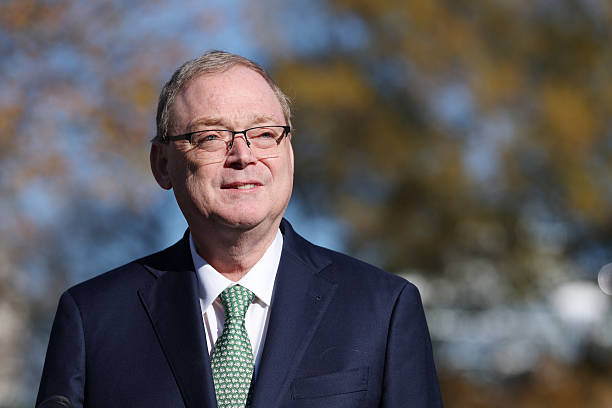
White House economic adviser Kevin Hassett has defended President Donald Trump’s proposed $5,000 payments to American adults, arguing that the plan can be implemented without abandoning fiscal responsibility.
White House National Economic Council Director Kevin Hassett has pushed back against criticism of President Donald Trump’s proposal to send $5,000 checks to American adults, saying the payments can be structured in a fiscally responsible manner.
Hassett made the argument in a Bloomberg Television interview as the administration continues to defend Trump's proposed “Trump Dividend,” which would provide $5,000 to eligible American adults if Republicans retain control of both chambers of Congress following the 2026 midterm elections.
The proposal has quickly become one of the most controversial economic promises of the midterm campaign, with supporters arguing that Americans should benefit directly from stronger government revenues while critics question how the payments would be financed.
Hassett defends the proposal
Hassett said the administration believes the payments can be carried out “in a fiscally responsible way,” seeking to counter concerns that the proposal would simply add another trillion-dollar expense to an already heavily indebted federal government.
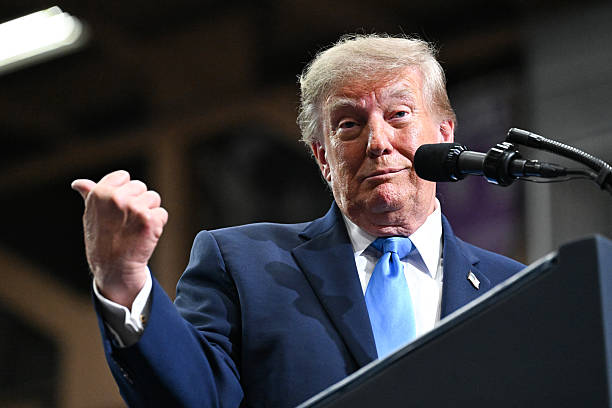
His comments came after Trump announced the proposed dividend at the Republican Party's midterm convention in Dallas.
Trump has said the payments would go to American adults if Republicans win or maintain control of the House and Senate. The president has framed the proposal as a reward connected to his economic policies rather than a conventional stimulus program.
Hassett's comments are significant because the White House has yet to provide a complete legislative and financing framework for the payments.
The plan could cost more than $1 trillion
One of the biggest questions surrounding the proposal is its potential cost.
Estimates place the total price tag at roughly $1.2 trillion to $1.35 trillion, depending on the number of eligible recipients and the final structure of the program.
That figure is substantial compared with the size of the federal budget deficit.
Reuters reported that the plan could cost around $1.2 trillion plus interest, while other estimates put the cost at approximately $1.35 trillion. Critics argue that financing such a large payment would be difficult without either reducing other spending, raising additional revenue or increasing federal borrowing.
The federal government is already operating with a large deficit, making the financing question central to the debate.
Tariffs are expected to play a role
The Trump administration has pointed to tariff revenue as one potential source of funding for the proposed payments.
The White House has argued that Trump's tariff policies have generated significant revenue that could potentially be returned to Americans.
However, analysts have questioned whether tariff collections would be sufficient to finance $5,000 payments for hundreds of millions of adults.
Recent estimates indicate that the proposed checks could require substantially more money than tariff revenues are expected to generate over comparable periods.
That gap has raised questions about whether additional funding sources would be needed.
Congress would have a major role
Another important issue is that Trump cannot simply order the Treasury Department to begin sending the proposed checks without the necessary legal authority.
The plan would require congressional action to appropriate the money.
Axios reported that Hassett has indicated the proposal could potentially be incorporated into a budget reconciliation bill, a process that allows certain legislation affecting spending and revenues to move through Congress under special rules.
That means the outcome of the November midterm elections would be particularly important to the proposal.
Trump has made Republican control of both the House and Senate a condition of his promise, while lawmakers would ultimately have to determine whether to authorize the payments and how they would be funded.
Republicans divided over the proposal
The $5,000 dividend has not received unanimous support even within Trump's Republican Party.
Some Republicans have welcomed the idea of putting money directly into Americans' hands, while others have warned that such a large payment could increase inflation, borrowing costs and the national debt.
Representative David Schweikert has criticized the proposal, arguing that additional government borrowing could create longer-term economic problems. Other Republicans have also expressed reservations about the size and financing of the plan.
The disagreement creates a political challenge for Trump because fiscal restraint has traditionally been an important issue for many Republican lawmakers.
Economists warn about inflation
Economists have also questioned whether distributing $5,000 to a large share of the adult population would put additional pressure on prices.
The U.S. economy is not currently experiencing the kind of severe downturn that typically leads governments to introduce large-scale stimulus payments. Critics therefore argue that injecting more than $1 trillion into consumer spending could increase demand at a time when inflation remains a concern.
Some economists have warned that increased consumer demand could push prices higher and potentially encourage the Federal Reserve to keep interest rates elevated or raise them further.
That could reduce some of the economic benefit recipients receive from the checks by increasing borrowing costs across the wider economy.
Trump insists the payments are a reward
Trump has rejected the characterization of the proposed payments as a conventional stimulus program.
Instead, he has described the checks as a “dividend” and a reward for Americans, linking them to the administration's economic policies.
The president has also argued that tariff revenue gives the government an opportunity to return money to citizens.
Critics, however, say the proposal resembles a large-scale transfer payment and could worsen America's fiscal position if it is not matched by sufficient revenue or spending reductions.
The proposal remains far from guaranteed
Despite Hassett's defense, Americans should not yet treat the $5,000 payment as an approved federal benefit.
The proposal remains contingent on the political outcome of the midterm elections and subsequent congressional action.
There is also no finalized timetable for payments, no complete eligibility framework and no enacted funding mechanism.
Trump has made similar proposals in the past involving direct payments to Americans, but not all of those proposals became reality. The latest plan therefore faces both political and fiscal hurdles before any checks could be issued.
For now, Hassett's comments represent the administration's effort to reassure voters and lawmakers that the proposal does not necessarily have to conflict with fiscal discipline.
A major economic debate ahead of the midterms
The $5,000 dividend is likely to remain a major issue as Republicans and Democrats campaign ahead of the November elections.
For Trump and his supporters, the proposal offers a way to put money directly into Americans' hands while presenting tariff revenues as a source of funding.
For critics, however, the central question is whether the government can afford such payments while already carrying enormous deficits and debt.
Hassett's argument is that both objectives — providing the payments and maintaining fiscal responsibility — can coexist.
Whether Congress agrees will ultimately depend on the details of the legislation, the proposed funding mechanism and the political balance following the midterm elections.
Until those details are settled, the $5,000 Trump Dividend remains a proposal rather than an approved payment.