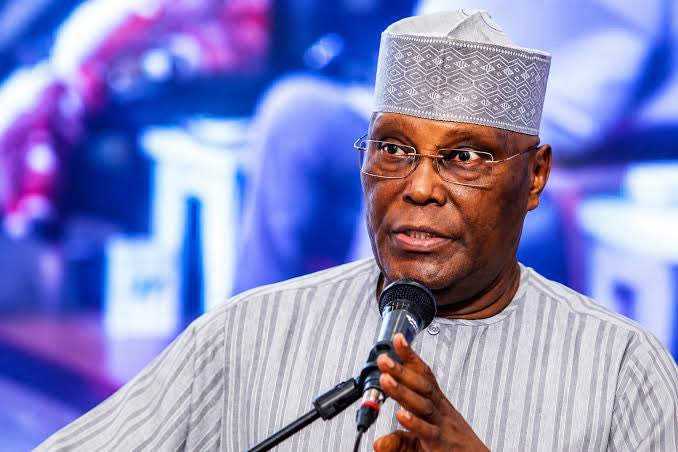
Former Vice President and African Democratic Congress (ADC) presidential candidate, Atiku Abubakar, has pledged to work towards ending election rigging in Nigeria if elected president in the 2027 general elections.
Atiku made the commitment in an address marking Nigeria’s 66th Independence anniversary, where he outlined a series of proposals focused on electoral reforms, economic relief, security and accountability.
According to reports on the address, the former vice president said his administration would respect the independence of the Independent National Electoral Commission (INEC) and support the prompt publication of results from every polling unit.
“If elected President, I will work to end election rigging. I will respect INEC’s independence, support the prompt publication of results from every polling unit, and insist that anyone caught buying votes or changing results faces the law – even if that person belongs to my party.”
Atiku also said electoral offences should be prosecuted regardless of the political affiliation of those involved, arguing that Nigerians should have confidence that their votes will be counted as cast.
Atiku calls for protection of voters’ choices
The ADC candidate urged Nigerians to protect their votes and reject intimidation as political activities intensify ahead of the 2027 elections.
He also encouraged voters to scrutinise candidates and demand detailed plans that can be assessed and promises whose implementation can be measured.
“The coming election offers us a peaceful way to choose our course,” Atiku said, according to the reported text of his address.
His comments come as political parties and their candidates prepare for the 2027 general elections, with electoral credibility expected to remain a major issue in the political debate.
Pledge to strengthen INEC
Atiku said an important part of his proposed electoral agenda would be strengthening the independence of INEC.
The former vice president has previously argued that elections should be determined by voters at the ballot box rather than through institutional or legal manoeuvres.
In July, following a Court of Appeal ruling involving the ADC, Atiku said political contests should be settled through votes rather than court processes. He also warned against the use of state institutions to eliminate political competition.
The ADC has itself repeatedly presented electoral reform and democratic accountability as part of its preparations for the 2027 elections.
The party has said it intends to participate fully in the election and comply with the Electoral Act and INEC guidelines.
Election rigging remains a recurring political issue
Concerns about electoral malpractice have featured prominently in Nigeria’s political discourse, including allegations surrounding party primaries and general elections.
Atiku’s own emergence as the ADC presidential candidate was followed by allegations from some party figures who questioned aspects of the primary process. Atiku and his representatives rejected those allegations, with his media team arguing that claims of manipulation should be supported with evidence.
Against that background, his latest pledge places electoral integrity at the centre of his campaign message ahead of 2027.
Focus also on cost of living and governance
Beyond electoral reform, Atiku used his Independence Day address to outline proposed measures on the economy and governance.
He pledged to pursue policies aimed at reducing the cost of food, fuel and electricity, while also promising measures to improve security, healthcare, education and employment opportunities.
On petrol pricing, Atiku proposed a capped and budgeted production subsidy tied to petroleum products refined locally. He said imported petrol would not qualify under the proposed arrangement and promised that the programme would be independently audited.
He also called for greater transparency in government spending, arguing that budgets should provide clear timelines for projects and allow Nigerians to determine what has been completed and what remains outstanding.
2027 election campaign gathers pace
Atiku emerged as the ADC’s presidential candidate after the party’s 2026 primary and is expected to contest the 2027 presidential election alongside his running mate, Rotimi Amaechi. The party has formally submitted the pair’s details to INEC for the election.
With the 2027 election approaching, Atiku has increasingly focused his public messaging on electoral credibility, economic conditions and democratic institutions.
His latest pledge to tackle election rigging is likely to form part of the broader campaign discussion over how Nigeria’s electoral system can be strengthened and how voters can have greater confidence that their choices at polling units will be reflected in final results.
For Atiku, the central message is that electoral participation should translate into actual representation and that those who attempt to manipulate votes should face legal consequences regardless of their political connections.
As political parties prepare for the 2027 polls, questions surrounding INEC’s independence, vote buying, result transmission, electoral offences and the enforcement of existing laws are expected to remain important issues in the national debate.