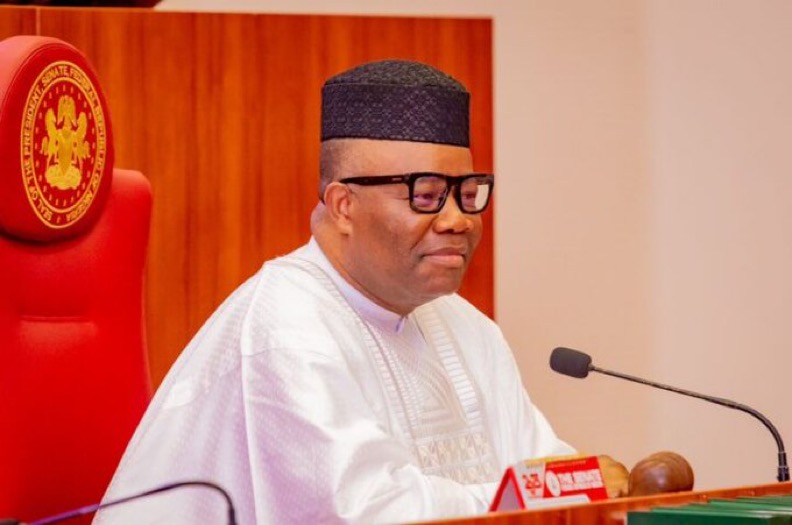
ABUJA — Senate President Godswill Akpabio has officially refuted media reports alleging that he guaranteed senatorial tickets to members of the All Progressives Congress (APC) who failed to secure victory during the party’s recent primary elections.
The clarification came following widespread speculation sparked by remarks Akpabio made while welcoming senators back from a three-week recess. During that session, the Senate President had suggested that the Senate leadership was working to address the political fallout from the primaries. Critics interpreted these comments as a pledge to override primary results for sitting lawmakers.
In a statement released on Saturday by his Special Adviser on Media and Publicity, Eseme Eyiboh, Akpabio dismissed these claims as misleading. The statement clarified that the Senate President was merely expressing empathy for his colleagues who were adversely affected by the primaries. He emphasized that he had neither the authority nor the intention to interfere with the internal processes of the APC, nor would he make commitments that fall outside the jurisdiction of the National Assembly leadership.
"The Senate President assured his colleagues that the APC leadership is actively working to address issues arising from the primaries," the statement noted. "The final list of candidates will be released in due course, in accordance with the party’s constitution and established electoral guidelines."
Akpabio Cautions Against Public Military Probe
In the same statement, the Senate President addressed growing calls from some legislators for a public probe into recent security incidents involving the military. While acknowledging that legislative oversight is a constitutional mandate, Akpabio cautioned against subjecting the armed forces to a public inquisition at this time.
Akpabio argued that with troops currently engaged on multiple fronts against terrorism and banditry, a public legislative investigation could prove counterproductive by undermining the morale and operational focus of the armed forces. Instead, he advocated for a more productive approach involving collaboration and closed-door engagements with security agencies to resolve operational challenges.