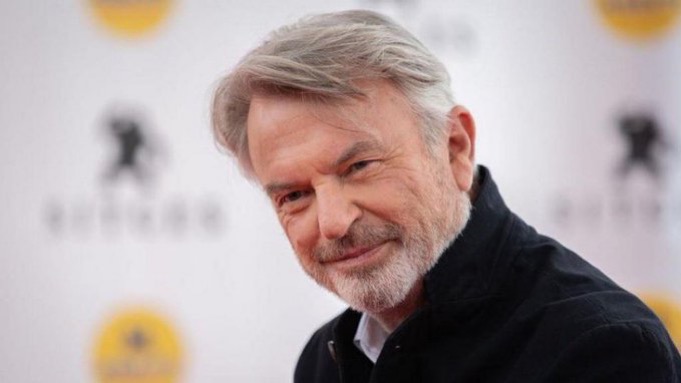
The world of cinema and the arts lost one of its most versatile, beloved, and grounded figures this week. Sir Sam Neill, the legendary New Zealand-Australian actor whose career spanned five decades and traversed everything from high-octane Hollywood blockbusters to intimate arthouse dramas, has passed away at the age of 78.
His death, confirmed by his family in a statement as "sudden and unexpected," has sent shockwaves through the global entertainment community. Despite a courageous and widely documented battle with non-Hodgkin lymphoma, for which he had recently announced he was cancer-free, the industry now mourns a man who was as revered for his humility as he was for his immense talent.
From County Tyrone to Global Stardom
Born in Omagh, County Tyrone, Northern Ireland, in 1947, Nigel John Dermot "Sam" Neill’s life was defined by a unique international perspective. His father, a New Zealand Army officer, moved the family back to New Zealand when Sam was seven years old. It was there, in the landscapes of his adopted home, that Neill’s identity was forged—a blend of Northern Irish roots and the rugged, unpretentious spirit of a New Zealander.
He would later describe his early years in Northern Ireland as formative, noting that while his original accent was "beaten out of him" by classmates in his new home, he never lost his connection to his birthplace. This adaptability became the hallmark of his career, allowing him to oscillate between the gritty police chief of Peaky Blinders and the gentle, curious paleontologist of Jurassic Park.
The Jurassic Phenomenon: A Legacy Carved in Stone
For many, Neill will forever be Dr. Alan Grant, the paleontologist whose childlike wonder at the sight of a Brachiosaurus mirrored that of the audience in Steven Spielberg’s 1993 masterpiece, Jurassic Park. The film did more than just break box office records—grossing over $900 million in its original run—it fundamentally changed the way cinema utilized CGI and practical animatronics.
Neill’s performance was anchored by his ability to make the extraordinary feel believable. In later interviews, he often spoke about the "childlike wonder" the film evoked. He understood that the terror of the dinosaurs was often found in what the audience couldn't see—the sound of footsteps, the movement in the trees—a testament to his deep understanding of cinematic tension. His work in the franchise spanned decades, culminating in his return in Jurassic World Dominion in 2022, where he was celebrated by director Colin Trevorrow as a "deeply soulful and beautiful man."
Versatility: An Unmatched Range
To define Sam Neill by a single role, however, is to ignore the vast landscape of his contributions to the arts. Throughout the 1980s and 90s, he emerged as one of the most bankable and respected character actors in the world.
-
The Arthouse Master: His performance in Jane Campion’s 1993 film The Piano remains a masterclass in shifting character dynamics, moving from a devoted husband to a haunting, nightmarish antagonist.
-
Genre-Bending Talent: From his eerie role in the 1981 cult horror Possession to his portrayal of Damien in Omen III: The Final Conflict, Neill demonstrated an uncanny ability to inhabit roles that demanded intense psychological depth.
-
The Australian Connection: Often adopted by Australian audiences as one of their own, Neill delivered unforgettable performances in My Brilliant Career (1979), Dead Calm (1989), and A Cry in the Dark (1988), the latter of which earned him an Australian Film Institute award for Best Lead Actor.
The Man Behind the Legend: Wine, Animals, and Humility
Perhaps the most striking aspect of the tributes pouring in is the consistency of the sentiment: Sam Neill was not interested in being a "celebrity." He famously rejected the lifestyle of the Hollywood elite, preferring the quiet solitude of his Two Paddocks vineyard in Central Otago, New Zealand.
His love for his farm was well-documented, often surfacing in anecdotes that endeared him to talk show hosts and fans alike. Whether he was humorously naming his chickens after A-list stars like Meryl Streep or discussing his cows with a cheeky grin, Neill’s life outside the studio was filled with the simple, earthy joys that kept him grounded.
He was a man who, in his own words, was "not interested in anything other than living." Even when faced with his cancer diagnosis, he channeled that energy into his memoir, Did I Ever Tell You This?, which offered an intimate, candid, and often humorous look at his life. He was insistent that it not be seen as a "cancer book," but rather a testament to a life well-lived.
A Legacy of Kindness and Professionalism
Tributes from colleagues paint a picture of a man who was deeply generous with his time and talent.
-
Karl Urban, his fellow Kiwi star, remembered him as a "national treasure."
-
Teresa Palmer, his co-star in Ride Like A Girl, spoke of being "absolutely shattered," remembering how he made her laugh and how he treated her with the warmth of a father figure.
-
Richard E. Grant, a friend of three decades, highlighted how Neill guided him through personal turmoil, calling him a "kind Sir."
Even world leaders weighed in. New Zealand Prime Minister Christopher Luxon noted that Neill "helped make our film industry into what it is today," while Australian Prime Minister Anthony Albanese reflected on the "wry, dry, thoughtful" nature of a man who fought his illness with the same conviction he brought to every performance.
A Final Act: Dignity and Grace
Neill’s journey over the last few years from his public diagnosis of aggressive lymphoma to the joyous news of his remission inspired millions. He handled his health struggles with a refreshing lack of ego, choosing to remain active and connected to his craft even when he was at his most vulnerable.
His death, while sudden, occurred while he was surrounded by the family he cherished. It is a testament to the life he built that in his final years, he focused on what truly mattered: his connections, his vineyard, and the stories he had left to tell.
As the curtains close on the life of Sir Sam Neill, the industry loses a rare talent who could bridge the gap between blockbuster spectacle and intimate storytelling. He leaves behind a body of work that will be studied, watched, and loved for generations. But perhaps more importantly, he leaves behind the memory of a man who lived with his eyes wide open, who never lost his sense of play, and who reminded us all that at the end of the day, the most important thing is not fame, but the life you choose to live.
In the words of his family, he "passed with the dignity that has characterised his whole life." May he rest in peace.