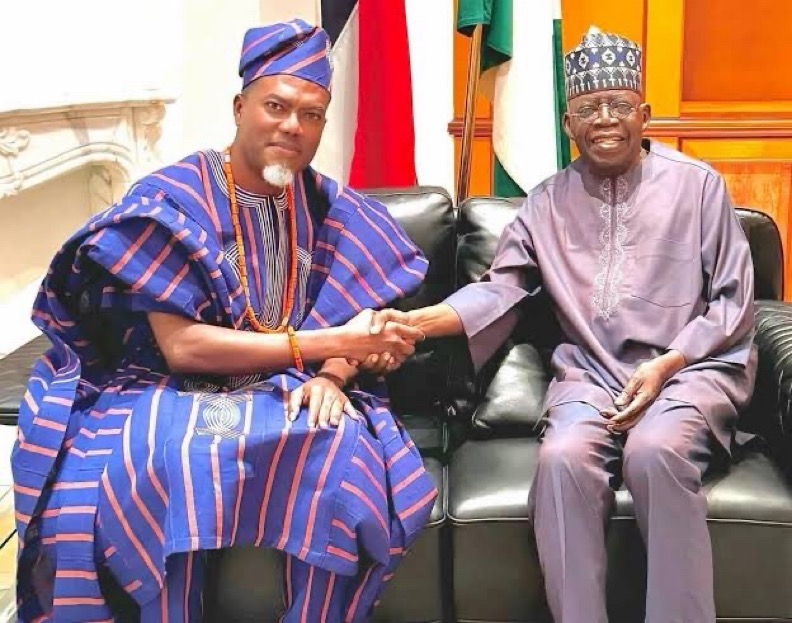
ABUJA — Former presidential aide and influential political commentator Reno Omokri has recently stepped forward to provide clarity regarding the status of his diplomatic appointment. Following widespread public speculation and social media inquiries concerning his pending resumption of duties, Omokri confirmed that his designation by President Bola Ahmed Tinubu is not a standard, single-country assignment. Instead, he has been tasked with the significant responsibility of serving as an envoy to four separate nations concurrently across Central and South America.
The Procedural Realities of Concurrent Diplomacy
The nature of Omokri’s assignment necessitates a multi-layered procedural path that is distinct from the typical appointment of an ambassador to a single host nation. In international diplomacy, every sovereign state maintains its own rigorous process for vetting and granting agrément—the formal acceptance—to a foreign envoy. For an appointee assigned to multiple jurisdictions, this means coordinating with four different foreign ministries and receiving individual approval from four separate heads of state.
Omokri emphasized that the bureaucratic requirements for his role are inherently more complex and time-consuming. "His Excellency, President Bola Ahmed Tinubu, chose to nominate me as an ambassador to serve concurrently in four countries in Central and South America," Omokri stated via his social media platforms. "Therefore, the processes involved for me, as an envoy to four different nations with four different presidents, differ from those of others."
By clarifying that he must satisfy the diplomatic protocols of four distinct countries before officially assuming his duties, Omokri has addressed the underlying concerns regarding the timeline of his deployment. In the world of international relations, haste is rarely the priority; rather, the focus remains on ensuring that the incoming ambassador is fully vetted and accepted by each host government, a process that requires meticulous inter-state communication.
Dismissing Comparisons and Cultivating Purpose
The public discourse surrounding Omokri’s appointment has occasionally been colored by comparisons between his timeline and that of other recent ambassadorial nominees. Some social media users have drawn parallels between the resumption of duties of various appointees, leading to speculation about potential delays or internal issues.
Omokri, however, has dismissed such narratives, rejecting any notion of competition or rivalry with his fellow diplomats. He utilized the opportunity to highlight a personal philosophy centered on contentment and individual destiny. "I don’t come from a culture of rivalry," Omokri remarked. "God created me and sent me to this world for a purpose, and that destiny is a standalone fate that has nothing to do with the doings or achievements of other people."
This perspective is central to his public persona. By reframing his appointment as a pursuit of individual purpose rather than a status race, he seeks to insulate his professional trajectory from the often-volatile commentary found on digital platforms. This philosophy of "standalone fate" is a clear directive to his followers that his commitment to the role is not defined by external metrics of speed or prestige, but by the successful completion of the diplomatic mandate assigned to him.
Diplomatic Commitment and National Service
While acknowledging that some of his peers may have been assigned to nations with higher profiles in the global media, Omokri expressed deep satisfaction with the trust placed in him by the Nigerian Presidency. He reaffirmed his dedication to the Federal Republic of Nigeria and his readiness to engage in the hard work of diplomacy once the required international protocols are finalized.
The Central and South American regions represent an area of growing strategic importance for Nigeria, particularly regarding economic partnerships, trade agreements, and cultural exchange. By placing a multifaceted diplomatic mission under the purview of a single envoy, the government aims to centralize its regional strategy. Omokri’s role will be to serve as a bridge between the interests of the Nigerian state and the specific objectives of the four host countries.
As the vetting process continues, Omokri remains focused on the long-term goal of his mission. His clarification serves as a reminder to the public that diplomatic appointments are not merely titles; they are deeply involved administrative and political commitments that operate on an international timeline. For now, he continues to navigate the final stages of the agrément process, expressing gratitude for the opportunity to contribute to the nation’s foreign policy goals.
Ultimately, his transparency serves to manage public expectations while reinforcing the seriousness of his upcoming diplomatic obligations. As he prepares to represent Nigeria across these four nations, his focus remains on fulfilling the procedural duties required by host governments while waiting to officially step onto the world stage as an envoy of the Nigerian state.