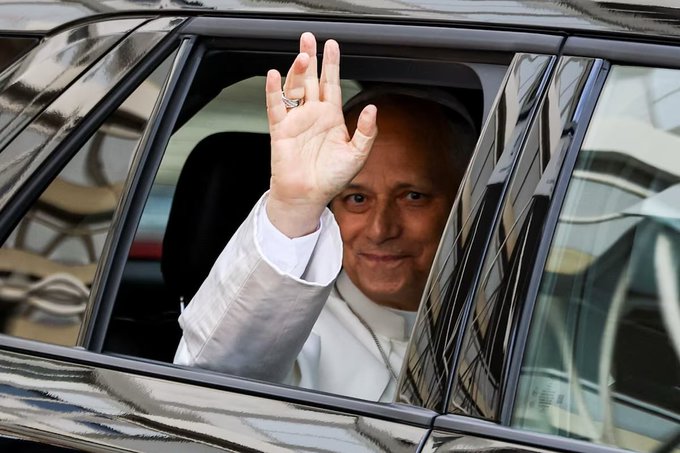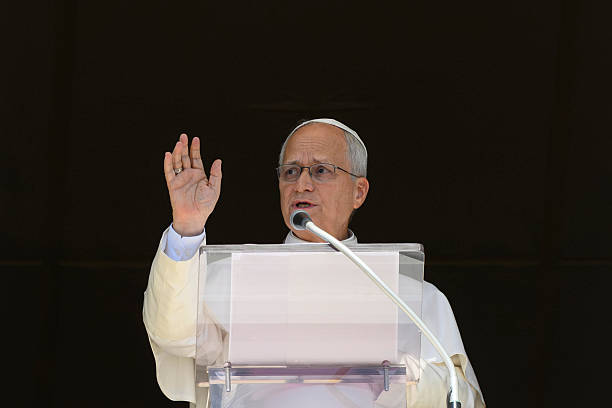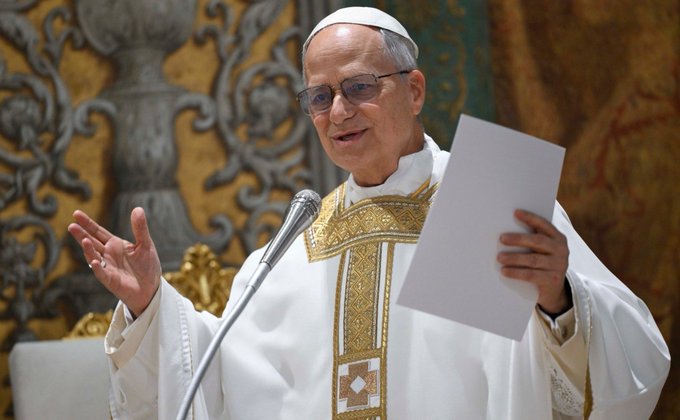
Pope Leo XIV has reaffirmed the Catholic Church’s opposition to capital punishment, declaring that the death penalty is “inadmissible because it is an attack on the inviolability and dignity of the person.”
The pontiff made the statement on Saturday, October 10, 2026, to mark the World Day Against the Death Penalty, renewing the Vatican’s call for justice systems to protect society without executing convicted criminals.
In a message published on his official X account, Pope Leo argued that public safety and justice could be achieved through effective prison systems that allow offenders the possibility of rehabilitation and redemption.
“The common good can be safeguarded and the requirements of justice can be met without recourse to capital punishment,” the pope said.
His remarks reaffirm the Catholic Church’s established teaching against the death penalty and come amid renewed debate in the United States over plans to livestream a military execution scheduled for December.
Pope Says Criminals Retain Their Human Dignity
Pope Leo's message emphasised that a person's dignity does not disappear after committing a serious crime.
The pontiff argued that governments can protect citizens and uphold justice through effective detention systems without permanently eliminating an offender's opportunity for redemption.
His position reflects the Catholic Church's teaching that human dignity remains inherent in every person, including those convicted of grave offences.
The pope's statement also challenges the argument that executions are necessary to maintain public safety. According to the Vatican's position, societies can protect their populations through secure imprisonment while preserving the possibility that convicted offenders may change.
Leo's message concluded with the hashtag #NoDeathPenalty, reinforcing the Church's continuing opposition to capital punishment.
The statement was published on the World Day Against the Death Penalty, an annual observance that draws attention to the use of executions and campaigns for their abolition.
Vatican Criticises Planned US Livestreamed Execution
The pope's statement came amid controversy in the United States over plans to livestream the execution of Nidal Malik Hasan, a former US Army psychiatrist convicted of killing 13 people and wounding 32 others during the 2009 shooting at Fort Hood, Texas.
The US Department of Defense announced that Hasan's execution by firing squad was scheduled for December 3, 2026, although further legal proceedings could affect the timetable.
The announcement that the execution could be livestreamed has drawn criticism from senior Catholic officials, who argue that broadcasting an execution risks turning the death of a condemned person into a public spectacle.
Pope Leo did not specifically refer to Hasan or the planned livestream in his October 10 message. However, his statement came shortly after senior Vatican officials publicly criticised the proposal.
Cardinal Pietro Parolin, the Vatican secretary of state, described the idea of livestreaming an execution as unacceptable.
“It is certainly unacceptable to turn death into a spectacle,” Parolin said, adding that other methods were available even when a person had been convicted of a serious crime.
The controversy has brought renewed attention to the ethical questions surrounding capital punishment, including whether executions serve as an effective deterrent and how governments should balance punishment, public safety and human dignity.
US Catholic Bishops Also Oppose the Proposal
The United States Conference of Catholic Bishops has also criticised the planned livestreamed execution.
Archbishop Paul Coakley, president of the conference, expressed shock and sorrow over the announcement and called for the decision to be reconsidered.
Coakley acknowledged the gravity of Hasan's crimes but argued that the proposed broadcast would promote a culture that normalises death rather than respect human life.
The bishops' position reflects the wider Catholic Church's opposition to capital punishment, including in cases involving particularly serious crimes.
Church leaders have maintained that condemning an offence does not require abandoning the dignity of the person responsible for it. They argue that a justice system can impose serious punishment while preserving the possibility of repentance and rehabilitation.
The disagreement also highlights a distinction between supporting victims and their families and opposing the execution of convicted offenders. Catholic leaders have argued that rejecting capital punishment does not mean minimising the suffering caused by violent crimes.
Catholic Church's Position on the Death Penalty
The Catholic Church's current teaching on capital punishment was formally strengthened under Pope Francis in 2018, when the Catechism of the Catholic Church was revised to state that the death penalty is inadmissible because it attacks human dignity.
Before the revision, Church teaching had allowed for the possibility of capital punishment in circumstances where it was considered the only effective way to defend human lives against an unjust aggressor.
The revised position placed greater emphasis on modern systems of imprisonment and the ability of governments to protect society without executing offenders.
Pope Leo has continued to endorse that teaching since becoming pontiff, including in a message delivered in April 2026 marking the anniversary of Illinois abolishing the death penalty.
In that message, he said human dignity is not lost even after a person commits a very serious crime. He also supported efforts to abolish capital punishment in the United States and around the world.
The October statement therefore represents a continuation of the Church's established position rather than a new change in Catholic doctrine.
Debate Over Justice, Deterrence and Rehabilitation
Capital punishment remains one of the most contested issues in criminal justice.
Supporters argue that the death penalty can be an appropriate punishment for the most serious crimes and reflects the gravity of offences such as murder and terrorism. Some also maintain that it serves as a deterrent and provides a form of justice for victims and their families.
Opponents, including the Catholic Church, question whether executions are necessary to protect society and argue that irreversible punishment carries the risk of executing innocent people.
They also maintain that life imprisonment and other secure forms of detention can protect the public without ending an offender's life.
Pope Leo's message places particular emphasis on rehabilitation and the possibility of redemption. His position is that even people convicted of serious crimes retain their human dignity and should not automatically be deprived of every opportunity to change.
The debate also involves wider questions about the role of punishment in society, including whether justice should focus exclusively on retribution or also consider rehabilitation and the protection of human rights.
The pope's statement does not suggest that serious crimes should go unpunished. Instead, it argues that justice and public safety can be achieved without resorting to executions.
Pope Leo Continues Focus on Prisoners and Human Dignity
Pope Leo has made prison ministry and the dignity of incarcerated people important themes of his papacy.
During a visit to a prison in Equatorial Guinea in April 2026, he offered encouragement to inmates and emphasised that people should not believe they have been abandoned, regardless of their circumstances.
His approach reflects the broader Catholic teaching that human worth is not determined solely by a person's past actions.
The Vatican's opposition to the death penalty is also connected to its emphasis on protecting human life and ensuring that punishment does not eliminate the possibility of redemption.
For the Church, the question is not whether offenders should face consequences for their actions, but whether governments should use execution when other means of protecting society are available.
Leo's latest statement reinforces that distinction and places the debate within the broader context of human rights, justice and the responsibilities of governments.
Death Penalty Debate Likely to Continue
The pope's declaration adds to the international discussion about capital punishment, particularly as the United States prepares for the scheduled military execution that has prompted objections from Catholic leaders.
Although Leo's message did not directly address the specific American case, its timing has drawn attention to the tension between the Vatican's teaching and the continued use of the death penalty in some jurisdictions.
The planned livestream has further intensified the debate by raising questions about whether broadcasting an execution is compatible with respect for human dignity.
For the Catholic Church, the central principle remains that the protection of society and the demands of justice do not require capital punishment.
Pope Leo's message reiterates the Vatican's position that effective imprisonment can protect citizens while allowing convicted offenders the possibility of rehabilitation and redemption.
As governments continue to debate criminal justice policies, the pontiff is urging them to consider approaches that preserve human dignity while maintaining public safety and accountability.