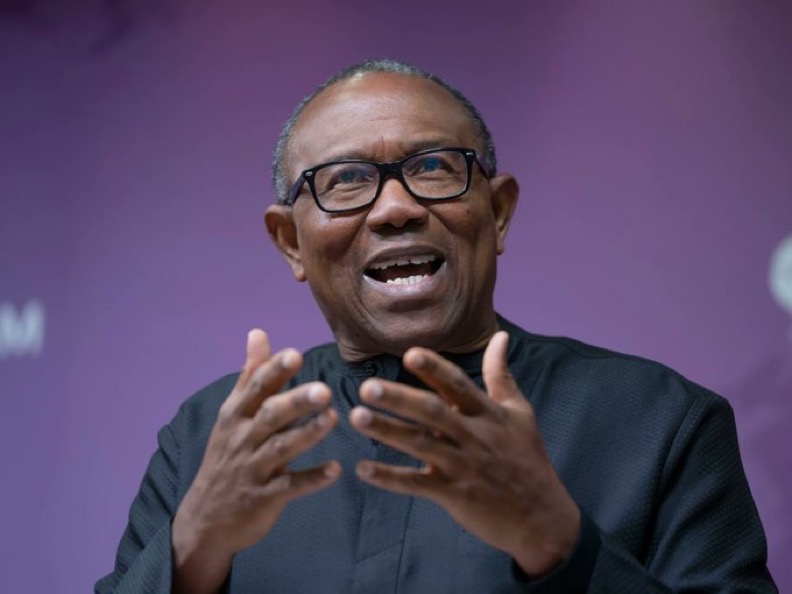
The immediate aftermath of the 2026 Osun State governorship election, national attention has shifted from the localized counting halls of Osogbo to the broader strategic implications for West Africa’s largest democracy. Following the official declaration by the Independent National Electoral Commission confirming incumbent Governor Ademola Adeleke's re-election victory, Peter Obi, the presidential candidate of the Nigeria Democratic Congress, issued a comprehensive state of the nation commentary on Sunday. Characterizing the election outcome as a triumph of civic determination over political coercion, Obi asserted that the firmness demonstrated by Osun voters serves as a vital template for citizens preparing for Nigeria's upcoming general elections.
Through a public statement issued via his official digital communication channels, the former Anambra State governor extended formal congratulations to Governor Adeleke and praised the electorate—specifically focusing on the state's youth demographic—for actively safeguarding their electoral choices. Obi observed that the populace had articulated its collective will with courage and clarity, demonstrating that when a populace remains vigilant and organized, the institutional power of the electorate remains supreme over subterranean political forces.
Complete Text Analysis and Electoral Context
The re-election of Ademola Adeleke under the Accord Party banner—polling 511,067 votes to defeat his closest rival, Bola Oyebamiji of the All Progressives Congress who polled 444,815 votes—represents a highly unusual dynamic in contemporary Nigerian politics. The election registered over one million participating voters out of 2.3 million registered citizens, spanning all thirty local government areas of the state.
Addressing the outcome, Obi emphasized that Adeleke’s victory was rooted in a demonstrable commitment to the populace, tangible empathy for public welfare, and executive performance during his initial term. He paid special tribute to young citizens who organized peacefully across polling units to monitor vote collation at the grassroots level. Obi framed this grassroots mobilization as a clear message that active civic participation remains the most effective defense against electoral malpractice and voter disenfranchisement.
Obi's Political Realignment and Electoral Reform Advocacy
The context of Peter Obi’s statement is deeply intertwined with his own political trajectory leading into the 2027 general elections. Following his groundbreaking 2023 presidential campaign under the Labour Party—which disrupted Nigeria’s traditional two-party hegemony—Obi transitioned to lead the Nigeria Democratic Congress following a strategic coalition realignment in mid-2026.
Throughout the period preceding the Osun ballot, Obi consistently advocated for peaceful electoral conduct and institutional neutrality. Days before the polls opened, he issued public appeals demanding that political figures refrain from incendiary rhetoric and urging security agencies and electoral officials to maintain absolute professionalism. The successful, relatively peaceful conclusion of the Osun governorship contest therefore serves as validation for his long-standing campaign centered on institutional integrity, civic education, and electoral vigilance.
The Mechanism of Civic Protection and Vote Defense
In contemporary African electoral studies, the concept of civic vigilance or vote protection refers to non-violent, structured citizen observation at the polling unit level. Under current Nigerian electoral frameworks, official results are generated, verified, and physically stamped at individual polling centers on Form EC8A before being transmitted digitally to central collation servers and physically moved to local government headquarters.
When political actors refer to citizens defending their votes, it describes a legal process where voters remain within permissible public perimeters around polling booths after casting their ballots. By observing the physical counting process, recording verified totals on personal mobile devices, and accompanying election officers to collation points, voters reduce opportunities for ballot tampering, result manipulation, or procedural falsification during transit. Obi’s endorsement of this methodology underscores its growing utility as a peaceful, legal deterrent against electoral subversion.
National Economic Hardship and the 2027 Strategic Horizon
The commentary from the NDC presidential candidate extends far beyond a routine political congratulation, carrying profound implications for Nigeria’s broader socio-economic landscape. Millions of Nigerian households continue to grapple with severe economic pressures, including elevated inflation rates, currency devaluation, food insecurity, and widespread public safety challenges.
Obi directly linked these structural socio-economic difficulties to the constitutional power of the ballot box. He argued that citizens enduring economic deprivation possess the ultimate sovereign mechanism to alter their governing conditions by electing leaders based on verifiable competence, character, and institutional capacity. By framing the Osun result as an practical demonstration of citizen power, Obi aims to counter widespread voter apathy ahead of the national polls, urging disenfranchised demographics to register, vote, and actively defend the democratic process.
Regional Implications and the Future of Multi-Party Competition
The political dynamics observed in Osun State reflect broader shifts across the West African region, where traditional party loyalties are increasingly tested by personality-driven coalitions and issue-based voting blocs. The ability of an incumbent governor to transition party platforms and secure a second term demonstrates an evolving electorate that evaluates candidate delivery over strict party alignment.
For political stakeholders across Nigeria, the Osun governorship election highlights that major political machinery can be held accountable when electoral participation remains high and monitoring is rigorous. Obi called on all political actors nationwide to reject political violence, uphold the rule of law, and view democratic contests not as armed battles, but as healthy debates on policy ideas, governance capacity, and public service.
Final Administrative Outlook and Political Mobilization
As the Independent National Electoral Commission concludes its official administrative duties in Osun State by preparing the formal issuance of the Certificate of Return, political organizations across the country are studying the electoral data collected from the 30 local government areas. Ground-level polling metrics, voter turnout percentages, and grassroots monitoring strategies are being integrated into national campaign frameworks.
Peter Obi’s commentary serves as an opening salvo in the nationwide political mobilization efforts leading into the next election cycle. By explicitly framing democratic participation as the primary antidote to national economic and security challenges, the NDC leadership intends to maintain continuous civic engagement, encouraging Nigerians to build a more secure, accountable, and prosperous nation through the disciplined use of their constitutional rights.