The Canadian federal government plans to invest up to $50 million in a proposed high-tech forestry centre in New Brunswick, using artificial intelligence (AI), digital modelling and data-driven tools to modernise the forestry industry, reduce operating costs and improve the management of Canada's wood resources.
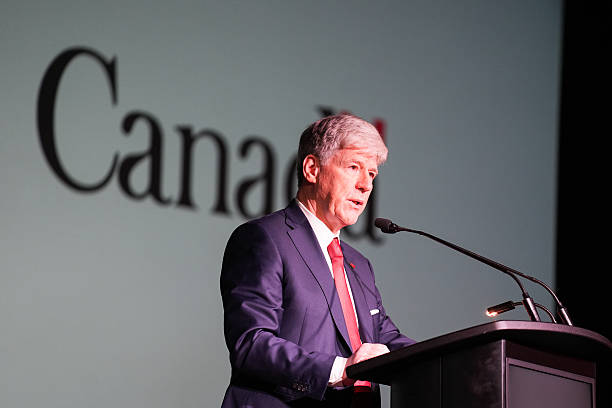
Natural Resources Minister Tim Hodgson announced the proposed investment on October 14, 2026. The initiative, known as the New Brunswick Strategic Innovation Centre in Digital Forestry, is being led by the Northern Hardwoods Research Institute in collaboration with ResearchNB. The project is valued at approximately $86 million, with the federal contribution conditional on final project approval and due diligence.
The investment comes as Canada's forestry industry faces pressure from higher operating costs, uncertain wood supplies, climate-related threats, weak pulp prices and U.S. tariffs on Canadian forest products. The government says digital technology could help businesses improve efficiency and strengthen the industry's long-term competitiveness.
New Centre to Use AI to Modernise Forestry
The proposed centre will develop digital tools to help forestry companies and other stakeholders identify, track and manage wood resources throughout the supply chain.
One of its central objectives is to improve information about the availability of timber, commonly referred to in the industry as fibre supply. Reliable fibre supplies are essential for sawmills, pulp and paper producers and manufacturers of packaging and other wood products.
By using digital systems to map available resources and match them with the requirements of individual manufacturing facilities, the initiative aims to reduce uncertainty over where wood can be sourced and how it should be allocated.
The project is also expected to use a digital model of New Brunswick's forests, allowing forestry managers to simulate different scenarios before implementing decisions on the ground.
According to reporting by Global News, the technology could help identify suitable areas for planting and harvesting, track logs and improve planning for forest protection. It could also support assessments of wildfire risks and pest infestations.
These tools could help businesses make better-informed operational decisions while supporting efforts to manage forest resources more sustainably.
Government Says Investment Could Improve Competitiveness
Hodgson said the initiative is intended to help Canada's forestry industry adapt to a changing economic and environmental landscape.
The federal government sees digitalisation as an opportunity to improve productivity, attract investment and help forestry businesses remain competitive in international markets.
New Brunswick's Natural Resources Minister, John Herron, also welcomed the investment, describing forestry as a major economic driver for the province.
The project is expected to bring together research institutions, government agencies and industry participants to accelerate the adoption of digital technologies across forestry operations.
Federal officials also hope the initiative will provide a model that could eventually be replicated in other Canadian forestry regions.
If successful, the approach could help other provinces improve their own forest-resource management systems and coordinate the movement of wood from harvesting areas to processing facilities.
Digital Tools Could Reduce Transportation Costs
Transportation efficiency is another major focus of the proposed centre.
Forestry operations often involve trucks travelling between harvesting areas, mills and other destinations. Inefficient routing can result in vehicles travelling significant distances without carrying timber, increasing fuel consumption and operating expenses.
Gaetan Pelletier, executive director of the Northern Hardwoods Research Institute, told Global News that approximately 40 per cent of forestry truck journeys in the province involve empty travel.
He estimated that better coordination and digital optimisation of the hundreds of trucks serving the sector could save the industry approximately $25 million annually by reducing these so-called empty miles.
The proposed digital platform could help centralise dispatching, improve route planning and coordinate deliveries with the needs of individual mills.
More efficient transport could reduce fuel consumption, limit unnecessary vehicle movements and help businesses manage costs at a time when the industry is facing considerable financial pressure.
However, the projected savings are estimates associated with potential improvements, rather than guaranteed results from a centre that has yet to be established.
Project Expected to Support Jobs and Regional Development
The forestry sector is an important source of employment and economic activity in New Brunswick, particularly in rural communities where mills, harvesting operations and related businesses support local livelihoods.
According to figures cited by Global News, the industry supports approximately 24,000 direct and indirect jobs in the province and contributes around $1.5 billion annually to its economy.
The proposed centre is intended to help the industry remain productive while adapting to technological changes and environmental challenges.
Pelletier said the introduction of digital tools could create new opportunities for workers rather than simply eliminate existing jobs. The technology could help forestry professionals complete tasks more efficiently while creating demand for specialised skills in data analysis, digital systems and forest management.
The project's long-term employment impact will depend on how widely the technology is adopted and how effectively companies integrate it into their operations.
For communities that depend on forestry, improving the industry's competitiveness could help support existing businesses and attract further investment.
Canada's Forestry Industry Faces Growing Pressure
The federal investment comes at a challenging time for Canada's forest products industry.
The sector has been dealing with uncertain timber supplies, increased operating expenses, low pulp prices and U.S. tariffs affecting Canadian wood products. Wildfires, pests and other environmental pressures have also made it more difficult to predict the availability of fibre resources.
These challenges can affect the profitability of mills and the decisions businesses make about production, investment and employment.
The federal government says Canada's forest sector supports nearly 200,000 jobs nationally and contributed $23.5 billion to the country's gross domestic product in 2024. It also underpins approximately 300 rural, remote and Indigenous communities.
Against this backdrop, officials are looking to technology and improved resource management to help businesses use available timber more efficiently and respond to changing market conditions.
The proposed centre is one component of a wider federal effort to transform the sector and strengthen its position in domestic and international markets.
Federal Forestry Strategy Expected in Budget 2026
Hodgson said the federal government's forthcoming forest sector strategy would provide further details on its plans to support the industry's modernisation.
The strategy is expected to outline measures intended to improve competitiveness, encourage investment and help Canadian forestry businesses respond to changing economic and environmental conditions.
Natural Resources Canada said the strategy would build on the work of the Canadian Forest Sector Transformation Task Force and consultations with provinces, territories, Indigenous partners and industry stakeholders.
The government has also said it has introduced more than $2.6 billion in measures since August 2025 to support and transform Canada's forest sector, including renewed programmes intended to help businesses adapt.
Further details about the broader strategy are expected in the federal government's 2026 budget.
The digital forestry centre could become an example of how the government intends to combine targeted funding, research and new technology to address structural challenges in the industry.
Funding Remains Conditional on Final Approval
Although Ottawa has announced plans to contribute up to $50 million, the project must still meet the government's final approval and due-diligence requirements.
The total estimated cost is $86 million. The remaining funding is expected to come from other project partners, including ResearchNB and New Brunswick's Department of Natural Resources.
The centre's eventual impact will depend on the development of its digital infrastructure, participation from forestry companies and the ability of its tools to deliver measurable improvements in resource management and operating efficiency.
For now, the announcement signals a federal push to make technology a more central part of Canada's forestry industry as it confronts rising costs, supply uncertainty and international trade pressures.