ABUJA — Obunike Ohaegbu, a House of Representatives aspirant for the Nnewi North, Nnewi South, and Ekwusigo Federal Constituency, has publicly refuted claims that he accused Peter Obi of involvement in financial malpractice during the party’s primary elections.
The Origin of the Allegation
The controversy began following a public assertion by Nollywood actor and politician Kenneth Okonkwo, who claimed in a television interview that Ohaegbu had sent an "SOS message" detailing alleged fraud and financial demands made by the party's presidential candidate, Peter Obi. According to Okonkwo, Ohaegbu had allegedly stated that the former Anambra State Governor demanded a sum of ₦10 million from aspirants as a prerequisite for campaign funding.
These claims, which quickly circulated across social media and various political news outlets, threatened to damage the integrity of both the aspirant and the presidential candidate during a sensitive period for the newly registered party.
A Direct Rebuttal
Ohaegbu, appearing on Channels Television to address the matter, dismissed the claims as both unfounded and a severe misrepresentation of his communications. He explained that he frequently sends broad analytical updates to a wide contact list, which includes both Peter Obi and Kenneth Okonkwo. He maintained that these updates are intended to foster dialogue and transparency, not to convey accusations of criminal activity.
"Peter Obi never told me to pay ₦10 million, and I never told Kenneth Okonkwo that Peter Obi in any way told me to pay ₦10 million," Ohaegbu stated emphatically.
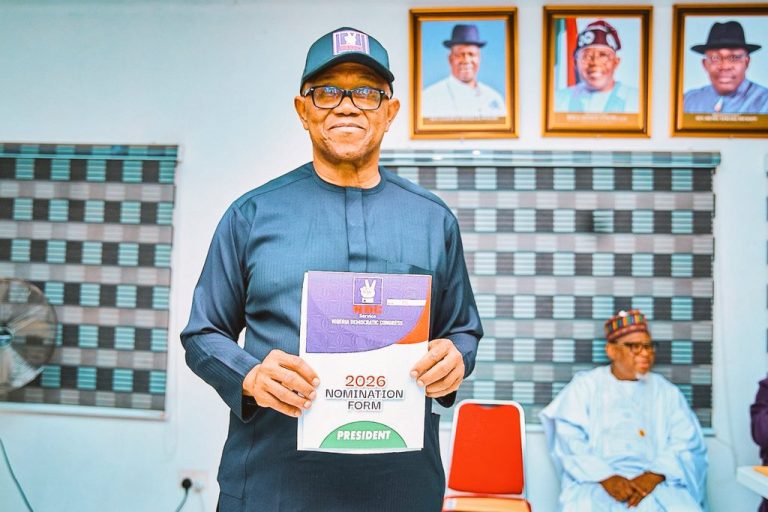
He further clarified the nature of the financial transaction that sparked the confusion. The ₦10 million payment he made was a legitimate party nomination fee paid into the official NDC account at Fidelity Bank. By presenting this as a standard procedural cost of seeking elective office, Ohaegbu sought to decouple the payment from any suggestion of bribery or illicit influence.
Distinguishing Internal Grievances from Personal Attacks
In his rebuttal, Ohaegbu took care to clarify where his frustrations actually lie. He acknowledged that he has had disagreements regarding the primary election process, but he insisted that these grievances are directed at the party’s National Secretary, not the presidential candidate.
Ohaegbu noted that his frustrations were specifically related to his interactions with party leadership regarding the issuance of nomination forms and the handling of promises regarding an automatic ticket. He further distanced himself from widespread rumors that Peter Obi and other senior party leaders were manipulating the electoral process from the John Wood Hotel in Abuja.
"My lawyers will be filing papers against the party," Ohaegbu added, signaling that he intends to pursue formal channels to address his concerns about the conduct of specific party officials. He reaffirmed that he has had no direct monetary discussions with Peter Obi throughout the entire primary process, emphasizing that his fight is one for organizational fairness rather than a personal vendetta against the party’s flagbearer.
Navigating the NDC’s Internal Crisis
The denial by Ohaegbu comes at a precarious time for the Nigeria Democratic Congress. The party, which has been making headlines due to its rapid rise and the subsequent legal challenges to its registration, is currently navigating significant internal pressures.
As a new political entity, the NDC faces the dual challenge of building a cohesive grassroots movement while simultaneously managing the ambitions of seasoned political figures. The public nature of this dispute underscores the difficulty of maintaining party discipline when aspirants feel that established internal protocols are being bypassed.
The Broader Political Context
The accusation made by Kenneth Okonkwo and the subsequent rebuttal by Obunike Ohaegbu highlight a growing trend in the Nigerian digital political space: the rapid amplification of unverified claims that can have real-world consequences for political actors. As the 2027 electoral cycle approaches, the ability of parties to manage internal disputes and prevent the weaponization of misinformation will be critical to their electoral success.
For Ohaegbu, the priority now is to refocus on his constituency and his legal efforts to resolve his issues with the party’s administrative wing. For the NDC, the focus remains on stabilization. By clarifying the nature of the "alleged fraud," the party hopes to put this particular narrative to rest and shift its focus toward its broader policy goals, including the upcoming general election.
The incident serves as a stark reminder of the intense scrutiny that political figures and aspirants operate under in Nigeria. As the party continues to work through its legal and internal challenges, the call for transparency and adherence to formal party processes remains the most effective defense against the rumors and internal strife that have historically hampered the growth of new political movements in the country.
Do you believe that political aspirants should be more cautious about how they discuss internal party grievances in the public eye, or is total transparency necessary for the health of democratic parties? Share your thoughts below.