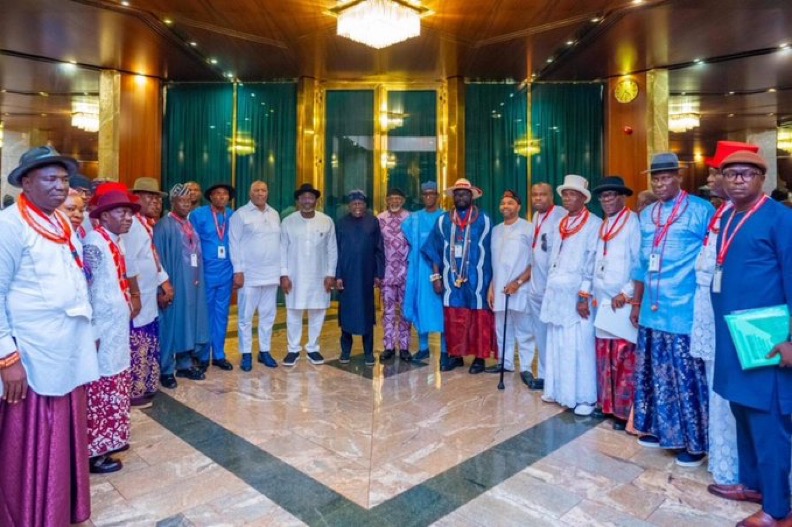
ABUJA — A long-standing dispute between the Ijaw and Itsekiri ethnic nationalities in Delta State regarding the ward delineation exercise by the Independent National Electoral Commission (INEC) has reached a resolution. Following direct intervention by President Bola Ahmed Tinubu, both groups have formally signed a power-sharing agreement regarding the proposed Warri Federal Constituency II seat in the House of Representatives.
Terms of the Agreement
The agreement, finalized during a high-level meeting chaired by the National Security Adviser (NSA), Nuhu Ribadu, establishes a rotational framework for political representation. Under the terms:
-
Rotational Tenure: The House of Representatives seat will rotate between the two ethnic groups.
-
Duration: The Ijaw nationality will hold the seat for the first two consecutive terms, followed by the Itsekiri nationality for the subsequent two terms.
The Path to Resolution
The breakthrough followed a summit at the Presidential Villa, where President Tinubu instructed key stakeholders from the affected ethnic nationalities to collaborate under the supervision of the NSA. The directive aimed to develop a political framework that would mitigate conflict and ensure equitable representation following contentious electoral boundary adjustments.
The document was signed by prominent leaders representing both sides:
-
Ijaw Representatives: Former Deputy Governor of Delta State, Kingsley Otuaro, and Dr. Eric Omare.
-
Itsekiri Representatives: Sir A.S. Mene and Chief Robinson Ariyo.
-
Endorsements: The National Security Adviser, Nuhu Ribadu, endorsed the agreement on behalf of the Federal Government, with Olorogun Victor Okumagba and Chief Westham Adehor serving as official witnesses.
This resolution is viewed as a significant step toward stabilizing the political landscape in the Warri region and addressing the grievances that previously stalled the ward delineation process.