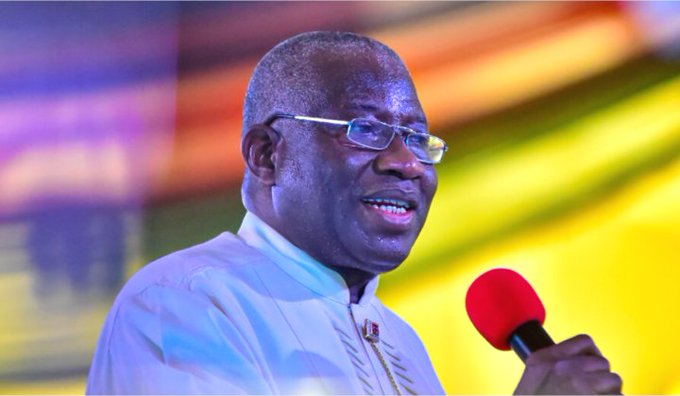
ABUJA — Former President Goodluck Jonathan has raised alarms over the entrenched role of political thuggery in Nigeria, describing it as a unique crisis on the African continent where electoral violence has essentially been transformed into a profession.
Speaking at the opening ceremony of the Nigerian Bar Association (NBA) Law Week in Abuja, Jonathan criticized the upside-down reward system in the country, pointing out that violent political actors often enjoy luxuries that top academics cannot afford.
"Nigeria is the only country where thuggery is a profession in Africa," Jonathan stated. "Some thugs, when they are travelling out of this country, fly first class, while university professors struggle to manage to buy economy tickets. When we have a country where the thugs fly first class, and the university professor flies economy, that country is like a cone turned upside down."
The remarks arrive amid notable political developments for the former president, who was recently granted a waiver by the Tanimu Turaki-led faction of the Peoples Democratic Party (PDP) to contest the 2027 presidential election. Despite the waiver, Jonathan focused his address entirely on institutional integrity, arguing that democracy cannot survive without credible polling units where thugs play no role.
Judicial Overreach and the Court System
Jonathan also directed heavy criticism toward the unusual volume of election-related litigation in Nigeria. He recalled a conversation with a South African official who was genuinely confused as to why a defeated politician would automatically head to a courtroom rather than accept the results.
"In Nigeria, not going to court is strange," Jonathan observed. He warned that many politicians file lawsuits despite knowing they lacked voter support, operating under the assumption that the judiciary can be manipulated to overturn the actual will of the field.
To address this, the former president recommended restructuring the legal framework so that courts are stripped of the power to declare winners. Instead, he argued, if a judge finds an election deeply flawed, the court should simply order the Independent National Electoral Commission (INEC) and the candidates to return to the field for a rerun. He also floated the idea of establishing a dedicated constitutional court or a single consolidated tribunal to handle all election disputes efficiently.
Monetization and Low Voter Turnout
The event featured additional perspectives on the structural challenges facing Nigeria's democratic process. Former Attorney General of the Federation, Mohammed Adoke (SAN), spoke out against the excessive monetization of local politics. Adoke warned that high nomination fees are being deliberately used by party leaderships to price out credible, qualified candidates. He also criticized the growing reliance on "consensus arrangements," describing the practice as the mere coronation of handpicked candidates rather than actual democratic participation.
Furthermore, Jonathan expressed concern over Nigeria's voter turnout trends, noting that the country currently records some of the lowest participation rates in Africa despite its large population. He pointed to Senegal's recent presidential election as a model of success, highlighting that credible outcomes can be achieved without highly sophisticated or expensive technology if political parties, security agencies, and citizens simply commit to doing the right thing.
NBA President Afam Osigwe (SAN) echoed these concerns, lamenting the "judicialization" of the democratic process where judges, rather than voters, increasingly determine who occupies public office. Osigwe concluded by praising Jonathan’s historic concession during the 2015 elections, urging current politicians to adopt the principle that personal ambition is never worth compromising the rule of law.
At the NBA Law Week in Abuja, the former leader calls for urgent electoral and judicial reforms, noting that thuggery has quietly been normalized into a career.