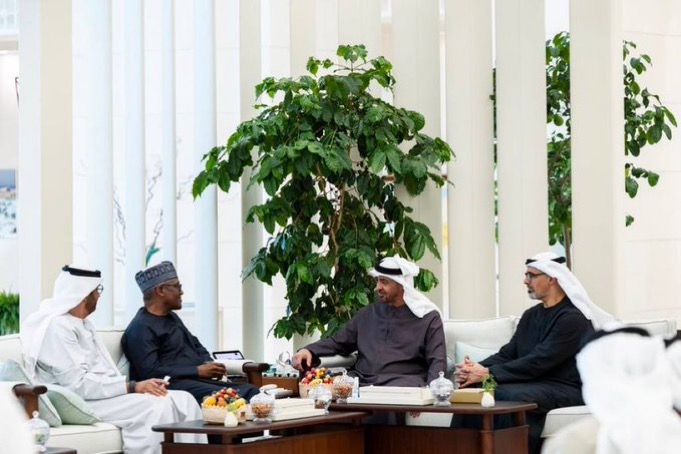
ABUJA / ABU DHABI — Aliko Dangote, the President of the Dangote Group, has formally unveiled his conglomerate’s ambitious "Vision 2030" strategy to the leadership of the United Arab Emirates (UAE). During a high-level diplomatic and economic engagement in Abu Dhabi, Dangote presented a comprehensive roadmap to Sheikh Mohamed bin Zayed Al Nahyan, the President of the UAE, outlining a bold pathway to transform the Dangote Group into a $100 billion global enterprise.
This strategic dialogue, attended by key Emirati figures including Dr. Sultan Al Jaber—the Minister of Industry and Advanced Technology and Group CEO of ADNOC—and Sheikh Khaled bin Mohamed bin Zayed Al Nahyan, the Crown Prince of Abu Dhabi, signifies more than just a business proposal. It represents a deepening synergy between African industrial ambition and Middle Eastern capital and technical expertise.
Vision 2030: The Pillars of Growth
The Vision 2030 roadmap is perhaps the most significant industrial initiative launched on the African continent in the 21st century. It is built upon three foundational pillars designed to foster self-sufficiency and regional economic stability:
-
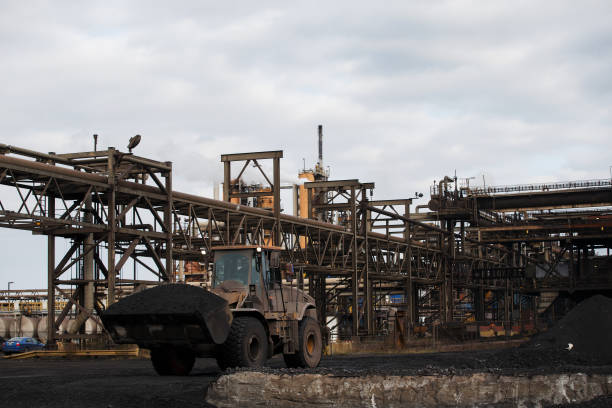
Energy Security (1.4 Million BPD): At the heart of the vision is the expansion of the Dangote Petroleum Refinery. By scaling capacity to 1.4 million barrels per day (bpd), the project aims to end Nigeria’s—and by extension, much of West Africa’s—crippling dependence on imported refined petroleum products. This is not merely an energy project; it is a macroeconomic stabilizer.
-
Industrial Infrastructure (90 Million Tonnes Cement): Construction is the backbone of development. Dangote Cement, already a titan in the industry, aims to ramp up annual production capacity to a staggering 90 million tonnes. This will provide the raw materials necessary to modernize African cities, build transport networks, and support a growing population.
-
Agricultural Sovereignty (12 Million Tonnes Fertilizer): To ensure food security across the continent, the plan includes quadrupling fertilizer production to 12 million metric tonnes annually. By empowering farmers with affordable, high-quality inputs, the Dangote Group is addressing the root causes of food inflation and rural poverty.
The UAE Partnership: Aligning Expertise and Capital
The choice of Abu Dhabi for this presentation is highly strategic. The UAE has successfully transformed its economy from an oil-dependent model to one fueled by sophisticated petrochemical, energy, and advanced manufacturing sectors. By aligning the Vision 2030 roadmap with the UAE’s industrial expertise, Aliko Dangote is seeking to secure the technical "know-how" necessary to scale his operations with world-class efficiency.
Discussions in Abu Dhabi focused on collaborative ventures in petrochemicals and energy infrastructure. For the UAE, partnering with the Dangote Group offers an entry point into the world’s fastest-growing consumer market. For Dangote, it offers a partnership with a nation that has proven it can build massive, high-tech industrial parks from the desert up. This synergy is viewed as a vital step in reversing Africa’s historical cycle: exporting raw materials and importing finished goods.
Read Also: Aliko Dangote Proposes Mega-Refinery for East Africa; Seeks Partnership with Ruto and Museveni
Sustainability as a Competitive Advantage
Vision 2030 is not solely about size; it is about future-proofing. Aliko Dangote has explicitly baked sustainability into the conglomerate’s expansion strategy. The shift of the group’s massive logistics fleet to Compressed Natural Gas (CNG) is a major move toward lowering the carbon footprint of African supply chains. Furthermore, the focus on "green manufacturing" ensures that as the group expands across 17 African countries, it does so in compliance with modern environmental standards, making the group’s products more attractive to global export markets.
The "Africa First" Philosophy
At its core, Vision 2030 is a manifestation of Aliko Dangote’s "Africa First" philosophy. He has consistently maintained that the continent’s economic future cannot be sustained by foreign aid or intermittent investment, but must instead be built upon a robust, homegrown industrial backbone.
"We are building for the next generation," Dangote has often reiterated, emphasizing that a self-sufficient Africa is not only a boon for its residents but a stabilizing force for the global economy. As the conglomerate scales its operations—stretching from the massive refineries in Nigeria to port and fertilizer projects currently under development in Tanzania—the strategic support of international partners like the UAE is proving to be the "X-factor" that transforms ambitious plans into tangible infrastructure.
Building the Backbone of a Continent
The scale of this vision is unprecedented. By integrating energy, construction, and agriculture, Dangote is building an industrial ecosystem that is increasingly insulated from global market volatility. As the UAE and the Dangote Group move toward formalizing the partnerships discussed in Abu Dhabi, the global business community is taking notice.
The successful implementation of Vision 2030 would fundamentally change the narrative around African development. It would transition the conversation from "potential" to "productivity." With the capital and technical support of the UAE, and the vision of Africa’s richest entrepreneur, the Dangote Group is poised to become the engine that pulls the African continent into a new era of prosperity.
As the group progresses toward 2030, the world will be watching to see how this ambitious roadmap navigates the complexities of the global economy, proving that a self-sufficient African industrial backbone is not just a dream, but an inevitable reality of the 21st century.