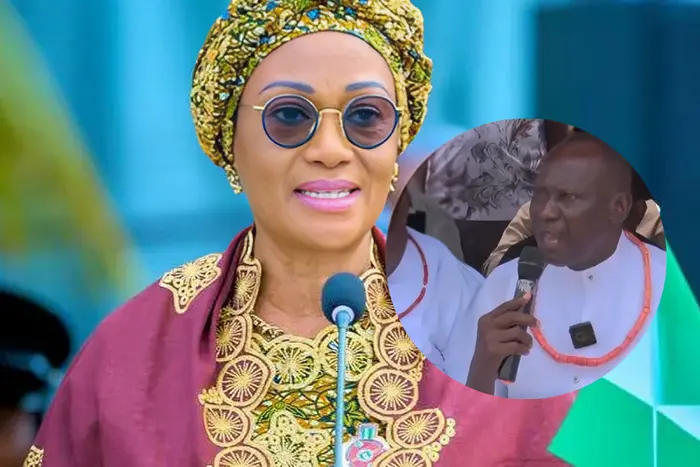
WARRI, DELTA STATE — A public statement made by a Warri chief criticizing Nigeria’s First Lady, Senator Oluremi Tinubu, has ignited a heated national debate regarding political interference, traditional authority, and the role of women in Nigerian public life.
The Incident
In a viral video circulating this week, a prominent chief from the Warri area publicly challenged the First Lady’s recent engagement in regional matters. During his remarks, the chief accused Senator Tinubu of interfering in Warri’s local affairs and suggested that she should instead focus her attention on her domestic responsibilities and "taking care of her husband."
The comments were reportedly made against a backdrop of ongoing regional tensions, specifically concerning an electoral ward delineation exercise and long-standing ethnic grievances involving the Ijaw, Itsekiri, and Urhobo communities. The chief also voiced deep concern over the broader issue of insecurity in the region, highlighting incidents such as the kidnapping of children.
A Shift in Relations
This critique marks a significant and surprising turn in the relationship between the First Lady and Warri traditional authorities. Just three months ago, in February 2026, the Olu of Warri, Ogiame Atuwatse III, conferred the prestigious chieftaincy title of “Utukpa-Oritse Iwere” upon Senator Tinubu during a grand homecoming reception. At that time, the visit was hailed by local leaders as a historic moment of unity, with the Olu praising her as a "reputable daughter of the land" and a positive role model.
Broader Debate on Gender and Leadership
The chief’s directive for the First Lady to "focus on the kitchen" has drawn sharp criticism from observers who view it as a symptom of ingrained patriarchal biases. Many argue that:
-
Double Standards: Critics note that male politicians intervening in local or regional issues are rarely, if ever, advised to return to their domestic duties, suggesting that women in power are still judged by a different set of traditional expectations.
-
Political vs. Personal: Opponents of the chief’s remarks argue that the First Lady, a former three-term Senator with a long history of public service, should be engaged based on her policy positions and influence, rather than being relegated to a domestic role.
-
Complex Regional Tensions: Political analysts suggest the chief’s outburst is less about gender and more about the high-stakes friction over electoral boundaries and local control in the Niger Delta, where traditional leaders are using the First Lady’s national prominence as a proxy for their frustration with federal policy.
As of now, the First Lady’s office has not issued an official response to the chief’s comments. The incident continues to trend on social media, reflecting a deep divide in how Nigerians reconcile traditional expectations of leadership with the modern political realities of women in high office.