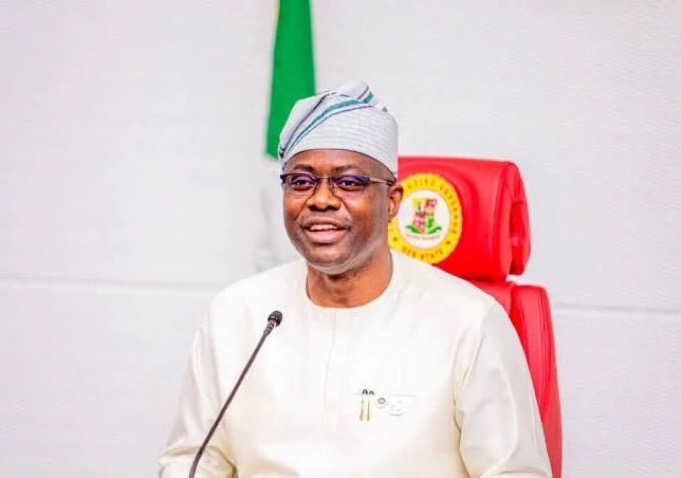
ABUJA, Nigeria — The political landscape ahead of the 2027 general elections has witnessed a significant shift as the Allied People’s Movement (APM) formally signaled its intent to challenge the incumbency of President Bola Ahmed Tinubu. On Monday, the party confirmed that it had successfully submitted the nomination details for its presidential, vice-presidential, and National Assembly candidates to the Independent National Electoral Commission (INEC).
The APM’s announcement, delivered by National Publicity Secretary Abubakar Yusuf, serves as a declaration of intent to present Oyo State Governor Seyi Makinde as the party’s flagbearer. The move marks a high-stakes turning point for the APM, as it seeks to position itself as the primary vehicle for what it describes as a necessary national turnaround.
The Makinde Factor: A Blueprint for National Governance
Governor Seyi Makinde’s selection as the APM presidential candidate has been presented by the party as a strategic choice based on "proven competence." The party is anchoring its campaign narrative on Makinde’s tenure in Oyo State, where his administration has focused on infrastructure, education, and health sector reforms.
"We have a presidential candidate who not only has the commitment but also the leadership capacity and competence to secure our nation, rebuild the economy, and ensure that every Nigerian enjoys the dividends of good governance," Yusuf stated.
The party is positioning Makinde as a "compassionate leader" capable of bridging the gap between the governing elite and the average citizen. By leveraging his reputation as a "people-focused" governor, the APM intends to appeal to voters who are disillusioned with the status quo and are seeking a candidate with a track record of tangible executive performance.
Strengthening the Grassroots: The Bala Mohammed Variable
Beyond the presidential ticket, the APM is signaling that it is building a broader coalition to exert influence at the legislative level. A key indicator of this strategy is the recent alignment of Bauchi State Governor Bala Mohammed, who has accepted the party’s senatorial ticket for Bauchi South.
This high-profile crossover is being interpreted by political analysts as a significant boost to the APM’s grassroots machinery. By securing a sitting governor for a legislative seat, the APM aims to strengthen its presence in Northern Nigeria, a critical battleground in any presidential contest. The party claims that since Makinde’s emergence and the subsequent alignment of other political heavyweights, the APM has seen a surge in membership and support across several geopolitical zones.
Framing the Opposition: The Critique of the APC Administration
The APM’s platform for 2027 is explicitly confrontational, focusing on the perceived failures of the current administration under President Bola Tinubu. The party has adopted a narrative of "economic rescue," pointing to the following issues as the primary catalysts for their campaign:
-
Cost of Living Crisis: The party highlights the inflationary pressures and the escalating costs of food and fuel as evidence that current policies have failed to cushion the impact on the populace.
-
Insecurity: The APM views the ongoing security challenges—ranging from localized insurgency to kidnapping and banditry—as a fundamental failure of the current administration to protect lives and property.
-
Unemployment and Economic Stagnation: The party argues that current economic policies have stifled growth rather than stimulating it, leaving a generation of young Nigerians without viable pathways to employment.
"Across the country, citizens have expressed deep concerns about the rising cost of living, widespread insecurity, unemployment, and declining economic opportunities," Yusuf remarked. "These are genuine concerns that require practical solutions and compassionate leadership, which only the APM can offer."
The Road to 2027: INEC and the Electoral Landscape
The submission of candidate details to INEC is a procedural milestone, but it also triggers the official countdown to the 2027 race. While the APM’s confidence is palpable, the political reality is that unseating an incumbent president in Nigeria requires significant financial resources, a vast political network, and a message that transcends regional and ethnic barriers.
The party’s rhetoric suggests it is well aware of these challenges. By framing the election as a choice between the "performance of the APC-led Federal Government" and a "new direction" offered by Makinde, the APM is clearly attempting to define the terms of the debate early.
However, political watchers note that the APM will need to do more than just criticize the current administration. To succeed, they must demonstrate how their proposed administration would manage the complexities of Nigeria's oil-dependent economy, navigate the intricate web of federal-state relations, and address the institutional weaknesses that currently hinder governance.
What to Expect Next
As the 2027 election cycle draws nearer, the attention of the electorate will likely shift from broad policy proclamations to specific, actionable plans. The APM has promised that the welfare of Nigerians will remain at the heart of its policy proposals, but it remains to be seen how the party will flesh out its economic blueprint.
For now, the formal entry of the APM into the race, with a ticket spearheaded by a prominent governor like Seyi Makinde, ensures that the political conversation for the next two years will be intense. The party's focus on "grassroots mobilization" suggests that it intends to bypass the traditional media-heavy campaigns in favor of a direct-to-voter strategy.
Whether this approach can overcome the established political machines of the ruling party is the defining question of the next election cycle. For the APM, the 2027 race is not just another contest; it is a bid to redefine the governance ethos in Nigeria. As INEC prepares for the next phase of the electoral process, the APM has fired the first major shot across the bow of the incumbent administration, setting the stage for what promises to be a highly competitive and pivotal general election.
With Governor Seyi Makinde as the candidate and Governor Bala Mohammed joining the legislative fray, how do you think this coalition will fare against the established political structures of the All Progressives Congress (APC) in 2027?
Share your thoughts