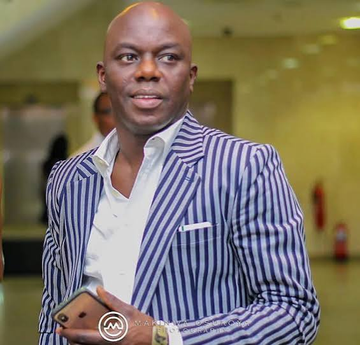
LAGOS, NIGERIA — The vibrant world of Nigerian entertainment has been shaken by a stark cautionary tale as popular Afrobeats singer-songwriter Abiola Akinbiyi, known professionally as Bella Shmurda, has publicly alleged that he is the victim of a massive real estate fraud.
In a distress call that has reverberated across social media, the "Cash App" hitmaker claimed to have been defrauded of a staggering $4 million (approximately ₦6.4 billion) in a property transaction that has turned out to be an alleged criminal scheme. The singer’s revelation came via an emotional Instagram Live session, during which he broke down in tears, pleading for public support and legal intervention to recover his lost funds.
The Anatomy of the Alleged Fraud
During the live stream, which was widely circulated on platforms like X (formerly Twitter) on Tuesday, a visibly distraught Bella Shmurda recounted the harrowing experience of realizing that his hard-earned capital had been syphoned away. According to the singer, the transaction involved a high-value property in Lagos, a city currently witnessing an aggressive, albeit often opaque, real estate boom.
"Nigeria, I need your help. I’m not doing okay right now," the singer pleaded during the broadcast. "I spent $4 million of my own hard-earned money, only to find out I bought stolen property."
The singer alleged that immediately after the substantial payment was transferred, the purported seller—whose identity he has not yet publicly disclosed—vanished. The sudden disappearance of the seller, coupled with the revelation that the property in question was not legally owned by the individual who brokered the deal, has left the musician in a state of financial and emotional shock.
"And now the seller has disappeared. Please, help me. Someone step in. I’ve got nothing left. I worked for years for this. I can’t lose $4 million like that," Bella Shmurda lamented, his voice cracking with emotion.
Legal Recourse and Pending Investigation
While the singer’s public appeal has garnered massive sympathy from fans and fellow industry colleagues, he confirmed that he has initiated formal legal proceedings. "I just contacted my lawyer for further investigation," he stated during the live session.
However, as of the time of this report, the allegations remain one-sided. Bella Shmurda has not yet released documentation, the identity of the seller, or the specific location of the property. Similarly, there has been no official statement from the Nigerian Police Force or other law enforcement agencies regarding a formal petition, nor has any counter-narrative been provided by the accused party.
The Dangerous Landscape of Lagos Real Estate
The incident involving Bella Shmurda sheds light on a systemic issue that has plagued the Nigerian real estate sector for decades: the prevalence of land racketeering, fraudulent title documentation, and "Omo-onile" (indigenous land grabber) interference.
Lagos, as the commercial nerve center of Africa, is currently witnessing an unprecedented influx of wealth into the real estate market. However, the legal framework governing property transfers often fails to keep pace with the sheer volume of transactions. Experts in the sector frequently warn of the "Lagos land trap," where individuals—including high-net-worth celebrities—fall victim to sophisticated scams involving:
-
Forged Certificates of Occupancy (C of O): Sophisticated syndicates utilize high-quality forgeries to present fraudulent titles to unsuspecting buyers.
-
Multiple Ownership Claims: Properties are often sold to multiple buyers simultaneously by entities claiming to be the rightful heirs or owners.
-
Property Encumbrances: Sellers often neglect to disclose that a property is under litigation or used as collateral for non-performing bank loans.
Celebrity Wealth and the Risk of Exploitation
Bella Shmurda’s case serves as a somber reminder that celebrities, despite their fame and access to professional advisors, are uniquely vulnerable targets for financial predators.
Industry analysts note that artists often feel pressured to complete "prestige" acquisitions—such as multi-million dollar mansions in areas like Lekki, Victoria Island, or Banana Island—as a marker of their global arrival. This pressure to maintain a certain image, combined with the often-hasty nature of high-stakes transactions, can lead to oversight in due diligence.
"When you are a celebrity, you are a walking target," says a Lagos-based property lawyer who preferred to remain anonymous. "You are often surrounded by 'fixers' who promise to expedite processes that, in reality, require months of deep-dive title verification at the Land Registry. When a celebrity wants a house, they want it now. Fraudsters thrive on that urgency."
Why Public Appeals for Fraud Recovery Are Risky
By taking his grievance to Instagram Live, Bella Shmurda has opted for a "court of public opinion" strategy. While this can sometimes pressure law enforcement to prioritize a case, it also carries significant legal risks:
1. Evidentiary Complications: Publicly discussing an ongoing investigation can potentially undermine the case in a formal court of law, especially if the singer inadvertently reveals information that could be used by the defense to claim a breach of confidentiality or defamation.
2. Safety Concerns: By publicly accusing an individual of a $4 million theft, the singer may be putting himself in danger, depending on the nature of the criminal syndicate involved.
3. Verification Hurdles: Without an independent verification of the transaction receipts and title documents, the public can only speculate, which can lead to misinformation and the trivialization of the issue.
Moving Forward: The Need for Institutional Due Diligence
The music industry is currently rallying behind the "Cash App" singer, with many calling for a thorough investigation by the Economic and Financial Crimes Commission (EFCC). For an industry that prides itself on "hustle culture," the loss of such a significant sum is a wake-up call for artists to professionalize their investment strategies.
Recommendations for High-Net-Worth Investors in Nigeria:
-
Institutional Verification: Never rely on a seller’s agent. Always commission an independent search at the Lagos State Land Registry and the Surveyor General’s office.
-
Escrow Services: Utilize reputable escrow accounts managed by tier-one banks or established legal firms, where funds are only released upon the successful and verifiable transfer of title.
-
Due Diligence Audits: Engage an independent property valuation and forensic audit team to cross-reference property history and potential litigation status.
As the legal wheels begin to turn, the case of Bella Shmurda serves as a sobering lesson for the Nigerian creative sector. Whether the singer recovers his $4 million will depend heavily on the strength of his legal team and the willingness of the authorities to dismantle the syndicate behind the alleged fraud. Until then, the story remains a high-profile example of the risks inherent in one of Nigeria's most lucrative and treacherous markets.
Considering the frequency of these high-profile real estate disputes, what specific legislative reforms should the Lagos State Government implement to digitize and secure property title verifications, making it impossible for fraudulent sellers to operate?