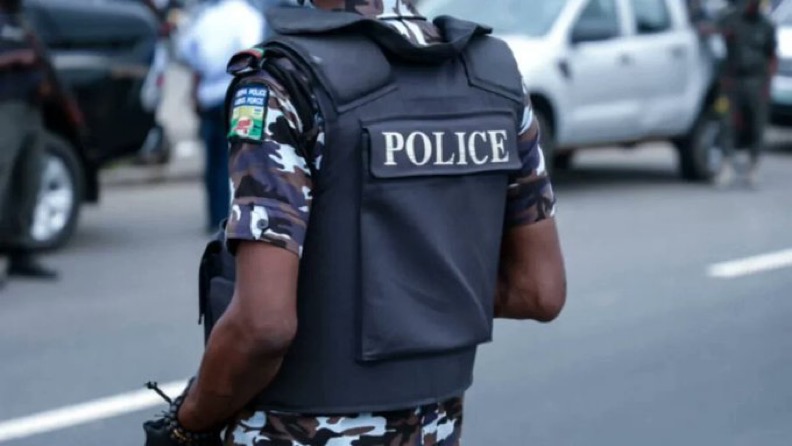
OSUN — An unprecedented security blanket comprising more than 40,000 personnel has descended upon Osun State as voters head to the polls today to elect a governor for the next four-year term. The massive force includes a minimum of 15,000 police officers under the direct supervision of a Deputy Inspector-General of Police and 30 Commissioners of Police, alongside 10,000 operatives from the Nigeria Security and Civil Defence Corps (NSCDC). They are joined by an undisclosed contingent of military units, Department of State Services (DSS) operatives, and specialized intelligence officers stationed across strategic locations in the state capital, Osogbo, and all thirty local government areas.
The security deployment follows weeks of escalating political tensions, sporadic clashes, and tragic pre-election violence across key electoral districts. Despite these disturbing incidents, civil society monitoring organizations and faith-based groups report a widespread determination among the electorate to exercise their constitutional rights. Friday sermons delivered across major Jumuat mosques throughout Osun State centered on civic duty, non-violence, and the imperative for peace, urging citizens to cast their ballots calmly and encouraging security agencies to act with absolute neutrality.
High Stakes and Heavy Security: The Electoral Landscape in Osun
The 2026 Osun State gubernatorial vote holds immense strategic importance within Nigeria's broader political arena. Functioning as the final off-cycle governorship election prior to the 2027 general elections, the contest serves as an early barometer of voter sentiment, institutional efficiency, and regional party dominance across the South-West geopolitical zone.
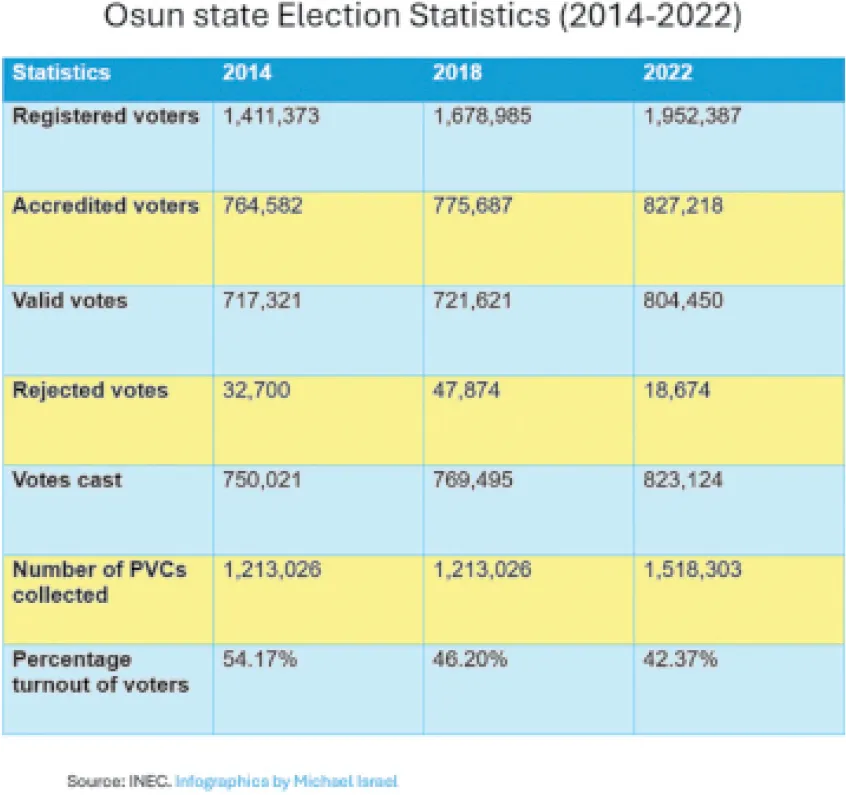
Official verification figures released by the Independent National Electoral Commission (INEC) confirm that 1,906,390 citizens out of a total 2,339,233 registered voters—representing 81.5 percent—have collected their Permanent Voter Cards (PVCs). In accordance with standard administrative safeguards, the remaining 432,843 uncollected cards have been securely archived in the Osogbo branch vault of the Central Bank of Nigeria (CBN). Voting operations span 3,763 polling units across the state, backed by advanced technological infrastructure aimed at ensuring voter accreditation integrity.
Fifteen Candidates on the Ballot: The Main Contenders and Realignments
Although fifteen political parties are fielding candidates in today's ballot, the political momentum has largely consolidated around two primary platforms: the Accord Party and the All Progressives Congress (APC). The race presents a unique political alignment following major party reconfigurations over the past four years.
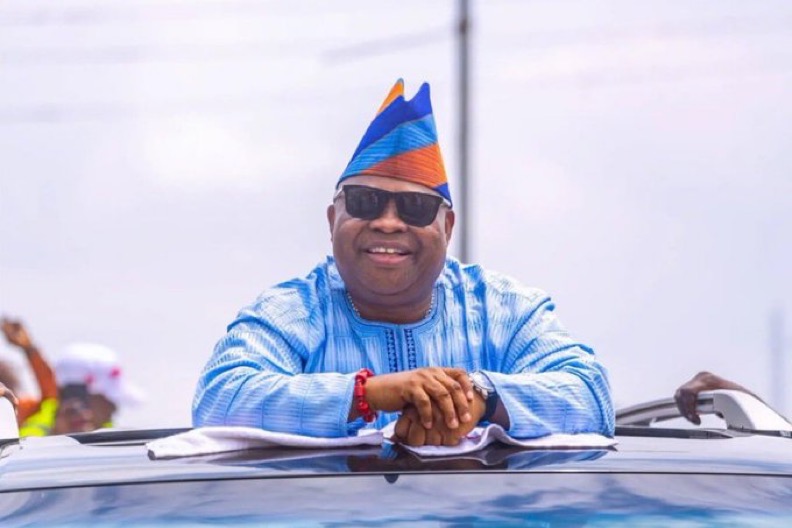
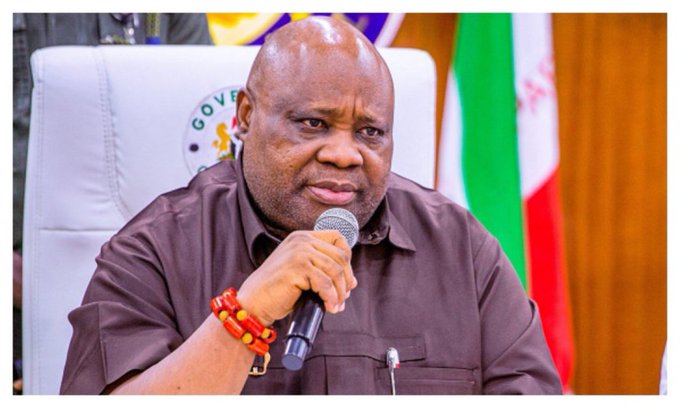
Incumbent Governor Ademola Adeleke, who won the 2022 election under the banner of the Peoples Democratic Party (PDP), is seeking re-election as the flagbearer of the Accord Party after a high-profile political defection. His chief challenger is the APC candidate, Bola Munirudeen Oyebamiji, a former commissioner for finance in Osun State who aims to return the APC to executive power after the party’s defeat in 2022.
The election also features thirteen other candidates representing diverse political platforms. Dr. Francis Olugbenga Ajala of the Social Democratic Party (SDP) and his running mate, Faseke Babajimi Oladipo, were added to the official ballot papers following a Federal High Court judgment delivered on July 22, 2026. To comply with the court order, INEC reproduced all ballot papers and official result sheets to ensure full inclusion of all fifteen contesting parties.
Other contestants on the ballot include Najeem Salam of the African Democratic Congress (ADC), Olanrewaju Farinloye of the Action Alliance (AA), Esan Olajide of the African Action Congress (AAC), Adeagbo Opawoye of the Action Democratic Party (ADP), Adeyemi-Doro Adesina of the All Progressives Grand Alliance (APGA), Adewale Adebayo of the Allied Peoples Movement (APM), Clement Adesuyi of the Action Peoples Party (APP), Adeleke Masilo of the Boot Party (BP), Taofeek Adeleke of the New Nigeria Peoples Party (NNPP), Saliu Oyelami of the Peoples Redemption Party (PRP), Ogunsakin Olalekan of the Young Progressive Party (YPP), and Adefemi Adesuyi of the Zenith Labour Party (ZLP).
Pre-Election Controversies: Accusations of Thuggery, Arms Possession, and Violence
The run-up to today's vote has been marred by bitter allegations exchanged between the major campaign councils. The media committee of the APC Governorship Election Campaign Council publicly accused the state government of sheltering non-resident political thugs within the Government House premises in Osogbo to evade security arrests. The APC called on the Inspector-General of Police and the Director-General of the DSS to intervene immediately to neutralize perceived threats to the electoral process.
Conversely, the Osun State Commissioner for Information, Oluomo Kolapo Alimi, counter-accused APC operatives of illegal arms possession and alleged that several suspects previously arrested by law enforcement were improperly released without full investigation. Tensions escalated further when the Speaker of the Osun State House of Assembly, Adewale Egbedun, stated that men carrying firearms attempted to ambush him. Egbedun reported personally handing the suspects over to security authorities, expressing dismay over their subsequent release and calling on international rights organizations and democratic missions to monitor developments closely.
In response to the reported pre-election casualties—which included the killing of a nephew to the APC Campaign Council's director-general—Governor Adeleke announced plans to establish an independent judicial commission of inquiry immediately following the election. The proposed panel will investigate all political killings, bring responsible parties to justice regardless of political affiliation, and establish a state framework to compensate surviving family members.
Presidential Mandate and Technological Safeguards: The Role of INEC and BVAS
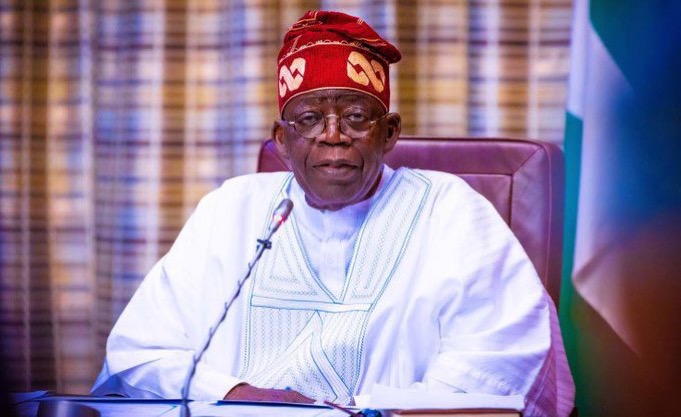
Addressing the nation ahead of the polls, President Bola Ahmed Tinubu urged the electoral commission and security agencies to demonstrate absolute neutrality and professional excellence. Speaking through his Special Adviser on Information and Strategy, Bayo Onanuga, the President emphasized that the Osun governorship election serves as a critical test case for assessing INEC's operational readiness ahead of the 2027 general elections. President Tinubu called on voters to come out confidently, assuring them that law enforcement agencies had been instructed to provide maximum security across all polling centers.
To ensure transparency during voter accreditation and result transmission, INEC has deployed 5,130 Bimodal Voter Accreditation System (BVAS) machines across the 3,763 polling units, retaining 1,328 additional devices as immediate technical backups. The Bimodal Voter Accreditation System (BVAS) is an electronic device designed to verify voter identity using biometric features—specifically fingerprints and facial recognition—before matching the record against the central voter database.
Once voting concludes at the polling unit level, the device digitally captures the signed physical result sheet (Form EC8A) and uploads the image directly to the INEC Result Viewing Portal (IReV). This public-facing digital repository allows election observers, political agents, and voters to view polling unit results in real-time, significantly mitigating opportunities for manual result tampering during transit to collation centers.
Off-Cycle Elections and the Legal Mechanics of Result Transmissions
In Nigerian electoral law, an off-cycle election occurs outside the standard four-year national election calendar. These irregular schedules arise when judicial rulings alter the legal start date of an executive term—often due to protracted election petitions that invalidate previous returns and swear in new governors at later dates. Because off-cycle elections focus security assets, administrative logistics, and national media coverage on a single state, they operate under intense scrutiny compared to nationwide polling days.
Navigating the legal framework requires strict compliance with the Electoral Act, which mandates that every voter must undergo digital accreditation via BVAS prior to receiving a ballot. If a voter's biometrics cannot be authenticated by fingerprint or facial scan, the law strictly prohibits manual accreditation overrides, thereby preventing illegal ballot padding. Domestic monitoring groups including Yiaga Africa, Kimpact Development Initiative (KDI), and The Kukah Centre, alongside international delegations such as the European Union Election Observation team and the National Democratic Institute (NDI), are deployed statewide to audit compliance with these legal procedures.
National Repercussions for Security Integrity and Democratic Governance
The outcome of today's vote carries profound structural implications for Nigeria's political development, voter participation trends, and institutional accountability. A peaceful, transparent execution of the Osun governorship poll will restore public confidence in democratic institutions, demonstrating that security forces can maintain law and order without intimidating voters or exhibiting political bias.
Conversely, any major security failure, widespread violence, or technological breakdown would deepen cynicism among the electorate, potentially depressing voter turnout in future national elections. From an economic perspective, maintaining stability in Osun State safeguards local trade networks, protects agricultural supply routes across the South-West region, and reassures foreign diplomatic partners regarding the country's capacity to manage complex democratic transitions peacefully.
The Final Stretch: Electorate Ready as Voting Commences
As polling stations open across Osun State today, the focus shifts entirely to the voters, electoral officials, and security teams on the ground. Civil society leaders and community elders have reiterated calls for voters to remain peaceful, discharge their civic responsibilities orderly, and allow law enforcement officers to maintain public safety.
With comprehensive security deployments in place, international observers monitoring every phase, and digital transmission systems active, the people of Osun State hold the power to choose their executive leadership for the next four years. The nation watches closely, expecting an outcome that reflects the transparent and uncoerced will of the electorate.