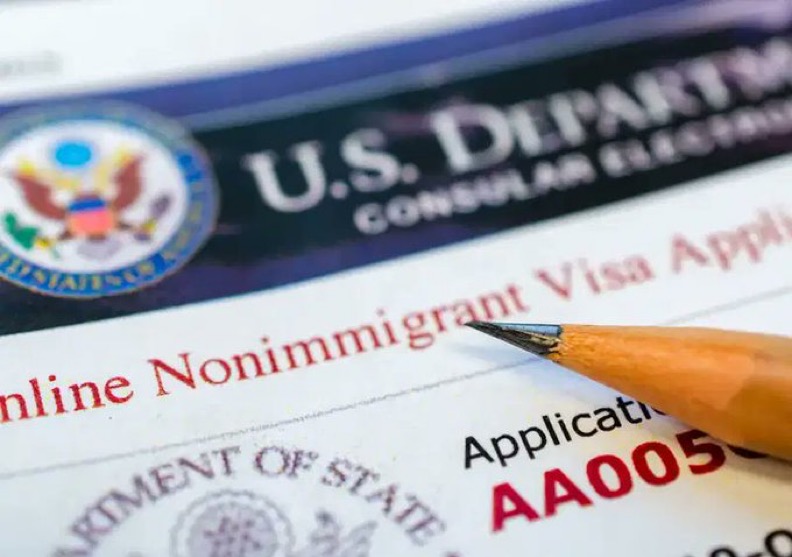
WASHINGTON, D.C. — The United States Department of Homeland Security (DHS) has unveiled a sweeping new regulatory rule that establishes strict, fixed time limits on visas for international students, exchange visitors, and foreign journalists.
According to an official government notice published on July 16, 2026, this policy represents a fundamental restructuring of the traditional non-immigrant framework. It targets holders of F academic visas, J cultural exchange visas, and I foreign media visas, introducing an aggressive layer of oversight to the American immigration system.
The newly introduced directive effectively dismantles a decades-old policy known as "Duration of Status" (D/S). Under the previous framework, international students and journalists were permitted to remain within the United States for an open-ended period, provided they maintained active enrollment in an accredited institution or remained continuously employed by their respective media organizations. The new policy replaces this flexibility with rigid, pre-determined expiration dates, forcing visa holders to navigate complex extension processes or risk deportation.
This regulatory overhaul marks the latest milestone in a broader immigration crackdown initiated since January 2025. The policy is expected to reshape international enrollment trends, increase administrative overhead for American universities, and create significant logistical challenges for foreign professionals working within the United States.
Deconstructing the New Limits: Four-Year Caps and Rolling Media Extensions
The operational details of the DHS directive indicate a coordinated effort to limit the physical stay of foreign nationals. Under the provisions of the new rule, international students and exchange visitors will generally face a strict four-year cap on their initial admission period. For undergraduate programs that traditionally span exactly four years, this leaves zero margin for academic delays, changes of major, or post-graduation transitions without immediate administrative intervention.
The restrictions are even tighter for international media professionals. Foreign journalists traveling on I visas will now be admitted for a maximum of 240 days at a time. This rolling eight-month limit will require foreign bureaus to constantly file for extensions to maintain continuous coverage of American current affairs.
Furthermore, the policy introduces explicit geopolitical differentiations, capping the admission period for Chinese journalists at just 90 days per entry. This particular clause is expected to heighten diplomatic tensions and complicate foreign press operations within Washington and New York.
[ New DHS Non-Immigrant Visa Caps ]
─────────────────────────────────────────────────────────
Visa Type    Target Group            Maximum Initial Term
─────────────────────────────────────────────────────────
F-1 / J-1    Students & Exchange     4 Years (General Cap)
I-1          Foreign Journalists     240 Days (Standard)
I-1 (China)  Chinese Media           90 Days (Restricted)
─────────────────────────────────────────────────────────
For any individual wishing to extend their stay beyond these newly established thresholds, the rule outlines a strict compliance pathway. Visa holders must either successfully apply for a formal extension of stay with U.S. Citizenship and Immigration Services (USCIS)—a process often plagued by significant backlogs and processing fees—or exit the United States entirely to reapply for admission from a consular post abroad.
The regulation is slated to take effect exactly 60 days after its formal publication in the Federal Register, pending standard congressional review. This timeline means the operational realities of the rule could immediately complicate admissions and orientation protocols for college programs scheduled to begin in August and September of the current academic year.
National Security vs. Academic Freedom: The Core Policy Debate
The Department of Homeland Security has defended the regulatory shift by framing it as a necessary correction to long-standing systemic vulnerabilities. The administration argues that the legacy "Duration of Status" framework left the United States open to national security risks, created tracking inefficiencies, and placed an unfair financial burden on domestic taxpayers.
In an official news release, the department highlighted instances where individuals allegedly utilized the flexibility of student status to remain in the country for decades without transitioning to permanent legal status or returning home. According to DHS data, an internal audit identified more than 2,100 individuals who originally entered the United States on student visas between 2000 and 2010 who still maintained active student status as of April 2026. These individuals managed to prolong their stay by repeatedly enrolling in new programs, transferring between language schools, or continuously extending their academic program dates.
Beyond setting hard deadlines, the new rule introduces strict barriers against international students attempting to transfer between schools or pivot to different academic tracks, with a particular focus on the graduate and doctoral levels. The administration maintains that these tightening measures are crucial for maintaining the integrity of the visa system, especially given the rising volume of international arrivals.
DHS records show that the United States recorded more than 1.8 million student visa admissions in the 2024 fiscal year, representing an 11 percent increase over the previous year. Additionally, the country welcomed over 500,000 exchange visitors and approximately 37,300 foreign journalists during the same period, creating an oversight volume that the department claims has stretched its monitoring capabilities to its limits.
Global Repercussions for Higher Education and Media Freedom
The introduction of fixed visa terms has sent shockwaves through the American higher education sector and international advocacy circles. University administrators, immigration attorneys, and civil society organizations have expressed deep concern over the long-term viability of the United States as a premier destination for global talent.
Higher education associations warn that these rigid time limits fail to align with the realities of advanced academic research. For instance, the pursuit of a Ph.D. or a specialized medical residency routinely extends beyond a four-year window. By forcing doctoral candidates and research fellows to apply for periodic visa extensions, the rule introduces an element of career instability that could drive top-tier international researchers to choose institutions in Canada, the United Kingdom, or Australia instead.
The policy also introduces significant financial and administrative burdens. International students already contribute billions of dollars annually to the American economy through tuition and living expenses. Forcing nearly two million visa holders to routinely pay for filing extensions will extract more capital from international scholars while adding pressure to an already overburdened USCIS adjudication system.
From a media perspective, press freedom advocates argue that limiting journalist visas to 240 days undermines the depth of international reporting. Foreign correspondents often require years of residency to understand the nuances of American politics and culture. Forcing journalists into a cycle of short-term visas and frequent renewals could disrupt long-term investigative projects and limit the ability of global audiences to receive comprehensive reporting on United States policy.
The Broader Context of Visa Revocations and Political Activism
This latest DHS regulation builds upon a series of aggressive immigration policies executed over the past year. In June, the Department of State confirmed that it had revoked more than 100,000 visas since the beginning of 2025, a figure that included at least 8,000 international students.
A notable portion of those student visa revocations was tied directly to political activism and campus protests. The administration's willingness to cancel travel documentation over ideological demonstrations highlights a lower threshold for visa termination, signaling that international scholars are operating under unprecedented scrutiny.
As universities prepare for the upcoming fall semester, legal departments are scrambling to issue updated guidance to international students. The consensus among immigration experts is clear: the era of flexible, open-ended residency for study and media assignments in the United States has come to an end. Whether this shift succeeds in enhancing national security or merely diminishes America's soft power and cultural influence remains a pivotal question for policy analysts worldwide.