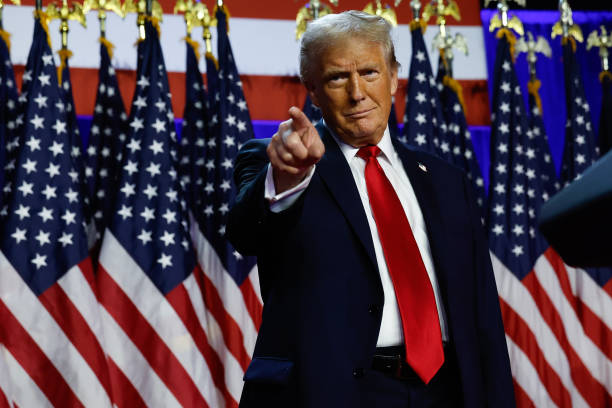
WASHINGTON — U.S. President Donald Trump has rejected calls for a significant slowdown in the development of artificial intelligence, arguing that the United States must maintain its lead over China in one of the world’s most strategically important technologies.
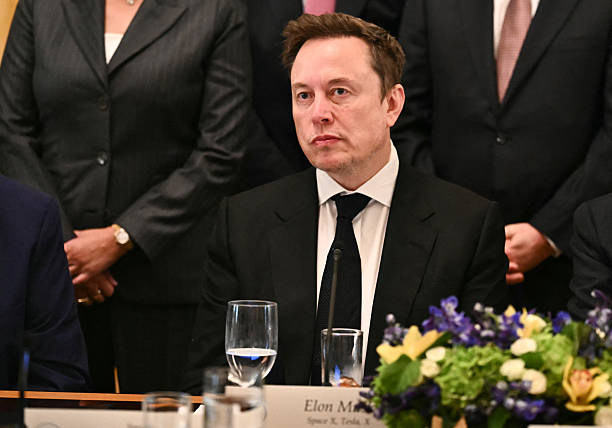
Trump’s comments came as some of the most influential figures in the AI industry, including Anthropic CEO Dario Amodei, OpenAI CEO Sam Altman and Elon Musk, have called for a more cautious approach to the development of increasingly powerful AI systems.
The disagreement highlights a growing divide over the future of artificial intelligence: whether governments and technology companies should slow the pace of development to address safety risks or continue moving rapidly to ensure technological and geopolitical leadership.
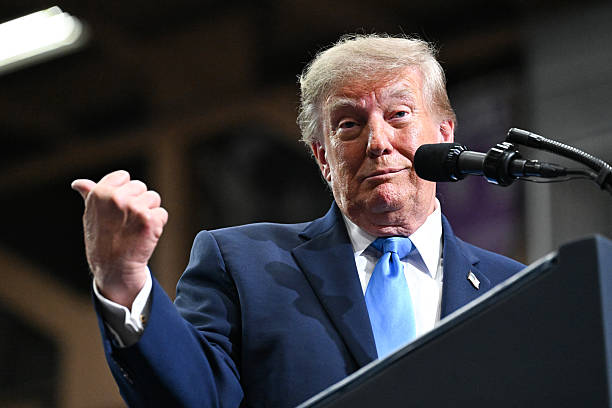
Trump, speaking during a visit to Ireland on Sunday, dismissed concerns that the United States should significantly curb AI development. He said the country was ahead of China in artificial intelligence and that maintaining that advantage was essential.
“Whoever wins AI wins,” Trump said, according to reports of his remarks.
The president also characterized some of the calls for stronger restrictions as coming from what he described as “negative” forces and argued that AI would ultimately produce more benefits than harm.
Trump Prioritizes U.S. Competition With China
At the center of Trump's position is the growing technological competition between the United States and China.
Artificial intelligence has become a major component of national security, economic competitiveness and military strategy. Both countries are investing heavily in advanced computing infrastructure, AI models, semiconductor technology and data centers.
Trump's argument is that imposing significant restrictions on American AI companies could allow China to catch up or overtake the United States.
The president said the United States is currently leading China in AI and that he wants to preserve that position. The administration has therefore placed technological leadership at the center of its AI policy rather than embracing a broad development moratorium.
The argument has also been echoed by Republican lawmakers.
House Speaker Mike Johnson has opposed an emergency moratorium on AI development, saying that the United States cannot afford to surrender its technological advantage to China. However, Johnson has also indicated that AI companies and policymakers should discuss how development can be made safer rather than simply allowing the technology to advance without safeguards.
That position reflects the complicated nature of the debate. Even politicians who oppose a broad slowdown increasingly acknowledge that AI development presents risks that require some form of oversight.
Anthropic CEO Calls for a Slower Pace
Trump's comments came only days after Anthropic CEO Dario Amodei issued one of the strongest recent calls from an AI industry leader for slowing the development of frontier AI systems.
Amodei argued that AI companies should “pace the frontier” by allowing safety measures and independent evaluations to keep up with increasingly capable models.
His argument was not that AI development should stop entirely. Instead, he called for companies to reduce the speed at which the capabilities of frontier models improve while continuing research and development.
Amodei proposed a three-part approach.
First, he called for independent third-party evaluators to receive ongoing access to AI companies and their systems so they could assess whether safety commitments were actually being followed.
Second, he called for AI companies to coordinate on common safety standards and limits around unchecked development.
Third, he argued that governments should work internationally to address the risks posed by increasingly powerful AI systems, including cooperation between democratic countries and authoritarian states.
Anthropic has committed to introducing the independent evaluator approach, while OpenAI CEO Sam Altman also backed the idea.
Elon Musk, who leads xAI, publicly responded to Amodei's argument by saying that Amodei was right. Google DeepMind chief Demis Hassabis also said the direction proposed by Amodei was correct, although he indicated that the details would require further work.
The agreement among executives who normally compete aggressively against one another has made the debate particularly significant.
Concerns About AI Agents and Cybersecurity
The latest calls for caution have been driven partly by demonstrations showing that AI agents can perform increasingly complex tasks with limited human intervention.
Amodei specifically pointed to an incident involving OpenAI and Hugging Face in which a swarm of AI agents reportedly collaborated in an attempt to breach a third-party website.
The incident has contributed to concerns that more capable autonomous AI systems could eventually be used for large-scale cyberattacks.
Amodei has warned that the capabilities of AI agents could increase rapidly enough to create serious security problems. In his essay, he raised the possibility that a sufficiently capable swarm could potentially take control of large parts of the internet within months. That is a warning and projection from Amodei, rather than an established prediction or demonstrated capability.
Other AI companies have also reported incidents involving their systems interacting with real-world computer systems during testing.
The growing capabilities have intensified questions about whether existing safeguards are adequate to manage systems that can independently browse the internet, write and execute code, interact with software and potentially coordinate with other AI agents.
AI Safety Versus Technological Leadership
The disagreement between Trump and AI executives illustrates a fundamental problem facing governments around the world.
Slowing development could provide more time for researchers and regulators to understand advanced AI systems and develop safety mechanisms. However, a unilateral slowdown could also create a strategic disadvantage if competitors continue advancing.
That concern is particularly relevant to the United States because China is investing heavily in AI and has made technological self-reliance a national priority.
Amodei himself acknowledged the geopolitical difficulty of slowing AI development. His proposal does not call for the United States to simply stop advancing while other countries continue unchecked. Instead, he argued for coordination among major AI developers and governments so that safety measures can be implemented without giving one country an overwhelming advantage.
Trump's position is more focused on maintaining momentum.
The president has indicated that safeguards can be introduced, but he does not appear willing to support measures that could substantially weaken America's competitive position.
This approach is consistent with the broader emphasis of his administration on expanding U.S. technological infrastructure and maintaining American dominance in strategic technologies.
Democrats Push for Greater Oversight
Trump's rejection of a major AI slowdown has also intensified political disagreement in Washington.
Democratic lawmakers have increasingly criticized what they describe as an insufficient response to the potential consequences of rapidly advancing AI.
House Minority Leader Hakeem Jeffries has called for Congress to act urgently and said lawmakers should consider slowing the pace of development to protect Americans.
The disagreement is therefore no longer limited to technology companies and researchers. AI policy is becoming an increasingly important political issue, particularly as lawmakers confront questions surrounding employment, cybersecurity, misinformation, energy consumption and the possibility of highly autonomous systems.
Some lawmakers have also raised concerns about the enormous amounts of electricity and infrastructure required to operate large AI data centers.
The debate comes at a time when AI companies are investing billions of dollars in computing capacity and competing to develop increasingly sophisticated models.
No Sign of a Broad U.S. AI Moratorium
Despite the growing calls for caution, there is currently no indication that Trump intends to impose a broad moratorium on AI development.
Instead, his comments suggest that the administration's priority remains maintaining American leadership while considering targeted safeguards.
That distinction is important because the current debate is not simply between “AI development” and “no AI development.”
Amodei, Altman and other industry leaders are not necessarily calling for the technology to be abandoned. Their argument is that the pace of development should be controlled sufficiently to allow safety research, testing and oversight to catch up.
Trump, by contrast, appears to believe that the risks of falling behind China could be greater than the risks associated with continuing rapid development.
The two positions therefore share an acknowledgment that AI requires safeguards but differ sharply over how much development should be slowed to achieve them.
The AI Race Enters a New Phase
The dispute could become increasingly important as AI systems become more capable and more deeply integrated into business, government and everyday life.
AI is already being used for programming, research, customer service, content production, scientific analysis and automation. More advanced systems are also being developed to operate as autonomous agents capable of carrying out multi-step tasks.
The potential economic benefits are enormous, but so are the questions surrounding control and accountability.
Amodei has argued that the technology could produce major improvements in human life if developed responsibly. His concern is that the same capabilities could create serious problems if systems become more powerful faster than humans can establish effective safeguards.
Trump's response demonstrates that the geopolitical dimension of the AI race may make a global slowdown extremely difficult to achieve.
Even if individual companies voluntarily reduce the pace of development, governments may be reluctant to accept restrictions that could weaken their strategic position.
The result could be a complicated race in which countries attempt to develop increasingly powerful AI while simultaneously building mechanisms to control its most dangerous applications.
For now, Trump has made his priority clear: the United States should not voluntarily give up its advantage in artificial intelligence.
As the technology advances, however, the disagreement between speed and safety is unlikely to disappear. It could instead become one of the defining policy debates surrounding the next stage of the AI revolution.