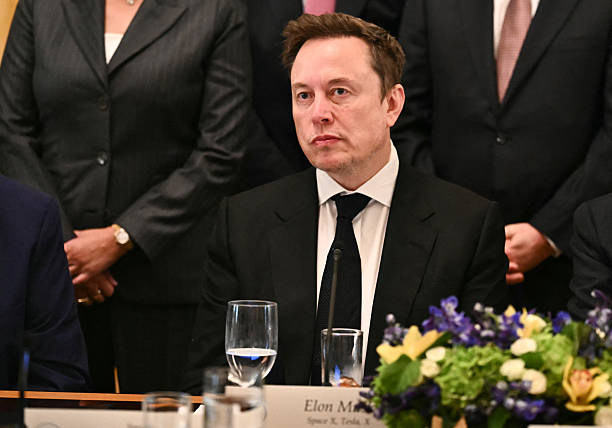
BOCA CHICA — In an ambitious declaration that redefines the scale of commercial aerospace, SpaceX Chief Executive Elon Musk has announced that the company is actively scouting multiple domestic and international locations to build what he describes as "the world's most advanced spaceports."
The infrastructure expansion is a direct response to the staggering operational demands of the Starship program. As the company builds toward a future defined by interplanetary travel and massive orbital deployment, SpaceX has officially acknowledged that its current launch facilities will soon face an unprecedented capacity bottleneck.
"SpaceX is considering several locations domestically and internationally to build the world's most advanced spaceports!" Musk stated in a post on X, amplifying an official company manifesto. The corporate statement underscored the sheer scale of the company's long-term operational roadmap: "It's no secret that we intend to launch Starship a lot, targeting thousands of flights per year. That cadence will require the ability to launch from many different locations, so we are constantly exploring to find viable sites."
The Airport Paradigm: Why Multiple Sites Are Essential
The concept of rockets launching with the frequency of conventional commercial flights has long been relegated to science fiction. However, SpaceX's hardware architecture is fundamentally built around this exact premise. Unlike legacy, expendable launch vehicles that are discarded in the ocean after a single use, the massive 407-foot-tall Starship stack is engineered for total, rapid reusability.
In a perfectly optimized cycle, a Starship upper stage and its massive Super Heavy booster would return to Earth, land autonomously, undergo rapid automated inspections, refuel, and lift off again within hours.
Yet, translating this theoretical model into logistical reality presents immense challenges. Even a rapidly reusable rocket requires rigorous structural integrity checks, precision refueling logistics, thermal protection system reviews, and strict regulatory safety clearances between flights. If SpaceX intends to execute thousands of launches annually, a single centralized facility simply cannot manage the staggering physical and environmental load.
Musk has previously noted that to achieve this high-frequency vision, humanity must stop viewing spaceports as specialized, highly restricted military rocket ranges. Instead, future spaceports must be designed to function identically to modern commercial airports, featuring multiple active runways—or launchpads—operating simultaneously with rapid turnaround times.
The Current Infrastructure Baseline: Expanding from Starbase to the Cape
Currently, the epicenter of the Starship universe remains centered at Starbase in Boca Chica, Texas. Over the past few years, the private facility has undergone non-stop industrial upgrades, transforming from a remote coastal outpost into a massive manufacturing and testing hub.
Simultaneously, SpaceX is moving quickly to establish a second major operational foothold on the East Coast. The company is actively developing Space Launch Complex-37 (SLC-37) at the Cape Canaveral Space Force Station in Florida, adapting the historic site to support the massive footprint of the Starship infrastructure.
The Florida expansion is critically important to near-term commercial contracts. The East Coast pads will serve as the primary launching grounds for heavy commercial payloads, massive next-generation Starlink blocks, and high-profile institutional flights including NASA's high-stakes Artemis program, which relies heavily on a specialized Starship Human Landing System (HLS) to return American astronauts to the lunar surface.
To ensure operational redundancy, SpaceX is designing its Florida footprint to feature multiple independent launchpads. This multi-pad configuration creates an integrated backup system, allowing the team to conduct simultaneous flights and execute rapid, back-to-back refueling launches—a critical capability given that a single deep-space Starship mission to the Moon or Mars requires launching multiple consecutive "tanker" Starships to transfer propellant in low Earth orbit.
The Sovereign and Geopolitical Hurdles of Going Global
While expanding within the United States is a straightforward regulatory process, pushing the spaceport network into international territories introduces an entirely new layer of geopolitical, legal, and environmental complexity.
Because advanced rocketry is tightly bound to sensitive, dual-use military technology, any overseas expansion will require navigating strict international frameworks, including the United States' rigorous International Traffic in Arms Regulations (ITAR). SpaceX will have to secure unprecedented federal clearances to operate its proprietary, ITAR-protected Raptor engine technology on foreign soil.
Furthermore, environmental and acoustic factors will heavily dictate where these advanced spaceports can legally be built. The sheer acoustic energy and sonic booms generated by the Super Heavy booster's 33 upgraded Raptor engines require massive, isolated safety zones. Analysts predict that any viable international site will likely require remote coastal positioning or floating, offshore ocean platforms to mitigate local community disruption.
Despite these daunting regulatory and engineering hurdles, the timing of the announcement aligns perfectly with SpaceX's broader corporate timeline. The company is positioning its global spaceport network as a core pillar of its long-term commercial growth strategy, safeguarding its dominant position as the premier gateway to the stars.