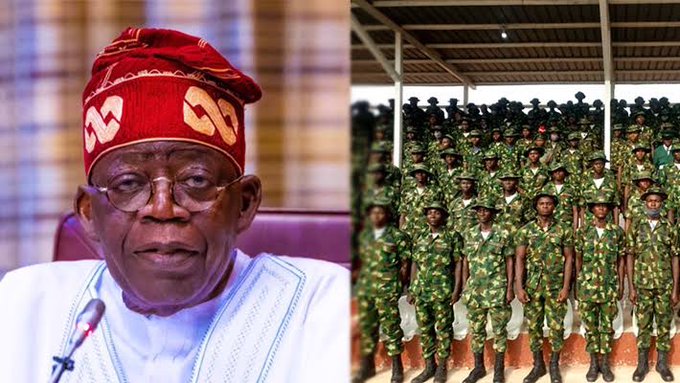
ABUJA — In a major geopolitical move designed to fortify the security boundaries of West Africa, the Federal Government of Nigeria has officially authorized the strategic deployment of combat troops to the neighboring Republic of Benin.
The military intervention serves as a coordinated, high-stakes operational campaign to suppress the rapid spread of violent extremism, cross-border terrorism, and sophisticated transnational syndicates currently threatening the structural stability of the sub-region.
The definitive announcement was delivered directly by the Chief of Army Staff (COAS), Lieutenant General Waidi Shaibu, during his formal opening address at the highly anticipated Chief of Army Staff Annual Conference 2026 in Abuja. Speaking before a high-level assembly of military commanders, defense attachés, and intelligence chiefs, the Army boss positioned the bilateral deployment as an absolute necessity for regional defense integration.
Securing the Borderlands: Eradicating Safe Havens for Terror Networks
The deployment of Nigerian soldiers into the territory of the Benin Republic represents an aggressive shift in Nigeria's foreign defense strategy, moving away from a purely reactive internal defense model toward an active, cooperative containment policy.
According to Lieutenant General Shaibu, the physical presence of Nigerian troops inside Benin is structured to reinforce the vulnerable regional security architecture, effectively closing logistical loopholes and ensuring that criminal elements are denied freedom of movement along the porous West African borders.
The operational architecture of this deployment relies heavily on advanced, real-time intelligence sharing, integrated strategic planning, and unified cross-border security mechanisms. By setting up joint tactical operational bases alongside Beninese defense forces, the Nigerian Army aims to intercept arms smuggling routes, dismantle criminal hideouts, and disrupt the supply chains of insurgent factions before they can penetrate deeper into domestic sovereign territories.
The Army chief strongly emphasized that modern sub-regional threats require an adaptive mindset, challenging commanders at all levels to abandon rigid operational silos and fully commit to multi-agency and multinational collaboration in the field.
Modern Firepower and Indigenous Upgrades Driving Operational Sustainability
Addressing the technical and logistics framework behind this international deployment, Lieutenant General Shaibu attributed the Army's high readiness levels to comprehensive structural interventions enacted by the political administration. He expressed deep gratitude to President Bola Ahmed Tinubu for his sustained backing, which has allowed the military to execute capital-intensive modernizations across its operational infrastructure.
The Army's ability to seamlessly project power across its borders has been heavily advanced by the aggressive induction of new, state-of-the-art combat platforms alongside a strict maintenance overhaul of existing equipment. Rather than relying entirely on expensive foreign defense procurement, the Nigerian Army has successfully leveraged local repair initiatives and indigenous engineering teams to refurbish aging armor assets and transport fleets.
The dual approach of buying new technology while maintaining older platforms has dramatically amplified the military's frontline mobility, heavy firepower capabilities, and tactical surveillance reach. These upgrades ensure that deployed forces possess the logistical endurance required to sustain prolonged, remote combat operations far from their primary supply lines.
Personnel Welfare and Civil-Military Synergy in Host Communities
Beyond purchasing weapons and executing tactical maneuvers, the Chief of Army Staff underlined that the long-term success of the Benin Republic operation depends fundamentally on the mental and physical well-being of the frontline soldiers. Over the past year, the military command has significantly expanded its internal welfare programs, rolling out widespread construction and renovation projects for barrack accommodations, upgrading regional military hospitals, and guaranteeing rapid emergency medical evacuations for wounded personnel.
Furthermore, specialized skill allowances have been adjusted upward to properly compensate troops operating in high-risk zones.
Simultaneously, General Shaibu revealed that the Nigerian Army is heavily embedding civil-military cooperation initiatives into its cross-border deployment strategy. Recognizing that local populations hold the key to winning asymmetric wars, troops entering the Benin Republic are mandated to prioritize human rights, support local humanitarian needs, and help resolve socio-economic challenges within their immediate host communities.
By building solid trust with the civilian population, the military hopes to establish a reliable local human intelligence network capable of exposing hidden insurgent operations, ultimately transforming the entire sub-regional deployment into a decisive triumph for African self-reliance.