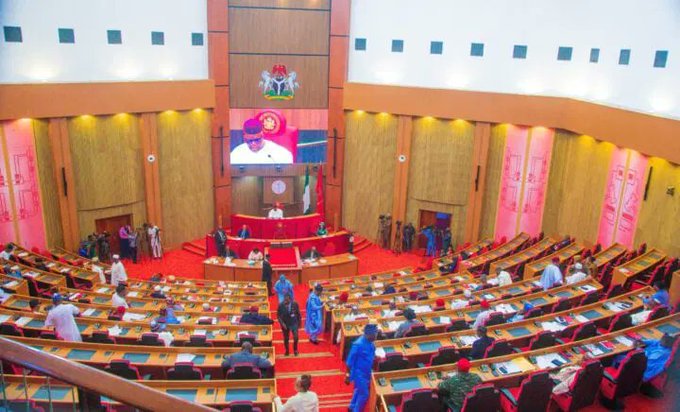
ABUJA — The Nigerian Senate has officially pledged to prioritize and commence urgent legislative deliberations on the establishment of state police this week. This move marks a pivotal step in the ongoing constitutional review process aimed at decentralizing Nigeria’s security architecture to combat rising national insecurity.
The Legislative Push
Senate Leader, Senator Opeyemi Bamidele, announced the development during a media briefing with Senate correspondents on Monday, June 8, 2026. He emphasized that the upper chamber is fully committed to aligning with the public's demand for state-level policing.
-
Fast-tracking the Bill: Following extensive stakeholder consultations, the Senate intends to expedite the legislative process. The goal is to finalize deliberations in the plenary this week, allowing the bill to proceed to the 36 State Houses of Assembly for concurrence before moving toward final presidential assent.
-
Constitutional Framework: The move follows months of coordinated discussions between the Presidency, the National Assembly, and security authorities. Chief of Staff to the President, Femi Gbajabiamila, confirmed recently that the constitutional framework for this decentralization is now nearing completion.
Addressing National Security Concerns
The drive for state police is a key component of President Bola Ahmed Tinubu's broader security strategy. The President has frequently urged the National Assembly to amend the constitution to move policing closer to the grassroots, arguing that local structures are better equipped to tackle threats like banditry and kidnapping.
However, the Senate Leader also addressed other pressing national issues during the briefing:
-
Military Probe: Senator Bamidele dismissed recent calls for a probe into the military as "unpatriotic," arguing that such initiatives during a period of intense security operations represent a misplacement of priorities.
-
Transparency in Remuneration: In response to public scrutiny regarding lawmakers' allowances and the purchase of official vehicles, the Senate Leader promised that the upper chamber will soon publish detailed disclosures. This will include the salaries and allowances of senators, ministers, and other public office holders to address transparency concerns.
-
Defense of Official Provisions: Defending the procurement of vehicles for lawmakers, Bamidele maintained that such assets are essential tools for facilitating constituency engagements and official oversight duties, noting that these provisions are standard practice for public office holders in Nigeria.
What Comes Next?
As the Senate enters this week’s plenary, the primary focus will be the mechanics of the constitutional amendment. While there is broad political alignment on the necessity of state police, the debate will likely turn toward establishing robust "guardrails" mechanisms to ensure state police forces are properly funded, ethically recruited, and shielded from political weaponization by state governors.