MAKKAH — As part of a grand initiative to modernize the pilgrimage experience, Saudi Arabia has unveiled a series of massive infrastructure and humanitarian projects for the 2026 Hajj season. From the distribution of sacrificial meat to 27 countries to the launch of futuristic urban corridors, the Kingdom is leveraging technology and heritage to serve millions of global visitors.
The Adahi Project: Feeding 27 Nations
At the heart of the Hajj’s humanitarian mission is the Adahi Project, a large-scale facility dedicated to the processing of sacrificial animals. Deputy Supervisor Siraj Muhammed revealed that the facility manages an incredible workload, handling approximately 300,000 animals daily during the peak of the pilgrimage, and nearly 900,000 over the three days of sacrifice.
Employing a workforce of 17,000, the project ensures that ritual meat is processed under strict hygienic standards and distributed to 27 Muslim countries worldwide. This effort underscores Saudi Arabia’s commitment to global humanitarian support, ensuring the blessings of Hajj reach the less privileged across international borders.
Masar Destination: A New Gateway to Makkah
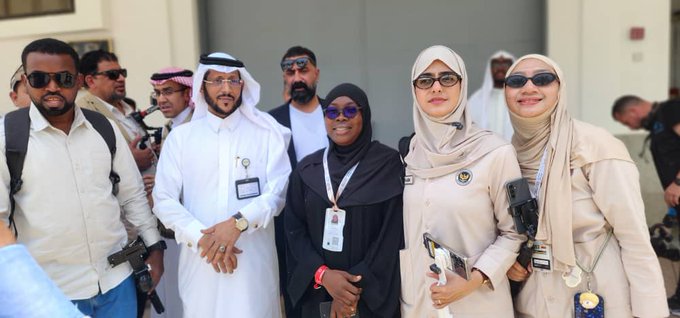
The media tour conducted by the Saudi General Authority for Media Regulation highlighted the "Masar Destination," a $26.6 billion urban development project. Spanning 3.5 kilometers near the Grand Mosque, this corridor serves as a new gateway to Makkah.
-
Capacity: The destination can accommodate roughly 160,000 people simultaneously.
-
Infrastructure: It features massive pedestrian boulevards, bus stations, and underground parking to eliminate the bottleneck of crowd movement between the Haramain train station and the Holy Mosque.
The Highest Museum in the World
Makkah is now home to a Guinness World Record-holding landmark: The Clock Tower Museum (Universe Sciences Centre). Located within the iconic Makkah Clock Tower, the museum sits at an elevation of over 426 meters. Occupying four specialized exhibition floors within the 120-story structure, it offers pilgrims an educational journey through:
-
The Origin of the Universe: Visualizing the Big Bang and cosmic evolution.
-
Space & Time: The movement of the sun and moon and their role in Islamic timekeeping.
-
The Giant Clock: An inside look at the engineering behind the world’s largest clock.
Preserving the Sacred Art of the Kiswah
The delegation also visited the Ka’aba Kiswah Factory, where Saudi artisans spend 10 months hand-crafting the black silk cloth used to cover the Holy Ka’aba. Officials noted a unique copyright tradition: the front design of the Kiswah remains attributed to a master craftsman named Abdulrahman, whose name is subtly inscribed on the fabric to honor the artistic heritage of the covering.
With over 860,000 foreign pilgrims already arrived in the Kingdom as of mid-May 2026, these initiatives—ranging from digital "Hajj Without Luggage" services to the expansion of pedestrian routes—aim to ensure a seamless and spiritually enriching journey for the faithful.