A Russian military satellite made an unusually close approach to a commercial Earth-observation spacecraft linked to Ukraine, raising fresh concerns about the vulnerability of privately operated satellites that provide intelligence and other services to governments.
The Russian satellite, Kosmos 2612, maneuvered toward ICEYE-X36, a synthetic-aperture radar satellite operated by ICEYE, a Finnish space company. Tracking data indicated that the two spacecraft came within a very short distance of one another during a series of maneuvers in mid-October.
Initial reports put the closest approach at less than one mile, while subsequent analysis of tracking data suggested the distance may have been substantially smaller — potentially around 500 metres, with another analysis estimating a separation of approximately 26 metres at one point. Because these distances are derived from commercial tracking data and the measurements carry uncertainty, the exact closest approach remains unclear.
The incident has attracted particular attention because ICEYE's radar imagery has been used to support Ukraine's military capabilities since Russia's full-scale invasion.
Although there is no public evidence that Russia attempted to damage or disable the spacecraft, experts say the maneuver demonstrates how a country could potentially approach a commercial satellite that supports another country's military operations.
Russian satellite shadowed ICEYE spacecraft
According to space-tracking company LeoLabs, Kosmos 2612 carried out what appeared to be deliberate rendezvous and proximity operations, commonly referred to as RPOs.
Such maneuvers involve one spacecraft changing its orbit and trajectory to approach another spacecraft.
They are not inherently hostile. RPOs can be used for legitimate purposes such as inspection, servicing, docking or debris removal.
What made the latest incident unusual was the identity of the spacecraft involved and the way Kosmos 2612 maneuvered around ICEYE-X36.
The Russian satellite reportedly spent months adjusting its orbit before rapidly closing the distance with the ICEYE satellite.
Between October 15 and 19, it moved into positions near the commercial spacecraft and at points appeared to match or shadow its movement. LeoLabs said the behavior was consistent with an intentional proximity operation.
After the close approach, Kosmos 2612 moved away from ICEYE-X36.
The purpose of the maneuver has not been publicly established.
LeoLabs said the intent remained uncertain but that the behavior warranted continued monitoring.
That uncertainty is one of the most important aspects of the incident.
A close approach does not by itself prove that a satellite was preparing to attack another spacecraft.
However, the ability to maneuver close to another satellite could potentially provide opportunities for observation, intelligence gathering, communications interference or, in more extreme circumstances, physical interference.
Why ICEYE-X36 matters
ICEYE-X36 is not simply an ordinary commercial imaging satellite.
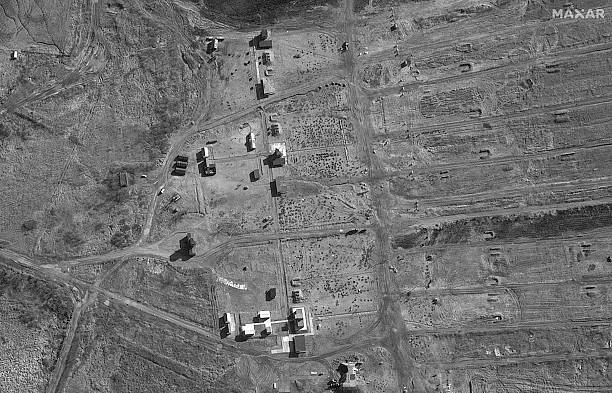
It is part of ICEYE's constellation of synthetic-aperture radar satellites, which can collect images of Earth's surface regardless of whether it is daytime or nighttime and with greater ability to operate through clouds than conventional optical imagery.
ICEYE has supplied radar imagery to Ukraine since 2022, making its satellite network an important component of Ukraine's access to commercial space-based intelligence.
A June analysis by the Royal United Services Institute said ICEYE data has contributed to Ukrainian military operations and cited Ukrainian Ministry of Defence information indicating that 38 per cent of ICEYE data contributed directly to strikes.
Ukraine's military cooperation with commercial satellite providers illustrates a broader transformation in modern warfare.
Governments no longer depend exclusively on satellites owned and operated by their own militaries.
Private companies can provide imagery, communications, navigation and other capabilities that can be purchased by governments and armed forces.
That creates additional capabilities for countries such as Ukraine, but it also creates new questions about whether commercial satellites can become targets during wartime.
The satellite is commercially owned but US-registered
Another important detail is the ownership structure of ICEYE-X36.
The spacecraft is associated with the Finnish company ICEYE, but ICEYE-X36 is reportedly owned by the company's US subsidiary and registered as a US satellite.
That makes the incident more complicated from a geopolitical perspective.
Russia would not simply be approaching a Finnish commercial spacecraft in isolation. The satellite is part of a commercial system with connections to the United States and is supporting a country at war with Russia.
Experts have therefore raised questions about whether Russia's maneuver could represent an attempt to test how Western governments would respond to pressure against commercial space infrastructure.
The implications extend beyond ICEYE.
If commercial satellites supporting Ukraine can be approached, monitored or potentially interfered with, other commercial spacecraft providing services to governments could face similar risks.
The approach was extraordinarily close
The distances reported in connection with the encounter are striking because spacecraft in low Earth orbit travel at extremely high speeds.
Axios reported that Kosmos 2612 was approximately three miles from ICEYE-X36 on October 17 after the two satellites had been more than 200 miles apart only a day earlier. Analysts described the maneuver as highly unusual.
LeoLabs subsequently reported an approach to roughly 500 metres.
Other analysis suggested an even closer encounter. The War Zone reported an estimated separation of approximately 26 metres, or about 85 feet, based on orbital tracking data.
The different estimates underline the difficulty of determining precise distances between spacecraft using publicly available tracking information.
Regardless of which estimate is ultimately most accurate, the spacecraft came close enough for analysts to describe the maneuver as highly unusual.
A space law professor cited by Axios noted that there is no universal rule establishing a specific minimum distance between satellites, but operators generally avoid getting extremely close because even small orbital changes can increase the possibility of collision.
What could Russia have been trying to accomplish?
There are several possible explanations, and analysts have cautioned against automatically interpreting the maneuver as preparation for an attack.
One possibility is intelligence gathering.
A satellite operating close to another spacecraft could potentially observe its physical configuration and collect information about its operations.
Another possibility is communications intelligence or interference.
A spacecraft positioned close to another satellite could theoretically attempt to intercept or interfere with signals, although there is no public evidence that Kosmos 2612 did so during this incident.
A third possibility is intimidation.
By demonstrating that it can maneuver close to a commercial satellite supporting Ukraine, Russia could send a message to satellite operators and governments that commercial space infrastructure is not necessarily beyond the reach of military spacecraft.
A RUSI analysis identified intimidation, non-kinetic interference and physical interference as possible motives while stressing that the actual intention remained uncertain.
A physical attack would represent a major escalation
Experts have also discussed the possibility of a destructive attack, although there is currently no evidence that Russia attempted one.
Russia has previously demonstrated anti-satellite capabilities, including destructive testing against its own satellite.
But physically attacking a commercial spacecraft connected to Western governments would be a significantly different step.
RUSI noted that physically damaging or interfering with ICEYE-X36 would cross a threshold that would have major implications for international space security.
The consequences could also extend beyond the immediate target.
Destroying a satellite creates debris that can remain in orbit and threaten other spacecraft.
That means a kinetic attack could potentially endanger unrelated commercial, military and scientific satellites.
For that reason, space powers have generally been cautious about conducting destructive activities in orbit even while developing technologies capable of threatening satellites.
Russia has previously monitored Western satellites
The Kosmos 2612 incident is not completely without precedent.
Russia has previously conducted close approaches involving Western military and intelligence satellites.
In 2020, two Russian satellites maneuvered near a US reconnaissance satellite.
In 2025, German officials said Russian Luch-Olymp satellites had been tracking Intelsat satellites that were used by the German military.
What makes the latest incident particularly notable is the apparent targeting of a commercial satellite rather than a clearly identified military spacecraft.
That distinction could become increasingly important as military forces around the world rely more heavily on commercial space providers.
Commercial space is becoming part of military infrastructure
The Ukraine war has demonstrated how quickly commercial space technology can become integrated into military operations.
Satellite communications have become critical to Ukrainian forces, while commercial radar and optical imagery have provided information about troop movements, equipment and battlefield conditions.
Companies can now provide capabilities that once required governments to spend billions of dollars developing their own satellite constellations.
This model has advantages.
Commercial companies can launch satellites relatively quickly, replace damaged spacecraft and expand constellations as demand grows.
But it also introduces vulnerabilities.
A commercial company may not have the same defensive capabilities as a military space agency.
And if its services are being used by a military, an adversary may view the company's infrastructure as part of the broader conflict environment.
Russia has previously warned that commercial satellites assisting Ukraine could be considered legitimate targets under certain circumstances.
A warning for the West
Some analysts believe the incident may have been intended partly to demonstrate that commercial satellites supporting Ukraine can be approached.
Juliana Suess of RUSI argued that Russia could be testing the boundaries of how Western countries respond when commercial space infrastructure becomes involved in a conflict.
The calculation could be particularly complicated when the satellite is commercially owned rather than directly operated by a government.
An attack on a sovereign military satellite would carry an obvious geopolitical message.
An attack on a commercial satellite could create uncertainty over whether the affected government would treat it as an attack on national infrastructure.
ICEYE-X36's US registration makes that distinction even more complicated.
No evidence of an attack so far
Despite the alarm generated by the maneuver, there is currently no publicly established evidence that Kosmos 2612 attacked, damaged or disabled ICEYE-X36.
The Russian satellite eventually moved away.
The significance of the episode therefore lies primarily in what the maneuver demonstrates about the changing security environment in orbit.
Satellites once operated largely as distant and relatively protected pieces of national infrastructure.
Today, commercial spacecraft are increasingly integrated into military operations, making them potentially attractive targets during conflicts.
The incident involving Kosmos 2612 and ICEYE-X36 shows how quickly the boundary between commercial and military space infrastructure is disappearing.
For Ukraine and its Western partners, that creates a difficult security problem: commercial satellites provide valuable intelligence and communications, but the more important those systems become to military operations, the more likely adversaries may be to monitor, interfere with or threaten them.
For now, the exact purpose of Kosmos 2612's close approach remains unknown.
What is clear is that the Russian spacecraft carried out a highly unusual maneuver around a commercial satellite connected to a network that supports Ukraine. The encounter has added to growing concerns among Western space-security experts that the next major confrontation between states may not be confined to Earth — and that privately operated