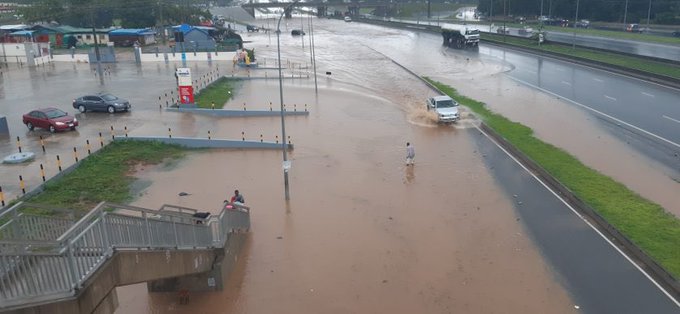
ABUJA — Residents of the Federal Capital Territory (FCT) are demanding accountability as recurring flooding continues to devastate communities despite significant government funding. Between June 2023 and December 2025, the FCT received over ₦1.24 billion from the Ecological Fund, yet major flood-prone areas like Trademore Estate, Lugbe, and Lokogoma remain severely vulnerable to seasonal rainfall.
A Growing Crisis in the Capital
While the FCT did not suffer a disaster on the scale of the 2023 Trademore Estate flooding in the following years, seasonal flash floods continue to disrupt daily life. Minor but frequent flooding is now common in areas such as Jabi, Utako, and Wuse. Residents report that these incidents are not only frightening but also place a heavy financial burden on them due to vehicle damage and destroyed property.
Why Does Abuja Still Flood?
Engineering experts point to a combination of factors that render the current drainage infrastructure insufficient:
Clogged Drainages: Many existing drainage channels are blocked by refuse and debris, preventing water from flowing freely.
Rapid Urbanization: Abuja’s population growth has moved much faster than the city’s drainage capacity, straining infrastructure designed for a much smaller population.
Master Plan Violations: The construction of illegal structures directly on natural waterways and drainage routes has significantly increased flood risks.
Poor Maintenance: Experts argue that regular desilting and upgrading of aging infrastructure are missing from the current management strategy.
The National Picture and Federal Response
Abuja’s struggle is part of a wider national crisis. In 2024 alone, flooding affected over 5.2 million people across Nigeria. In response, the Federal Government has stated it is shifting its strategy from "reactive disaster response" to "proactive flood management."
During the unveiling of the 2026 Annual Flood Outlook, officials announced the establishment of an Anticipatory Action Framework and improved forecasting systems. Currently, the Nigeria Hydrological Services Agency (NIHSA) has identified over 14,000 communities nationwide, including several in the FCT, as high-risk flood zones for the 2026 season.
The Call for Accountability
The central issue for Abuja residents remains the transparency of the ₦1.24 billion ecological allocation. With the 2026 rainy season underway, there is a loud demand for visible, concrete action such as the urgent clearing of blocked drains and the enforcement of building codes rather than further policy assurances. For those living in flood-prone corridors, the ability to navigate the rainy season safely has become a matter of immediate survival.