A powerful magnitude 7.7 earthquake struck Panama on October 9, 2026, shaking buildings in the capital, Panama City, prompting widespread evacuations and damaging buildings, roads and other infrastructure across the Central American country.
A second earthquake measuring magnitude 6.6 struck later the same day, followed by numerous aftershocks. Authorities reported damage across several provinces, while residents rushed out of homes, offices, hospitals and other buildings as tremors shook the country.
The government declared a state of emergency on Saturday, October 10, as emergency teams assessed the damage and communities continued to experience aftershocks.
Two Powerful Earthquakes Strike Within Hours
According to the United States Geological Survey, the first earthquake measured magnitude 7.7 and was centred approximately 10 kilometres southwest of Pitaloza Arriba, a remote community in Panama's central Herrera province.
The earthquake struck at a relatively shallow depth of about 10 kilometres, increasing the potential for strong shaking near the epicentre.
A second major earthquake, measuring magnitude 6.6, struck approximately two and a half hours later along the Pacific coast.
Seismologists subsequently recorded more than 100 aftershocks, including several measuring above magnitude 5. The continuing tremors complicated rescue operations and heightened concerns about buildings already weakened by the initial earthquakes.
The shaking was felt across Panama, including in the capital, where residents evacuated high-rise buildings and gathered in open spaces.
Buildings Damaged as Residents Flee
The strongest damage was reported in central provinces, including Herrera, Veraguas, Coclé and Los Santos.
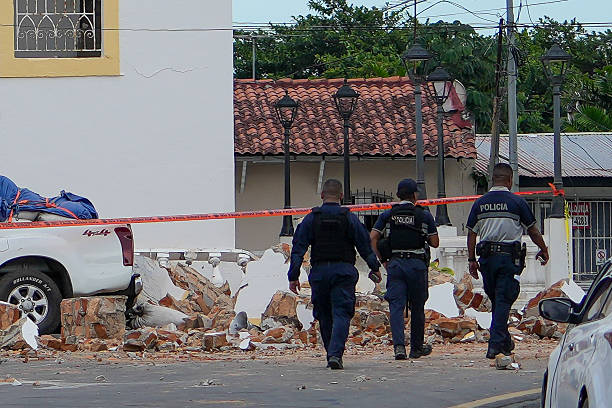
Authorities reported damage to homes, schools, healthcare facilities, hotels, churches, roads and bridges. Some buildings partially collapsed, while cracks appeared in structures and road surfaces.
One of the most significant losses involved the historic Church of San Atanasio in La Villa de Los Santos. The building, recognised as a national historic heritage site in 1938, collapsed during the disaster.
In Penonomé, officials reported damage to public buildings and a hotel, while a person was injured after being struck by debris from a partially collapsed structure.
By Saturday, authorities had reported 27 injuries and no confirmed earthquake-related deaths. Officials cautioned that assessments were continuing, particularly in communities affected by damaged roads and difficult access.
The scale of the damage prompted emergency teams to inspect buildings and identify areas where residents might face additional risks from aftershocks.
Panama City Sees Mass Evacuations
Although the epicentre was far from Panama City, the capital experienced strong shaking that sent residents into the streets.
People evacuated offices, residential towers, hospitals and shopping centres as emergency procedures were activated. Some residents remained outside while waiting for authorities to confirm whether buildings were safe to re-enter.
The tremors also disrupted public transportation. Services on two lines of the Panama City Metro were temporarily suspended as a precaution, while Tocumen International Airport halted operations for a period before reopening.
Schools were ordered to close while officials assessed the effects of the earthquakes.
Despite the disruption, authorities reported no comparable level of structural damage in the capital to that seen in some communities closer to the epicentre. Panama City's building standards, particularly for high-rise construction, have been cited as a possible factor in limiting damage to its skyscrapers.
Tsunami Warnings Issued and Later Lifted
The earthquakes also prompted tsunami alerts across parts of the Pacific region.
Following the first major tremor, the US tsunami warning system warned that potentially hazardous waves could affect coastal areas in Panama and neighbouring countries.
Authorities monitored coastal communities while residents were advised to follow official instructions.
The warnings were subsequently lifted after assessments indicated that the anticipated threat had passed. Nevertheless, the alerts added to the urgency of evacuation measures, particularly for communities along Panama's Pacific coastline.
Panama Canal Continues Normal Operations
The earthquakes raised concerns about possible disruption to the Panama Canal, one of the world's most important maritime trade routes.
The canal connects the Atlantic and Pacific oceans and serves as a critical passage for international shipping, including vessels transporting energy, agricultural commodities and manufactured goods.
However, the Panama Canal Authority said operations continued normally following the earthquakes.
The authority prioritised the safety of workers, vessels and crews while specialist teams inspected relevant facilities for possible damage. No interruption to normal canal operations was reported in the immediate aftermath.
The continued operation of the waterway helped limit concerns about an immediate disruption to international shipping.
Government Declares State of Emergency
Panamanian authorities declared a state of emergency on October 10 as the extent of the damage became clearer.
The declaration was intended to support the government's response to the disaster, including damage assessments, emergency assistance and efforts to reach affected communities.
Officials reported damage across all 10 of Panama's provinces and two Indigenous territories. Hundreds of homes and schools were affected, alongside hotels, churches and bridges.
Some communities faced access difficulties because of damaged roads and landslides, increasing the importance of emergency coordination and the delivery of assistance.
President José Raúl Mulino called for calm and visited affected areas as authorities coordinated the response.
The government continued to assess the situation while emergency personnel worked to identify unsafe buildings and determine the needs of displaced residents.
Why Panama Experienced Such a Powerful Earthquake
Panama lies in a seismically active region influenced by the interaction of several tectonic plates, including the Cocos, Nazca and Caribbean plates.
These movements can generate earthquakes, particularly around the country's Pacific coast and its border with Costa Rica.
Although earthquakes occur in the region, a tremor of magnitude 7.7 is an unusually powerful event for Panama.
The country's experience with the disaster has renewed attention to earthquake preparedness, building standards and emergency planning.
Authorities and seismologists have also stressed the importance of remaining alert after a major earthquake because aftershocks can continue for days and may cause further damage to structures weakened by the initial shaking.
International Assistance and Recovery Efforts
The scale of the disaster prompted expressions of support from neighbouring countries and international partners.
The United States announced assistance and deployed search-and-rescue personnel to support the response, while regional governments offered help.
Recovery efforts are expected to focus on assessing structural damage, restoring affected infrastructure, supporting displaced residents and determining whether damaged buildings can be safely occupied.
The government must also consider the longer-term effects on communities whose homes, schools and historic buildings were damaged.
Although no deaths had been confirmed in the official reports available by October 11, the injuries, widespread property damage and disruption demonstrated the seriousness of the earthquakes.
What Happens Next?
Panama faces the immediate task of responding to continuing aftershocks, assessing damaged structures and providing assistance to affected communities.
Authorities will need to determine the extent of repairs required for homes, schools, roads, bridges and public facilities. Residents may also face temporary displacement where buildings are considered unsafe.
The continued operation of the Panama Canal has provided some reassurance for international trade, but the impact on local communities remains significant.
The magnitude 7.7 and 6.6 earthquakes have triggered a nationwide emergency response, with officials continuing to assess the damage as Panama works to protect residents and restore affected infrastructure.