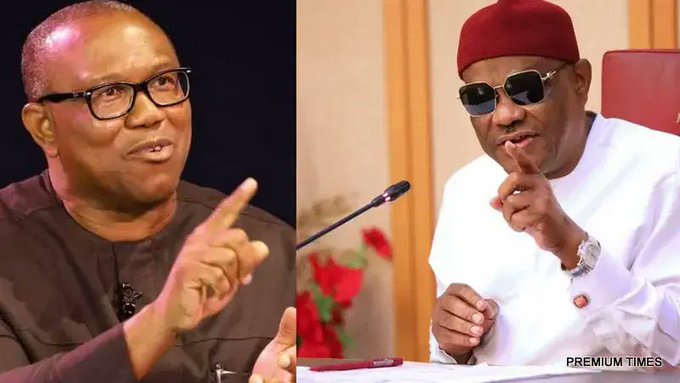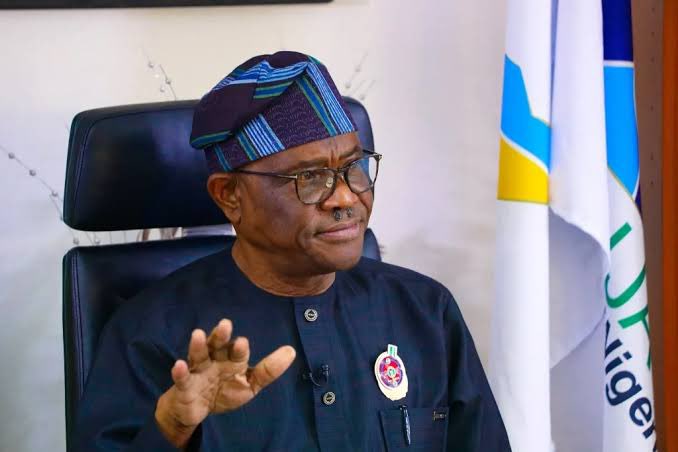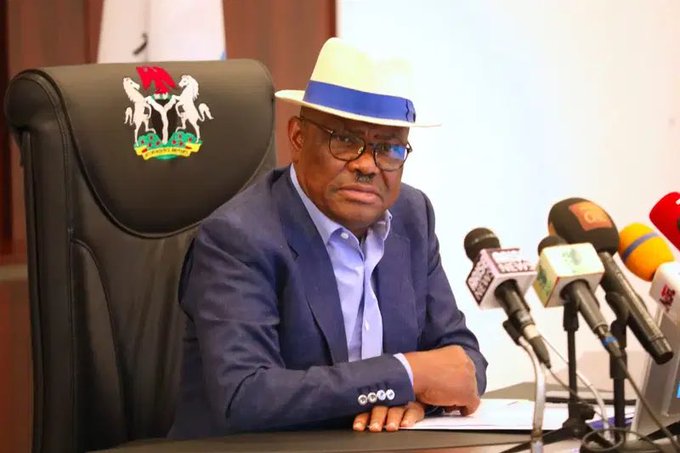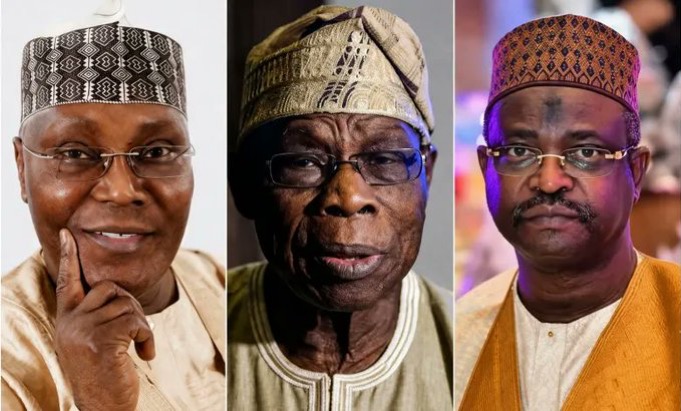
ABUJA — A fierce war of words has erupted between two of Nigeria’s most prominent elder statesmen, former President Olusegun Obasanjo and his former Vice-President, Alhaji Atiku Abubakar. The dispute centers on grave historical allegations involving bribery, constitutional maneuvering, and executive-legislative friction during the country's early return to democratic rule in the Fourth Republic.
The political feud reignited following public remarks made by Obasanjo regarding the historical events preceding the 2003 general elections. The former president alleged that Atiku secretly funded an impeachment plot against him during his first term in office, providing a ₦5 million inducement to the late former Speaker of the House of Representatives, Right Honourable Ghali Umar Na’Abba.
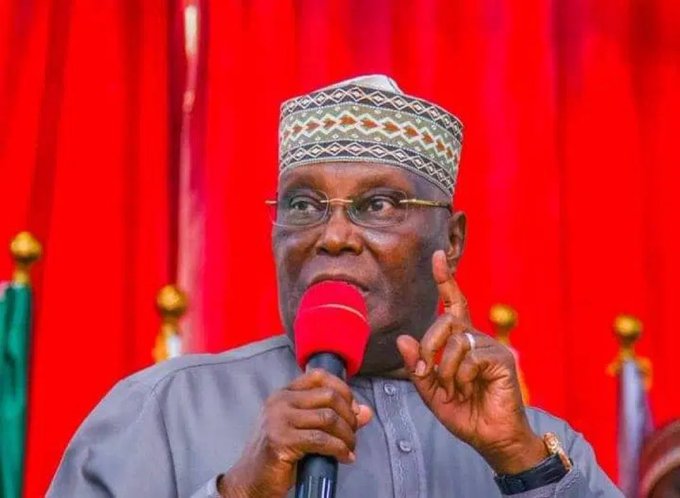
Atiku has forcefully rejected the accusation through a comprehensive statement issued by his media office, characterizing the claim as a politically motivated fabrication designed to influence public sentiment ahead of the 2027 general elections.
The Core Allegation: Executive Division and the ₦5 Million Impeachment Charge
Speaking on the sidelines of political reflections regarding the Fourth Republic's foundational years, former President Obasanjo detailed what he described as a covert attempt initiated within the Villa to terminate his presidency prematurely.
According to Obasanjo, the plot was hatched on a Friday when he was away from the presidential villa. He alleged that Atiku invited Speaker Na’Abba to his official office to convince him that the administration should be limited to a single term. Obasanjo stated that the former vice-president provided ₦5 million to Na’Abba to mobilize members of the House of Representatives and initiate formal impeachment proceedings against the sitting president.
Obasanjo maintained that the entire encounter was secretly monitored, recorded, and reported to him by his then-Chief of Staff, whom he described as a highly trained professional intelligence officer. The former president added that he remained unfazed by the threat at the time, confident that no legitimate constitutional grounds existed for his removal from office.
Atiku’s Counter-Offensive: Defense of the Dead and Political Motives
In a swift and sharp response released by his Senior Special Assistant on Public Communication, Phrank Shaibu, Atiku Abubakar strongly refuted the claims, questioning both the timing and the moral foundation of Obasanjo's statements.
Atiku emphasized that invoking the name of the late Ghali Umar Na’Abba who passed away in December 2023 was inherently unfair because the former speaker is no longer alive to confirm or deny the serious accusation.
Key counter-arguments presented by Atiku’s camp include:
-
Absence of Legal Action: Atiku questioned why a sitting administration wielding the full prosecutorial apparatus of the Nigerian state failed to initiate legal or administrative proceedings at the time if concrete intelligence and physical evidence existed.
-
The Third-Term Legacy: Atiku asserted that Obasanjo’s persistent hostility stems directly from Atiku's public opposition to the former president's failed constitutional amendment attempt—commonly referred to as the "Third Term Agenda"—between 2005 and 2006.
-
2027 Electoral Strategy: The former vice-president alleged that the sudden resurrection of two-decade-old allegations is a calculated effort to damage his political standing and confer an unmerited advantage on Obasanjo’s preferred regional candidates ahead of the 2027 presidential contest.
"If this allegation were true, why did he never make it while Rt. Hon. Na’Abba was alive? Why wait until the only man who could confirm or refute the claim has departed this world?" Atiku's media team stated. "The task before leaders today is not to rewrite history but to rescue the future. Nigerians are more interested in knowing why food prices continue to soar and why public debt continues to rise than in revisiting political disagreements from over two decades ago."
Historical Perspective: The Executive-Legislative Battles of the Early Fourth Republic
To fully understand the weight of these modern recriminations, political historians point to the chaotic legislative dynamics that defined Nigeria's transition from military rule to civilian governance between 1999 and 2003.
During Obasanjo's first term, the National Assembly under the leadership of Senate President Chuba Okadigbo and House Speaker Ghali Na’Abba frequently clashed with the executive branch over budgetary allocations, constitutional independence, and executive oversight.
The relationship between President Obasanjo and Speaker Na’Abba was notoriously strained. Na’Abba fiercely guarded the independence of the House of Representatives, frequently accusing the executive of centralizing power and attempting to manipulate legislative leadership. In 2002, the House officially issued a multi-point motion calling on President Obasanjo to resign or face formal impeachment proceedings over alleged non-implementation of national budgets and extra-budgetary spending.
While historians acknowledge that executive-legislative friction was intense during this era, the specific claim that Vice President Atiku directly financed the leadership of the House to remove his principal highlights the deep internal fractures that plagued the ruling People's Democratic Party (PDP) leading into the 2003 nominating convention.
Contemporary Implications for Nigerian Governance and Politics
The resurgence of public conflict between Obasanjo and Atiku comes at a delicate time for Nigeria’s political class, as opposition parties maneuver to build broad-based coalitions to challenge the ruling All Progressives Congress (APC) in the upcoming 2027 electoral cycle.
Political analysts argue that public disputes among founding figures of the Fourth Republic reflect broader struggles over legacy, historical narrative, and political alignment:
1. Impact on Opposition Coalitions: Atiku Abubakar remains a central pillar of the opposition landscape, having served as the PDP presidential candidate in multiple election cycles. Personal attacks from influential statesmen like Obasanjo risk fragmenting potential opposition alignments.
2. Public Disillusionment: With ordinary citizens facing significant socio-economic pressures including high inflation, fuel price adjustments, and national security challenges veteran political leaders publicly debating 25-year-old financial accusations risk deepening public cynicism toward the political elite.
3. The Quest for Archival Truth: The feud highlights the broader challenge facing Nigerian political history, where critical state decisions, intelligence reports, and high-level political conflicts remain undocumented in official public archives, leaving historical truth dependent on competing personal memoirs and media interviews.
As the political landscape moves closer toward the next general election season, public discourse will likely continue to balance the lingering grievances of past administrations against the urgent demand for economic stabilization and governance reform.