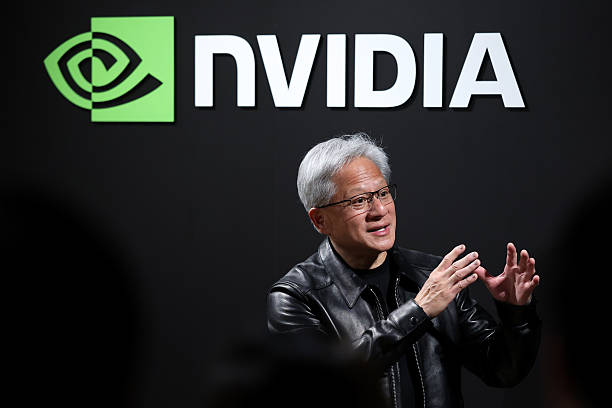
SAN FRANCISCO — Nvidia Founder and Chief Executive Officer Jensen Huang has officially joined social media platform X (formerly Twitter). Marking his inaugural post, Huang published a high-stakes manifesto advocating for the proliferation of open-source and open-weight artificial intelligence models, signaling a major strategic alignment among Silicon Valley's most influential technology leaders.
The debut post comes at a critical juncture in the global artificial intelligence race, as multinational corporations, sovereign governments, and open-source communities debate the ethical, competitive, and security frameworks required to govern next-generation foundation models.
Accompanying an open letter co-signed by an unprecedented coalition of technology giants, venture capital firms, and defense contractors—including Nvidia, Meta Platforms, Microsoft, Y Combinator, Palantir Technologies, and Andreessen Horowitz (a16z)—Huang framed the current trajectory of artificial intelligence as a generational transformation that must remain globally accessible.
"AI will transform every industry, power every company, and be built by every country," Huang wrote in his debut statement on X. "Open models strengthen safety and cybersecurity, accelerate innovation and diffusion, and enable sovereignty."
The Open-Source AI Coalition: Silicon Valley Heavyweights Unite
The collective open letter co-published alongside Huang’s debut post represents one of the most significant unified policy statements by technology executives since the inception of the generative AI boom.
By uniting hardware manufacturers like Nvidia, cloud infrastructure leaders like Microsoft, social media and AI open-weight champions like Meta, and institutional venture capital firms like Andreessen Horowitz, the coalition seeks to establish an industry-wide consensus: open-weight models are vital for maintaining competitive free markets and democratic technological access.
The manifesto explicitly draws historical parallels between today’s artificial intelligence revolution and the early expansion of open-source software, such as the Linux operating system and Apache web servers, which ultimately formed the backbone of the modern internet.
Key principles outlined in the joint manifesto include:
-
Democratic Accessibility: Open-weight models allow university researchers, early-stage startups, non-profit institutions, and developing nations to fine-tune advanced intelligence capabilities without relying exclusively on closed, proprietary application programming interfaces (APIs).
-
Enhanced Safety and Cybersecurity: Contrary to arguments that open models pose systemic security risks, the signatories maintain that open code enables thousands of independent security researchers worldwide to inspect model weights, identify vulnerabilities, red-team potential exploits, and patch security flaws far faster than closed-door engineering teams.
-
Data Sovereignty and Control: Open models empower private enterprises and sovereign governments to deploy artificial intelligence within their own local data centers and private cloud environments, ensuring sensitive data remains protected behind national and corporate firewalls.
Hardware Dominance and Strategic Alignment: Why Nvidia is Backing Open Models
Industry analysts view Nvidia’s explicit backing of open-weight artificial intelligence as both a philosophical stance and a masterclass in corporate strategy.
As the world’s preeminent provider of graphics processing units (GPUs) and accelerated computing infrastructure—spanning H100, H200, and Blackwell architectures—Nvidia occupies the foundational layer of the global AI supply chain. While closed-model providers rely on massive centralized compute clusters to train proprietary models behind paywalls, open-weight models democratize model deployment across millions of enterprise data centers globally.
When open-weight models like Meta’s Llama series, Mistral AI’s open architectures, or Alibaba's Qwen models are made freely available, thousands of enterprise organizations purchase localized Nvidia hardware to fine-tune, host, and run inference workloads independently. Consequently, a thriving open-model ecosystem directly expands Nvidia's total addressable market across corporate enterprise, academic, and public sectors.
Furthermore, Huang’s emphasis on "sovereign AI"—the principle that every nation state must build and own its domestic digital infrastructure—aligns precisely with Nvidia’s international enterprise strategy. By combining open-weight models with localized supercomputing hubs, nations can train custom large language models tailored to their native languages, cultural nuances, and national security requirements without transferring data to foreign tech conglomerates.
The Coexistence Model: Frontier Closed vs. Frontier Open AI
A central thesis of the manifesto co-signed by Huang is that the future of global technology will not and should not be defined by a binary choice between open-source and proprietary software models.
Instead, the coalition advocates for a hybrid computational paradigm in which both closed and open architectures fulfill distinct, complementary roles within the global economy.
+-----------------------------------------------------------------------+
|                    THE DUAL AI ARCHITECTURE MODEL                     |
+-----------------------------------------------------------------------+
|                                                                       |
|   CLOSED / PROPRIETARY MODELS          OPEN / OPEN-WEIGHT MODELS      |
|   (e.g., OpenAI, Anthropic)            (e.g., Meta Llama, Mistral)    |
|                                                                       |
|   - Frontier Multimodal Research      - Localized Enterprise Host    |
|   - Massive Centralized Compute       - Custom Domain Fine-Tuning     |
|   - Turnkey Cloud API Integration     - On-Premises Data Privacy      |
|   - Specialized Commercial Services   - Sovereign National Infrastructure |
|                                                                       |
+-----------------------------------------------------------------------+
As the manifesto explicitly notes: "The world needs both frontier closed models and frontier open models." While closed models often spearhead massive multi-billion-dollar research breakthroughs at the bleeding edge of artificial general intelligence (AGI), open-weight models serve as the engine for widespread enterprise deployment, domain-specific customization, and academic experimentation.
Broader Industry Policy and Regulatory Implications
Huang’s public entry onto X and the simultaneous release of the open-source manifesto come at a pivotal time for international technology policy, as regulatory bodies in Washington, Brussels, and London draft legislative frameworks to govern artificial intelligence.
In both the United States and the European Union, policymakers have debated whether open-source AI models should be subject to stringent licensing regimes or export controls out of concern over potential misuse. The high-profile unified stance taken by Nvidia, Meta, Microsoft, and Palantir serves as a direct message to lawmakers: over-regulating open-weight models could concentrate AI power in the hands of a few dominant monopolies, stifle startup innovation, and handicap national competitiveness.
As Jensen Huang’s debut post continues to circulate across the global tech community, attracting millions of impressions and endorsements from industry leaders, it signals a definitive shift in the narrative surrounding artificial intelligence. By placing Nvidia's formidable institutional weight behind open models, Huang has helped set the strategic agenda for the next decade of technological advancement—one where open access, data sovereignty, and hardware accelerated computing intersect to reshape the global economy.