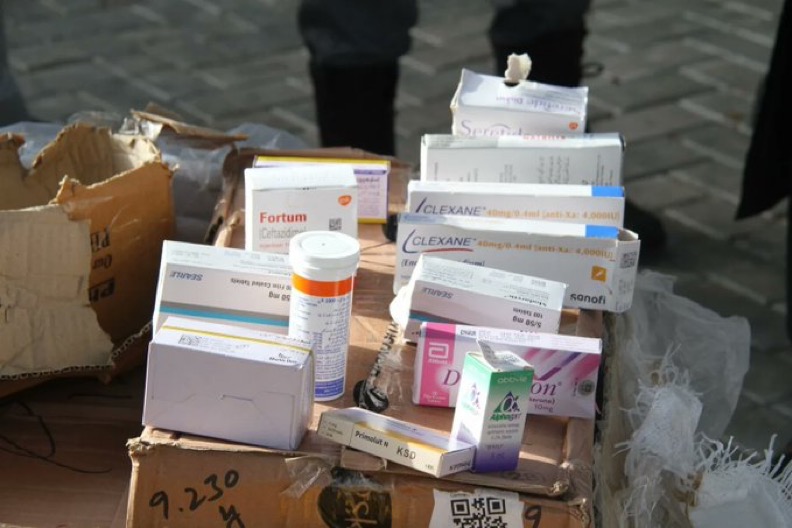
KANO — The Nigeria Customs Service (NCS) Kano/Jigawa Area Command has intercepted over 580,000 units of unregistered pharmaceutical products at the Mallam Aminu Kano International Airport. The seized items have been officially handed over to the National Agency for Food and Drug Administration and Control (NAFDAC) for further regulatory action.
Intelligence-Driven Seizure
The interception, which took place on June 9, 2026, at the SAHCO shed of the airport, was the result of an intelligence-led operation. Following a joint examination by Customs and NAFDAC officials, it was confirmed that the large consignment lacked the mandatory registration and certification required for importation and distribution within Nigeria.
The breakdown of the seized items includes:
• 575,440 tablets of various medicaments
• 5,415 injections
• 1,075 bottles of eye drops
• 243 inhaler canisters
Read Also: Ogun Customs Seizes ₦6.77 Billion Contraband, Intercepts Massive Cache of "Ghana Loud" and Smuggled Rice
Strengthening Public Health Safety
Deputy Comptroller of Customs Usman Adamu, the Acting Customs Area Controller, emphasized that this operation is part of the service's broader commitment to protecting Nigerians from the dangers of illicit and uncertified medicines. "The products were found to be unregistered and therefore not approved for circulation in Nigeria," Adamu stated during the handover ceremony at the Customs House in Bompai, Kano.
Adamu issued a stern warning to importers and distributors, declaring that the command will intensify surveillance and enforcement operations to ensure that the Nigerian market is not used as a dumping ground for harmful pharmaceutical products.
Inter-Agency Collaboration
Azik Kanadi, Assistant Director in the NAFDAC Ports Inspection Directorate, received the items on behalf of the agency. He commended the Nigeria Customs Service for their vigilance and reiterated NAFDAC's commitment to preventing unsafe medicines from reaching hospitals, pharmacies, and homes across the country.
This seizure marks another critical instance of inter-agency cooperation aimed at upholding the integrity of the pharmaceutical supply chain and protecting national public health interests.