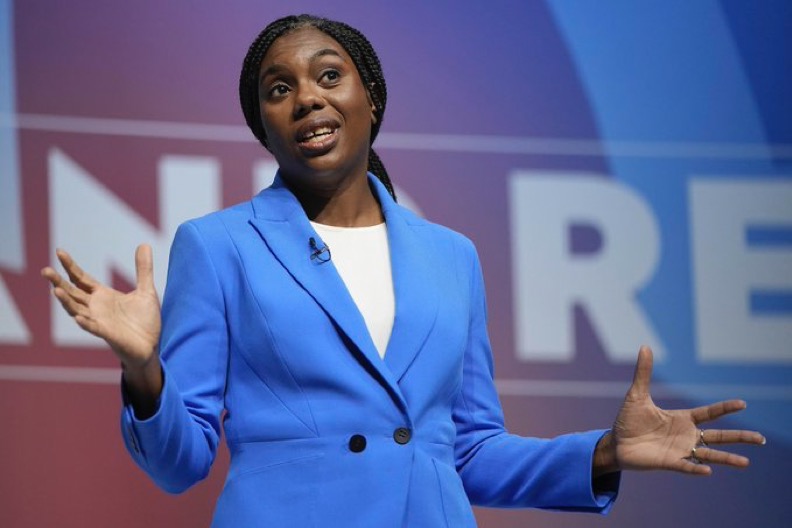
LONDON — Conservative Party leader Kemi Badenoch has ignited a political firestorm after publicly criticizing Nigeria’s economic management, specifically citing the country’s inability to provide consistent electricity despite its status as a major oil producer.
The remarks, made during a discussion on her political philosophy, were intended to highlight the dangers of government overreach. Badenoch, who spent part of her childhood in Nigeria, used the nation’s infrastructure challenges as a cautionary tale to warn against what she described as "stupid" economic policies in the United Kingdom.
Policy Critique and Comparisons
Badenoch contrasted Nigeria's struggles with her own conservative economic convictions. She argued that the country's lack of development was not a result of a lack of resources, but a failure of government policy.
"Nigeria is an oil-producing country that has never had electricity," Badenoch stated. She contended that excessive state control and redistribution efforts are "reliable paths to national ruin," and she drew pointed parallels between the economic management of past Nigerian military regimes and the current policies advocated by U.K. Energy Secretary Ed Miliband.
Reflecting on her upbringing, she noted that her experiences in a developing nation shaped her desire to prevent similar outcomes in Britain. "You grow up in a third-world country and you look at why it is termed 'third world,' and I don't want that to happen here," she added.
Public and Political Reaction
The comments have drawn sharp criticism from observers both in the U.K. and Nigeria. Many have questioned the diplomatic and political appropriateness of a prominent British leader of Nigerian descent framing her heritage in such a manner. Critics argue that the characterization oversimplifies complex historical and systemic issues, while supporters defend her right to draw lessons from her personal history to inform her political agenda.
The controversy highlights the often-tense intersection of personal identity and political rhetoric, particularly for politicians operating within the global diaspora. As of Saturday, Badenoch’s office has not issued a formal clarification regarding the backlash.