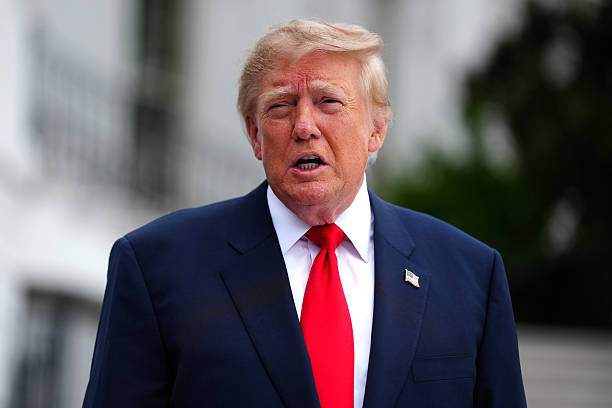
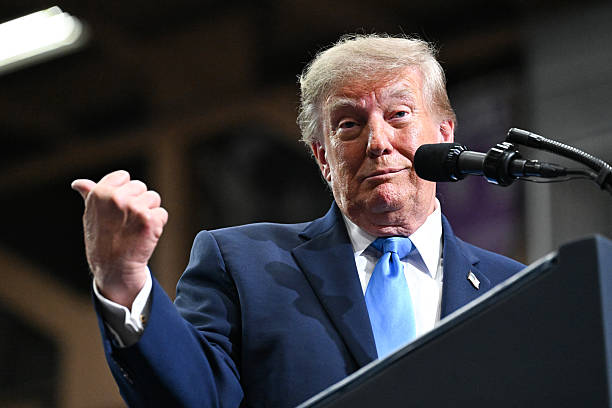
BEIJING — In a major moment for global geopolitics, United States President Donald Trump has officially touched down in the Chinese capital, kicking off a highly anticipated, high-stakes diplomatic summit with Chinese President Xi Jinping. The visit, which marks the first time a sitting U.S. president has set foot in China in nearly a decade, lands at a deeply critical juncture as Washington looks to navigate complex trade parameters, regional security friction over Taiwan, and the wider economic fallout of the ongoing war in Iran.
Air Force One taxied to a halt at the Beijing Capital International Airport at exactly 7:50 PM local time following a grueling transatlantic flight from Washington, D.C. The tarmac immediately became a stage for carefully orchestrated diplomatic symbolism, signaling how seriously both superpowers are taking this face-to-face engagement.
Pomp and Precedent: Beijing Rolls Out the Heavyweight Red Carpet
In a stark departure from recent Chinese diplomatic protocols which typically see lower-ranking state councillors dispatched to receive visiting Western heads of state Beijing dramatically upgraded its airport welcoming committee. Stepping onto the tarmac to personally receive President Trump was Chinese Vice President Han Zheng, alongside Chinese Ambassador to the U.S. Xie Feng and Executive Vice Foreign Minister Ma Zhaoxu.
The presence of Vice President Han represents a major elevation in status compared to Trump’s last state visit in 2017, where he was met on arrival by then-State Councillor Yang Jiechi. Han Zheng notably shares a direct rapport with the current administration, having previously attended Trump’s presidential inauguration in Washington as President Xi’s special representative.
The welcoming ceremony featured a full military honor guard formation, a live military brass band, and roughly 300 Chinese youths lining the red carpet. The students enthusiastically waved alternating mini U.S. and Chinese flags while chanting, “Welcome, welcome! Warm welcome!” in Mandarin. Pausing mid-descent, a smiling President Trump punched the air in acknowledgment before being whisked away in his heavily armored presidential limousine.
The Agenda: War, Trade Truces, and the Battle for Silicon
While Trump has frequently lauded his strong personal chemistry with President Xi, the actual working sessions scheduled across the two-day itinerary will force both leaders to navigate deep structural disagreements.
The primary geopolitical shadow looming over the summit is the war involving Iran. Leaving the White House, Trump explicitly told reporters that he anticipated a long, frank conversation with Xi regarding Tehran’s financial lifeline, given that Beijing remains the primary global customer for heavily sanctioned Iranian crude oil. Despite the heavy friction, Trump played down immediate disagreements, stating that Xi has been "relatively good" to deal with on the matter. "I don't think we need any help with Iran," Trump stated to the press pool. "We'll win it one way or the other. We'll win it peacefully or otherwise."
Beyond the defense sphere, the core of the summit revolves around saving a highly fragile economic truce struck between the two nations, which successfully suspended triple-digit tariffs on Chinese manufacturing in exchange for Beijing lifting its choking export restrictions on rare earth minerals.
To capture tangible economic victories for American voters ahead of the upcoming midterm elections, Trump arrived with a massive coterie of America's most powerful Big Tech executives, including:
-
Elon Musk (Tesla & SpaceX)
-
Tim Cook (Apple)
-
Jensen Huang (Nvidia)
Before arriving, Trump took to Truth Social to announce that his very first request to President Xi would be to aggressively "open up" the Chinese market to American corporations. Big Tech firms like Nvidia are particularly desperate for regulatory relief, as strict export curbs have blocked them from selling high-margin H200 artificial intelligence chips into China's booming software sector. Conversely, Beijing enters the room demanding that Washington systematically ease its sweeping blocks on advanced semiconductor manufacturing equipment.
A Complex Hand at the Negotiating Table
Independent geopolitical analysts observe that Trump enters these bilateral sessions navigating several domestic vulnerabilities. The conflict in Iran has simultaneously catalyzed rising inflation within the domestic U.S. economy and snarled shipping corridors like the Strait of Hormuz, creating severe political headwinds for the Republican party at home. Furthermore, domestic U.S. courts have increasingly hemmed in the executive branch's ability to levy unilateral tariffs at will.
In contrast, while the Chinese domestic economy has faced notable structural headwinds of its own, President Xi Jinping does not face matching electoral or legislative pressures, allowing Beijing to project an aura of strategic patience.
"The Trump administration arguably needs this meeting more than China does," noted Liu Qian, founder and CEO of the Beijing-based geopolitical advisory firm Wusawa Advisory. "Washington needs to explicitly demonstrate to American voters and agricultural states that major trade deals are being signed, planes are being ordered, and real money is being made."
As the formal working lunches and state banquets commence at the Great Hall of the People, citizens and market traders worldwide are watching closely, hoping this superpower dialogue injects a measure of predictability into a highly volatile global market.