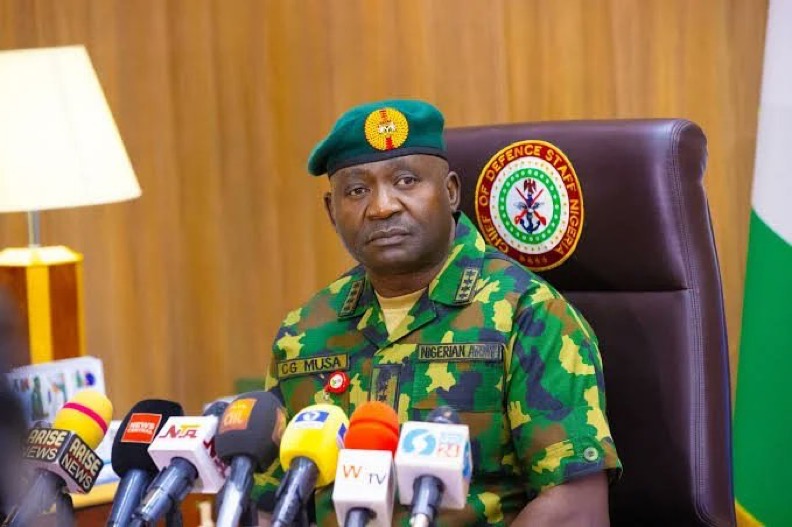
ABUJA — The Minister of Defence, General Christopher Musa (Rtd), has highlighted that ongoing international geopolitical conflicts are creating significant barriers to Nigeria’s acquisition of critical military hardware. Speaking at the Nigerian People’s Strategic Conference and Defence Exhibition 2026 in Abuja on Saturday, the Minister noted that these global instabilities have severely disrupted the supply chains necessary for national security operations.
Challenges in Military Procurement
Minister Musa explained that ongoing wars involving major global powers and regions specifically referencing Israel, Iran, Russia, Ukraine, and the United States have created a highly competitive and congested market for defence equipment.
"Because most times they do down payment because they have the money and they produce most of these items, so even when you go to get, they have booked for them," Musa stated. He emphasized that the situation necessitates a shift in strategy, asserting, "The only solution is for us to produce what we need." The Minister further called for increased government patronage and support for indigenous defence manufacturers and innovators to bolster Nigeria's domestic military production capabilities.
The Need for a National Database
Beyond procurement, Minister Musa addressed significant structural hurdles in Nigeria’s internal security architecture, most notably the absence of a comprehensive national database. He argued that the lack of centralized data is a major impediment for agencies, particularly the Nigeria Police Force, in effectively tracking and apprehending criminals.
"I want to also appeal to the National Assembly on the issue of a database. We must develop a database for every Nigerian in the world," Musa said. He praised the police for their operational performance despite these constraints, noting that their ability to solve crimes currently relies heavily on manual efforts that would be significantly enhanced by digital intelligence.
Shared Responsibility and Governance
The Minister also utilized the forum to stress the necessity of public cooperation in security matters, urging citizens to move beyond indifference. He warned that security agencies cannot function effectively without timely intelligence and community participation, citing frequent vandalism of public infrastructure as a direct consequence of community silence.
Furthermore, he addressed the economic drivers of insecurity, calling on state governors to ensure that federal allocations are translated into tangible grassroots development to combat poverty, unemployment, and illiteracy. He also cautioned against the proliferation of unvetted community-based security outfits, advocating for the proper regulation of such groups to prevent further instability.
Legislative Perspective
Deputy Speaker of the House of Representatives, Benjamin Kalu, echoed the importance of a multifaceted approach to security. He confirmed the National Assembly's commitment to legislative support, highlighting the recent passage of the State Police Bill as a landmark effort to decentralize policing and better address the needs of Nigeria’s population of over 220 million.