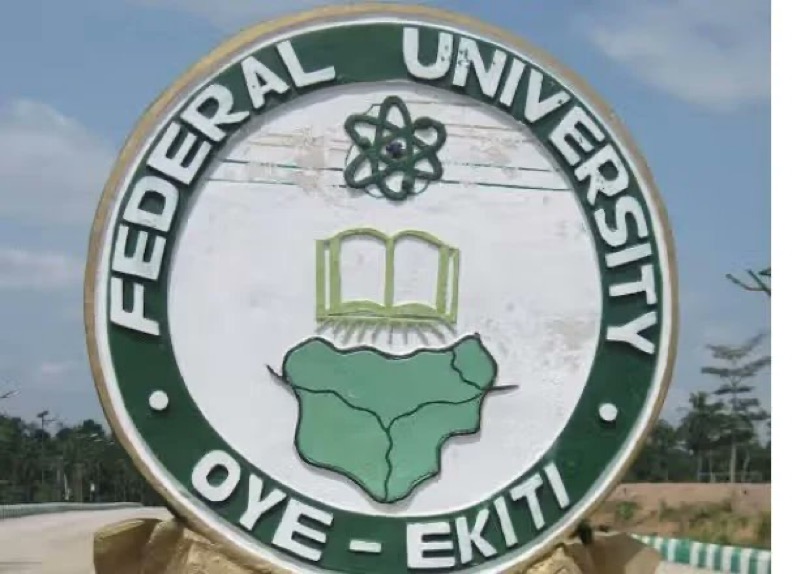
OYE-EKITI — The Federal University Oye-Ekiti (FUOYE) has taken a decisive stand against financial misconduct, announcing the immediate suspension of three prominent figures within the university community. This move, which has sent shockwaves through the campus, follows allegations of the unauthorized collection of funds from 100-level students. The disciplinary action underscores the university management’s commitment to upholding the principles of transparency, accountability, and the protection of its student body from exploitation.
The Breach: Unauthorized Levies and Financial Impropriety
The controversy centers on a ₦1,000 levy imposed on each first-year student under the guise of funding practical sessions. According to the official statement released on June 16, 2026, by the University Registrar, Mufutau Ibrahim, this levy was neither proposed to nor approved by the university’s Senate, Management, or the Bursary Department. By circumventing these established financial protocols, the individuals involved effectively bypassed the institutional checks and balances designed to ensure fiscal responsibility.
The university administration launched a rigorous, preliminary fact-finding committee upon receiving a petition detailing the illicit collection. The findings of this committee revealed a structured, albeit unauthorized, scheme that raised immediate red flags regarding the abuse of office.
Individuals Under Investigation
The suspension affects three individuals occupying positions of significant responsibility and influence within the institution:
-
Olanrewaju Patrick Ogunjobi: As the Director of the Directorate of Educational Technology, Innovation and Entrepreneurship, Ogunjobi held a role that demanded high institutional integrity. The committee accused him of being the primary architect behind the authorization of the collection, having sanctioned the levy without the required institutional mandate.
-
Dr. Banji Rildwan Olaleye: Serving as the Deputy Dean of Student Affairs and Support Services, Dr. Olaleye’s participation was particularly noted by the committee. Given his administrative role, which is explicitly tasked with the protection and welfare of students, his alleged involvement in the collection process represents a severe conflict of interest and a violation of the trust placed in the Student Affairs office.
-
James Iyanuoluwa Adio: The President of the Students’ Union Government (SUG), Adio, was also implicated in the fallout. The inquiry suggests that he was indirectly involved, participating in the distribution of an initial portion of the collected funds. Most alarmingly, the Registrar noted that after the situation began to escalate, Adio allegedly requested a refund, which resulted in a transfer of ₦700,000—a sum derived from the collected levies—into his personal bank account.
Institutional Response: Zero Tolerance for Corruption
In his statement, Registrar Mufutau Ibrahim made it clear that the university maintains a zero-tolerance policy regarding the exploitation of its students. "The university will not tolerate the extortion of students, abuse of office, financial impropriety, or corruption in any form," the Registrar stated.
The suspension of these individuals is a precautionary measure intended to ensure the integrity of the ongoing disciplinary proceedings. By removing these officials from their posts, the university is creating an environment where the fact-finding committee can operate without the risk of interference, intimidation, or the tampering of evidence.
The Impact on the University Community
For the student body, the news has been both a source of alarm and a vindication. Students often bear the brunt of "hidden charges" and unauthorized levies, which place an undue financial burden on families already struggling with the costs of tertiary education. By taking swift, public action against senior staff and the student leadership, the FUOYE administration is signaling that no member of the university—regardless of their rank or position—is above the institution’s code of conduct.
This incident also highlights the vital role of the "whistleblower" culture within Nigerian universities. The fact that the investigation was triggered by a student petition suggests that the university's internal grievance mechanisms, while occasionally tested, remain a functional tool for accountability.
The Path to Restoration: Due Process and Transparency
As the formal disciplinary proceedings begin, the university community is watching closely. The process will involve:
-
Comprehensive Auditing: An investigation into all financial transactions linked to the Directorate of Educational Technology, Innovation and Entrepreneurship.
-
Disciplinary Panels: The officials will be given the opportunity to defend themselves before a formal panel in accordance with the university’s statutes and conditions of service.
-
Restitution: Management is expected to determine the process for refunding the affected students, ensuring that the financial impact of this "unauthorized levy" is corrected.
The administration has reiterated that protecting students from exploitation is not just a policy but a fundamental obligation. As FUOYE moves forward, the focus remains on restoring the trust of the students and parents, ensuring that the institution’s reputation for academic excellence remains untarnished by the actions of a few individuals.
Ultimately, this case serves as a broader lesson for all tertiary institutions in Nigeria. It underscores that in an era of heightened institutional oversight, every financial transaction—no matter how small—must be traced to a senate-approved mandate. Anything less is a violation of the public trust and a betrayal of the fundamental educational mission of the university.