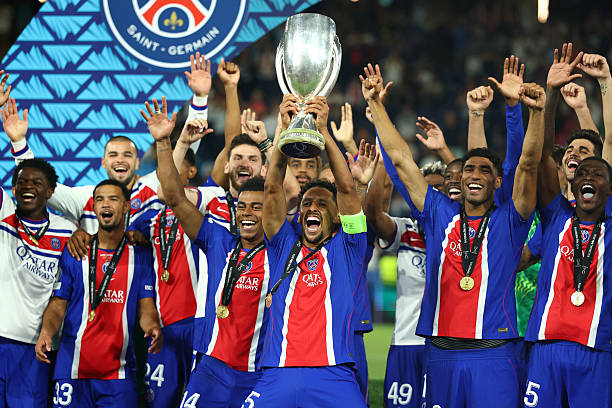
Paris Saint-Germain solidified its stature at the pinnacle of international club football by securing a thrilling 2-1 victory over English side Aston Villa to capture the UEFA Super Cup in Salzburg. The triumph marks a significant historical milestone, making the French titans the first club to successfully defend and retain the prestigious trophy since Real Madrid accomplished the feat in 2017. Controlled by Spanish manager Luis Enrique, Les Parisiens displayed resilience and tactical adaptability, overcoming a spirited effort from Unai Emery’s Aston Villa side. A decisive second-half strike from Désiré Doué sealed the victory, delivering another major trophy to the capital club and reinforcing their growing dominance over English Premier League opposition in continental competitions.
The match served as a compelling curtain-raiser for the European competitive calendar, pitting the reigning UEFA Champions League winners against the current UEFA Europa League titleholders. Despite entering the contest with a squad heavily impacted by staggered pre-season returns following international tournament commitments, Paris Saint-Germain found the necessary quality when it mattered most. The victory also highlights Luis Enrique’s personal operational mastery in single-leg European finals, securing his third personal Super Cup title while maintaining an extraordinary competitive record against Premier League clubs across recent continental campaigns.
Double Glory in Salzburg: Match Summary and Tactical Breakthroughs
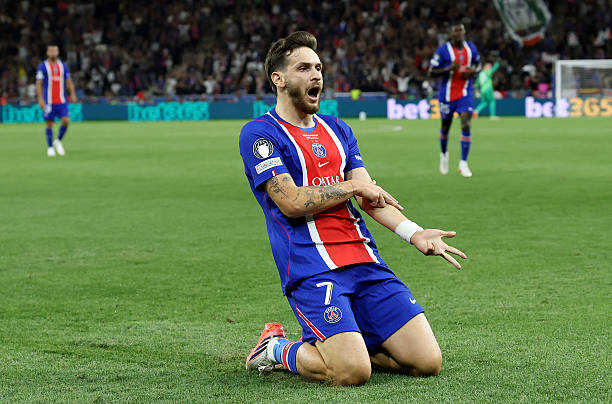
The contest unfolded with high intensity at the Red Bull Arena in Salzburg, with Paris Saint-Germain establishing an early territorial advantage despite relying on key players who had only returned to full training a week prior. Luis Enrique named nine players in his starting lineup who had featured in May’s UEFA Champions League final victory over Arsenal, ensuring tactical familiarity across the pitch. Georgian winger Khvicha Kvaratskhelia set the tempo in the twentieth minute, cutting inside from the left flank before unleashing a powerful strike past Aston Villa goalkeeper Marco Bizot. The goal extended Paris Saint-Germain’s extraordinary competitive scoring streak to twenty-nine consecutive matches and underscored Kvaratskhelia’s reputation as an elite offensive force, having recorded five goals against English sides over the past calendar year.
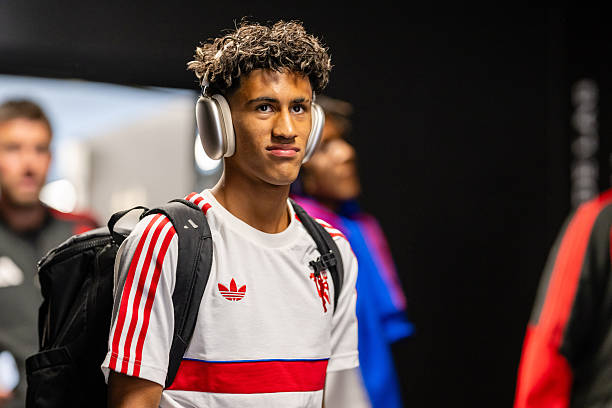
Aston Villa responded with commendable tactical bravery, led by seventeen-year-old debutant Brian Madjo, who made history as the youngest player ever to start a UEFA Super Cup final. The teenage prodigy presented a persistent aerial threat, missing narrow chances from John McGinn deliveries before knocking an effort against the outside of the post after outmuscling defender Willian Pacho. Madjo’s persistence rewarded Villa on the stroke of halftime when he met McGinn’s precise cross with a volley into the roof of the net, becoming the youngest goalscorer in the tournament's history.

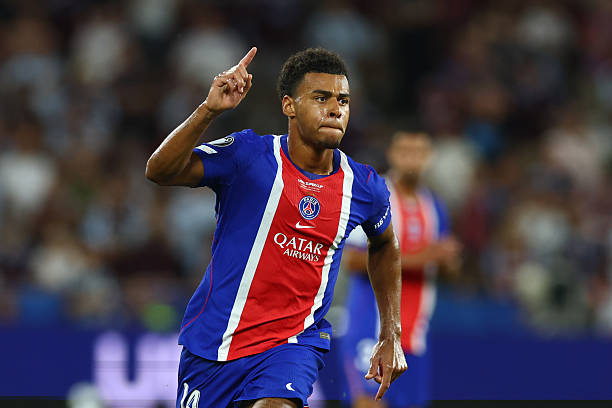
The match reached its climax following a key substitution at the interval, with Ousmane Dembélé entering the field to replace debutant Maghnes Akliouche. Shortly after Villa captain John McGinn forced PSG goalkeeper Matvéi Safónov into a full-extension save, the French champions struck the decisive blow just after the hour mark. Emerging talent Désiré Doué expertly timed his run to spring Aston Villa’s offside trap, coolly slotting the ball past Bizot. Although initially flagged for offside on the field, a thorough review by the Video Assistant Referee confirmed the validity of the goal. Villa pressed aggressively for an equalizer in the closing stages, but defensive interventions from Warren Zaïre-Emery and Matvéi Safónov preserved PSG’s 2-1 lead until the final whistle.
Historical Timeline: From Paris Rebuilding to Back-to-Back European Super Cup Dominance
The trajectory leading to Paris Saint-Germain’s historic back-to-back Super Cup triumphs reflects a major multi-year structural transition within the club's administrative and sporting philosophies. For over a decade following the ownership acquisition by Qatar Sports Investments, the French club pursued a star-studded commercial strategy centered on acquiring world-renowned megastars. While this framework generated massive commercial revenues and domestic dominance, it frequently struggled to achieve tactical coherence in high-pressure European knockout competitions.
A strategic pivot occurred with the appointment of Luis Enrique, who instituted a squad-building framework prioritized around youthful intensity, collective pressing, and functional tactical flexibility. The fruits of this strategic transition became evident during the 2024-2025 campaign, when Paris Saint-Germain captured the UEFA Champions League title with a convincing victory over Arsenal. That European victory led directly to the team's first modern Super Cup triumph against Tottenham Hotspur twelve months ago. By defeating Aston Villa in Salzburg, Les Parisiens have extended an unprecedented unbeaten run against Premier League clubs to eleven matches, encompassing ten victories and a single draw, effectively establishing a new standard of performance against English football powerhouses.
Tactical Pressing, Offside Traps, and the Role of Video Assistant Referees
From a technical perspective, the UEFA Super Cup final offered an instructive display of advanced modern tactical concepts, specifically regarding offside trap manipulation and video technology intervention. Aston Villa manager Unai Emery utilized his signature high defensive block, designed to compress the playing field, restrict central space, and catch opposing attackers in an offside trap—a defensive tactic where the backline steps forward in sync to leave attacking players in an illegal position behind the last defender at the exact moment the ball is passed.
However, Paris Saint-Germain’s winning goal demonstrated how elite teams systematically dismantle high defensive lines through precise spatial timing and secondary line-breaking runs. In plain English, a line-breaking run occurs when an attacking player starts their movement from an onside position deep in the midfield, accelerating past static defenders just as a long pass is played overhead. Désiré Doué executed this movement to perfection, timing his sprint to remain level with the last defender before collecting the ball.
The subsequent intervention of the Video Assistant Referee (VAR) highlights the importance of semi-automated offside technology in modern elite sport. VAR utilizes multi-angle tracking cameras and high-frequency ball sensors to construct three-dimensional spatial models of player positions at the precise frame of ball contact. By overturning the initial on-field offside ruling, technology ensured that tactical execution was rewarded accurately, eliminating human margin of error in fractional line calls during high-stakes championship encounters.
Economic and Strategic Implications for European Football Franchises
The commercial and economic ramifications of sustained European performance are substantial for elite football institutions operating under financial sustainability frameworks. Winning the UEFA Super Cup provides direct prize money allocations from European football’s governing body, alongside secondary financial windfalls derived from international broadcasting rights, commercial performance bonuses, and enhanced global merchandising sales. For Paris Saint-Germain, maintaining a high-performing competitive brand enhances corporate sponsorship values and reinforces its position as an international lifestyle and sporting brand.
Furthermore, the contest demonstrated the high financial stakes facing English Premier League clubs attempting to challenge established European giants. Aston Villa’s rapid rise under Unai Emery has required significant capital expenditure in player acquisition and training infrastructure to meet modern competitiveness benchmarks. Participating in high-profile continental finals accelerates brand exposure across high-growth international markets, particularly in North America and Asia, where television viewership drives long-term commercial valuation. While Villa fell short of lifting the trophy, their competitive display against Europe's dominant side signals a structural rise in their operational status and earning potential within global sport.
French Football Dominance and the Premier League Response
At the macro level, Paris Saint-Germain’s continued dominance over English clubs provides a compelling narrative within international sports governance and regional league rivalry. For years, the English Premier League has enjoyed financial superiority over rival continental leagues, driven by massive domestic and international television rights contracts that vastly outpace revenues generated by France's Ligue 1. This financial disparity created a widespread perception that English teams possessed an insurmountable structural advantage in squad depth and tactical quality.
Paris Saint-Germain’s current eleven-match unbeaten record against top-tier English opposition directly challenges that narrative, demonstrating that strategic coaching continuity, elite physical conditioning, and tactical cohesion can offset pure television revenue disparities. The result in Salzburg further cements Ligue 1’s position at the top of European football achievement through its flagship representative. As European clubs prepare for an expanded global fixture calendar, Paris Saint-Germain’s operational playbook under Luis Enrique offers a benchmark for how continental organizations can achieve sustained technical supremacy on the international stage.