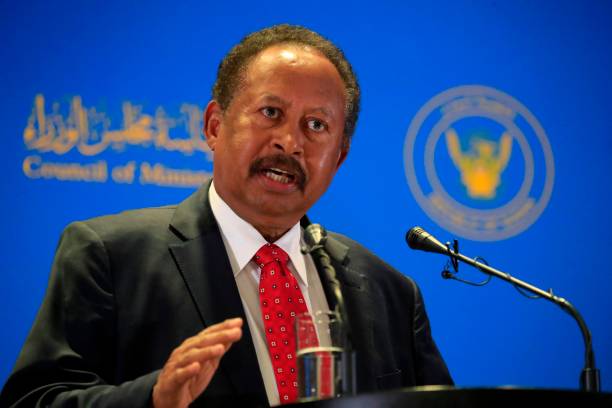
Former Sudanese Prime Minister Abdalla Hamdok has appealed for stronger Canadian support to end Sudan’s devastating war, warning that the country risks further fragmentation unless ceasefire efforts are backed by an inclusive political process.
Hamdok led a delegation of Sudanese civilian leaders to Ottawa this week as part of a diplomatic campaign to secure greater international involvement in ending the conflict between the Sudanese Armed Forces and the paramilitary Rapid Support Forces (RSF).
The delegation met Canadian officials to discuss the deteriorating humanitarian situation, international efforts to secure a ceasefire and the need to restore civilian democratic rule in Sudan.
The visit comes as the war, which began in April 2023, continues to devastate communities, displace millions of people and intensify fears over food shortages and the possible fragmentation of the country.
Hamdok Calls for Greater Canadian Involvement
Hamdok’s delegation met with Canada’s Secretary of State for International Development, Randeep Sarai, in Ottawa on October 5, 2026.
During the meeting, the Sudanese representatives briefed Canadian officials on developments in the conflict and its humanitarian consequences. They also discussed diplomatic initiatives intended to establish a humanitarian truce and create conditions for a broader political dialogue.
Canadian officials reaffirmed their government’s support for efforts to achieve peace and restore civilian democratic governance in Sudan.
The discussions formed part of a wider international outreach effort by Sudanese civilian groups seeking to build support for a negotiated settlement rather than a military solution.
The delegation’s message was that ending the fighting would require more than a temporary halt to hostilities. A lasting settlement, they argue, must also address the political disputes and governance problems that have contributed to Sudan’s instability.
The delegation subsequently held talks with officials from Canadian Prime Minister Mark Carney’s office. The discussions on October 9 focused on the humanitarian crisis, the risks of the conflict spreading across the region and ways to strengthen international efforts to end the war.
Why Sudan’s War Remains Difficult to End
Sudan’s conflict erupted on April 15, 2023, following a power struggle between the Sudanese Armed Forces, led by General Abdel Fattah al-Burhan, and the RSF, commanded by Mohamed Hamdan Dagalo, widely known as Hemedti.
The two military leaders had previously shared power following the removal of longtime ruler Omar al-Bashir in 2019. However, disagreements over the future of Sudan’s political transition and the integration of the RSF into the national army escalated into open warfare.
The fighting has since spread across large parts of the country, destroying infrastructure, disrupting essential services and forcing civilians to flee their homes.
Attempts to negotiate a lasting ceasefire have faced repeated obstacles. The opposing sides have continued fighting while disagreeing over security arrangements, political authority and the future structure of the state.
For Hamdok and other civilian leaders, a central concern is that negotiations focused exclusively on the military commanders could leave Sudan’s civilian population without meaningful influence over the country’s future.
Their proposed approach places humanitarian relief, a ceasefire and a civilian-led political transition within a broader peace process.
Hamdok Warns Against the Risk of Sudan’s Fragmentation
Hamdok has also raised concerns that the war could leave Sudan effectively divided if efforts to stop the fighting are not accompanied by an inclusive political settlement.
In an interview published by Al-Monitor on October 1, the former prime minister warned that Sudan risked de facto partition unless the United States-led ceasefire initiative was combined with a political process involving a wider range of civilian actors.
He stressed that the political track should not be pushed aside while international mediators concentrate on stopping the immediate fighting.
His concerns are shaped partly by Sudan’s history of territorial division. South Sudan became independent in 2011 after a referendum, separating from Sudan following decades of conflict.
Hamdok has warned that another fragmentation of Sudan would carry serious consequences for its population and regional stability.
The concern is that prolonged fighting could deepen territorial divisions, weaken national institutions and create competing centres of political and military authority.
A ceasefire could reduce immediate violence, but a lasting settlement would also need to address the distribution of political power, the future of the security forces and the representation of Sudan’s diverse communities.
Humanitarian Crisis Remains Central to Peace Efforts
The humanitarian consequences of the war remain a major focus of Hamdok’s diplomatic engagements.
Fighting has disrupted agriculture, trade, healthcare and access to essential services. Millions of Sudanese have been displaced, while many communities face severe shortages of food, clean water and medical supplies.
Humanitarian organisations have struggled to reach people in areas affected by fighting, insecurity and restrictions on movement.
For civilians trapped in conflict zones, a ceasefire could create opportunities for aid deliveries, medical assistance and the return of displaced families. However, humanitarian relief alone would not resolve the political and security problems driving the war.
The Sudanese civilian delegation has therefore called for international efforts to connect humanitarian arrangements with a wider political process.
That approach would seek to ensure that a truce becomes a step towards a sustainable settlement rather than a temporary pause before fighting resumes.
Canada has already been involved in humanitarian assistance to Sudan. According to Global Affairs Canada, its support includes emergency food assistance, healthcare, clean water, sanitation, civilian protection and peacebuilding initiatives.
Canada also says it supports civil society participation in dialogue and efforts to build a peaceful democratic future led by Sudanese civilians.
Canada Reaffirms Support for Civilian Democratic Rule
Canada’s engagement with Hamdok’s delegation reflects its stated commitment to humanitarian relief and a peaceful, civilian-led future for Sudan.
During the Ottawa meeting, Sarai reaffirmed Canada’s support for initiatives aimed at ending the war and restoring civilian democratic governance.
The Canadian government has also backed humanitarian programmes designed to assist vulnerable communities affected by the conflict.
However, diplomatic support does not automatically translate into a ceasefire. Progress will depend on whether the warring parties accept meaningful negotiations and whether international mediators can develop a framework capable of securing compliance.
Canada’s potential contribution includes maintaining diplomatic pressure, supporting humanitarian organisations and working with international partners to encourage negotiations.
For Sudanese civilian groups, international engagement is also important because they fear that a settlement negotiated solely between armed factions could sideline demands for democratic government and accountability.
The challenge is to ensure that efforts to end the immediate violence also create a credible path towards a political system in which civilian institutions exercise authority.
International Diplomacy Continues
Hamdok’s visit to Canada follows other diplomatic engagements aimed at coordinating international responses to the crisis.
In September, he led a delegation from the Civil Democratic Alliance of the Forces of the Revolution, known as Somoud, in meetings with United Nations officials and Norwegian representatives in New York.
The discussions focused on ending the war, improving humanitarian access and coordinating international mediation efforts.
The delegation called for an unconditional truce and an inclusive political process that would address the causes of the conflict and support a return to civilian rule.
Norwegian officials, meanwhile, reiterated their commitment to diplomatic efforts aimed at halting the fighting and supporting a settlement reflecting the Sudanese people’s demands for freedom, peace, justice and democratic governance.
These engagements underline the continuing efforts by civilian leaders to prevent Sudan’s future from being determined exclusively by military developments.
However, international initiatives have yet to deliver a durable end to the war. A successful process will require cooperation among regional and international actors, as well as commitments from the Sudanese parties themselves.
Is Peace Still Possible in Sudan?
Hamdok’s diplomatic campaign rests on the argument that peace remains achievable if international efforts are sustained and the political process is not neglected.
The immediate priorities include reducing violence, protecting civilians, enabling humanitarian assistance and establishing a credible path towards negotiations.
Beyond a ceasefire, Sudan will need an agreement addressing the role of the armed forces, the future of civilian government and the political arrangements required to rebuild state institutions.
The participation of civilian groups will be a significant issue. Their inclusion could help ensure that a settlement reflects the interests of people affected by the war, rather than only the priorities of the military factions.
But serious obstacles remain. Continued fighting, mutual distrust and disagreements over political authority could undermine attempts to reach an agreement.
For now, Hamdok’s meetings in Canada represent another effort to build international backing for a negotiated solution.
Whether that support can help translate diplomatic engagement into a meaningful breakthrough will depend on the willingness of the warring parties to halt the fighting and participate in a political process.
For Sudan’s civilians, the stakes remain enormous: an end to the war could open the way to humanitarian recovery and civilian government, while continued conflict risks deepening displacement, hunger and national fragmentation.