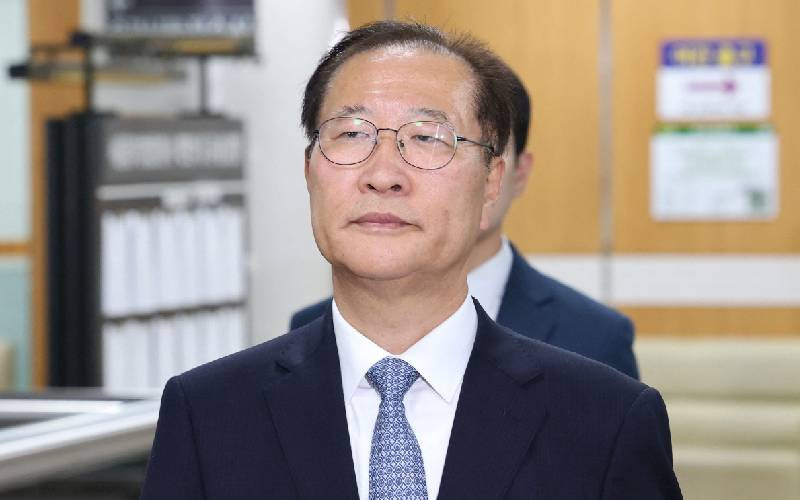
SEOUL — The Seoul Central District Court delivered a landmark verdict on Monday, June 22, 2026, sentencing former Justice Minister Park Sung-jae to 25 years in prison. The ruling marks a critical chapter in the ongoing judicial response to the unprecedented political crisis that engulfed South Korea in December 2024, when then-President Yoon Suk Yeol attempted to implement a surprise declaration of martial law.
A Breach of Constitutional Duty
The court found Park guilty of charges including insurrection and abuse of power, handing down a sentence that exceeded the 20-year term requested by prosecutors. In delivering the verdict, Presiding Judge Lee Jin-gwan emphasized the gravity of Park’s betrayal of his official responsibilities. The court noted that Park had actively facilitated the illegal martial law decree, choosing to participate in the insurrection in the belief that it would ultimately succeed. In his closing remarks, Judge Lee stated that Park had fundamentally "turned his back on his duty to uphold the Constitution."
According to the court’s findings, Park’s involvement was immediate and systematic. Following President Yoon’s televised address on the night of December 3, 2024, Park convened senior officials at the Justice Ministry to coordinate the enforcement of the state of emergency. Prosecutors provided extensive evidence demonstrating that Park ordered travel bans on individuals suspected of opposing the decree and authorized the preparation of correctional facilities to detain political figures and activists. The court underscored that these actions were taken with full awareness of their illegality and were deliberately intended to undermine the constitutional order. Park was taken into custody immediately following the ruling, as the court cited concerns regarding potential evidence destruction and a notable lack of remorse.
The Broader Political Downfall
The conviction of Park Sung-jae is part of a wider, systemic judicial reckoning following the 2024 crisis. The martial law declaration, which lasted only six hours before the National Assembly voted to overturn it, led to the swift impeachment and subsequent removal of President Yoon Suk Yeol in April 2025. The aftermath of the event triggered a series of high-profile trials that have fundamentally reshaped South Korea’s political landscape.
Read Also: South Korea Makes History: Market Cap Crushes 6,000 Trillion Won Milestone
Former President Yoon Suk Yeol is currently serving a life sentence, following a conviction in February 2026 for masterminding the insurrection. In a separate judicial proceeding finalized by the Supreme Court on July 9, 2026, Yoon also saw a seven-year prison sentence upheld for his role in obstructing Cabinet deliberations and deploying presidential security forces to block his own arrest. Furthermore, he faces a 30-year sentence in a separate case involving the deployment of drones into North Korea, which prosecutors argued was a calculated attempt to manufacture a national security crisis to justify the martial law bid.
The purge of the former administration has been extensive. Former Prime Minister Han Duck-soo is currently serving a 15-year prison sentence, while former Interior Minister Lee Sang-min has been sentenced to nine years. Additionally, former Defense Minister Kim Yong-hyun received a three-year sentence for the unauthorized disclosure of classified military information related to the insurrection.
The Impact on South Korean Democracy
The martial law crisis of 2024, which rattled global financial markets and drew significant international concern, has become a defining moment for South Korea’s democratic institutions. The failure of the insurrection has been widely credited to the resilience of the National Assembly and the country's vigilant civic body. However, the subsequent years of legal proceedings have revealed the deep vulnerabilities within the nation's political and security sectors.
As the judicial system concludes these high-profile trials, the focus in Seoul has shifted toward long-term institutional reform. The political crisis triggered snap elections in 2025, which saw the transition of power to the center-left Democratic Party. For the South Korean public, the sentencing of Park Sung-jae and his colleagues serves as a final, formal acknowledgment of the danger that executive overreach and the politicization of the security sector pose to the country’s stability. The legal drama, which began with a late-night broadcast in 2024, is now closing in the courtroom, leaving behind a nation that remains deeply committed to safeguarding its hard-won democracy against the threat of authoritarian backsliding.