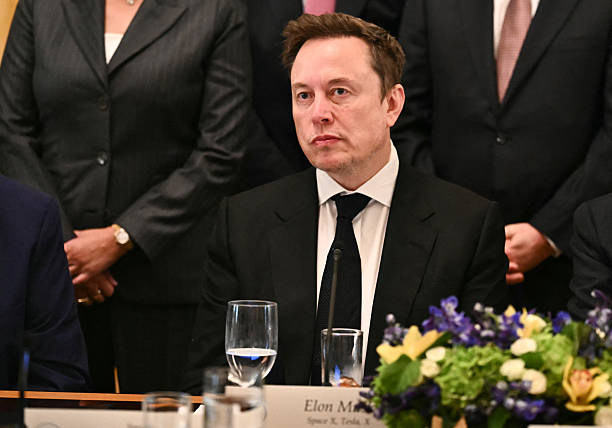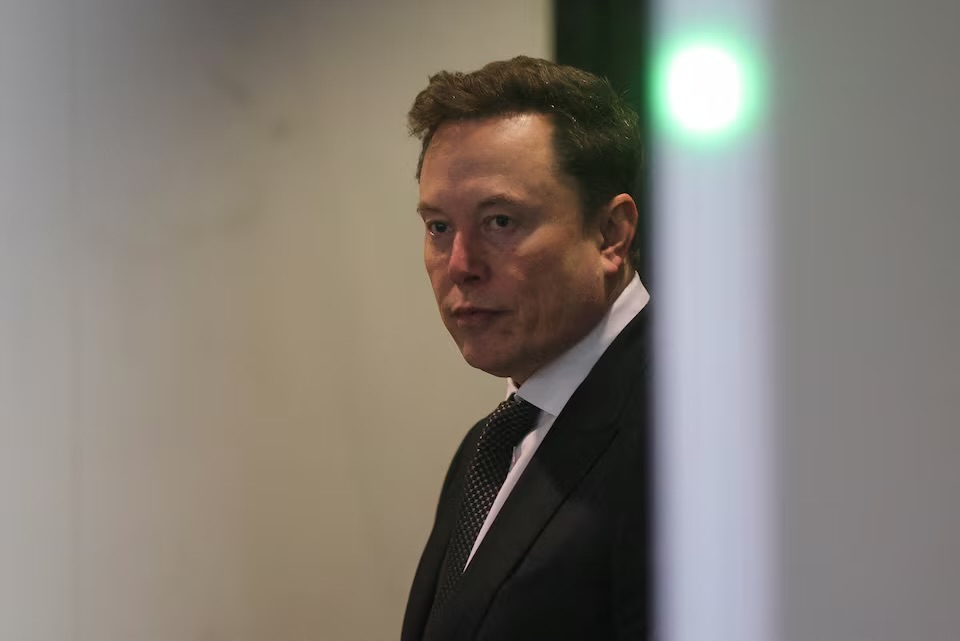
AMSTERDAM — Elon Musk delivered a high-profile virtual address to employees at ASML Holding N.V.’s annual technology conference on June 11, 2026. The appearance, held in the Netherlands, offered an inside look at "Terafab," Musk’s multi-billion dollar initiative to revolutionize how the world produces the advanced silicon required for the future of artificial intelligence, robotics, and space exploration.
The Terafab Initiative: Vertical Integration at Scale
Musk’s "Terafab" project is arguably one of the most audacious industrial undertakings in modern history. The project aims to consolidate the fractured semiconductor supply chain—design, fabrication, memory production, advanced packaging, and testing—under one roof. By establishing a massive, vertically integrated manufacturing facility in Texas, Musk intends to create an "incredibly fast recursive loop" for chip design, allowing for rapid prototyping that drastically outperforms current industry standards.
Key components of the initiative discussed during the conference include:
-
Strategic Alliances: Musk confirmed that the venture is collaborating with Intel, leveraging its 14A process technology, and maintains an active, high-level dialogue with ASML. As the world’s sole supplier of extreme ultraviolet (EUV) lithography systems, ASML is a critical partner in Musk’s vision to print the intricate circuitry required for next-generation logic and memory chips.
-
The Texas Fab: Initial phases of the project are focused in Austin, Texas, with a massive full-scale complex planned for Grimes County. The facility is expected to eventually support the production of up to one terawatt of AI compute capacity annually.
-
Applications: The output of Terafab is earmarked to support the extreme computing requirements of SpaceX’s orbital data centers, Tesla’s autonomous driving infrastructure, and the mass production of "Optimus" humanoid robots, which Musk envisions reaching a scale of up to 10 billion units manufactured annually.
ASML CEO Christophe Fouquet, who has been instrumental in facilitating these discussions, has previously noted that Musk is "very serious" about the initiative. By bringing fabrication capabilities in-house, Musk intends to secure his companies against the geopolitical and logistical vulnerabilities that have historically plagued the global semiconductor industry.
A Pivotal Day for SpaceX
Musk’s engagement with ASML coincided with a historic milestone for SpaceX. June 11, 2026, marked the pricing of the company’s initial public offering (IPO), widely considered one of the largest financial debuts in history. With an estimated valuation ranging between $1.75 trillion and $2 trillion, the IPO on the Nasdaq under the ticker "SPCX" has set a new benchmark for space and AI technology assets.
The massive influx of capital is expected to provide the liquidity required to fuel SpaceX’s expanded ambitions, including:
-
Starship Maturation: Accelerating the development of deep-space launch economics.
-
Starlink Expansion: Further scaling the direct-to-device satellite constellation.
-
Compute Infrastructure: Funding the integration of xAI’s artificial intelligence capabilities into the broader SpaceX and Tesla ecosystems.
Industry Implications
The Terafab project represents a fundamental shift in how "Big Tech" approaches hardware. By following the strategy he successfully employed at Tesla—where he vertically integrated battery production and AI training hardware—Musk is betting that internalizing chip production will provide an insurmountable competitive advantage.
However, analysts remain divided on the feasibility of the timeline. With an industry-standard chip design cycle of 18 to 24 months, Musk’s target of 9-month iterations puts unprecedented pressure on his engineering teams. Furthermore, the reliance on multiple parallel process paths—simultaneously working with TSMC, Samsung, and Intel—creates a level of operational complexity that has never before been attempted in the semiconductor industry.
As Musk prepares for the next phase of the Terafab rollout, the global semiconductor ecosystem is watching closely. Whether this initiative succeeds as a disruptive force or falters under the weight of its own ambition remains the defining question of the year. For now, with SpaceX successfully trading on the Nasdaq and ASML’s lithography tools forming the backbone of the project, the ambition remains on track at "light speed."