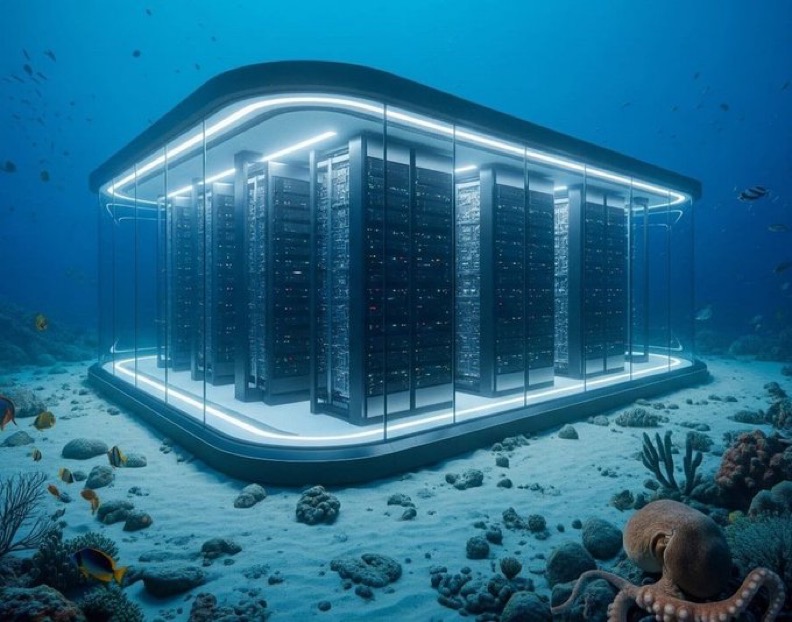
SHANGHAI — Chinese engineers have officially switched on the world's first commercial-scale, offshore wind-powered underwater data center (UDC). Located off the coast of Shanghai in the Lingang Special Area, this innovative facility marks a significant shift in how data infrastructure can be deployed to reduce environmental impact.
Key Features of the UDC
Sustainable Power: The facility is powered primarily by offshore wind turbines, which generate approximately 95% of the electricity required for its current operations.
Efficient Cooling: By utilizing the surrounding seawater as a natural heat sink through a circulating copper-pipe heat exchange system, the center significantly reduces cooling electricity consumption by 22.8%.
Space and Resource Efficiency: The design eliminates the need for freshwater cooling and reduces land use by more than 90% compared to traditional, above-ground data centers.
Scale and Future Potential
While the center currently operates at a capacity of 2.3 MW, it has been designed with a future-proof plan to scale up to 24 MW, which is enough to power approximately 20,000 households. The facility houses 192 server racks distributed across four levels.
According to Professor Li Zhen of Tsinghua University, the potential energy savings from this model are massive. If deployed at scale, underwater data centers could save an estimated 50 billion kWh of electricity annually by drastically reducing the power needed for cooling.
Environmental and Long-term Questions
Despite the technical advancements, the project faces ongoing scrutiny:
Marine Impact: Researchers are closely monitoring the ecological effects of continuously releasing heat into the local marine environment.
Longevity: As this is a first-of-its-kind commercial-scale project, the long-term durability of underwater hardware remains an area of active study.
As global demand for computing power driven by the AI age continues to surge, this project serves as a crucial test case for whether moving infrastructure into new environments can successfully offset the land and water consumption issues associated with traditional data centers.