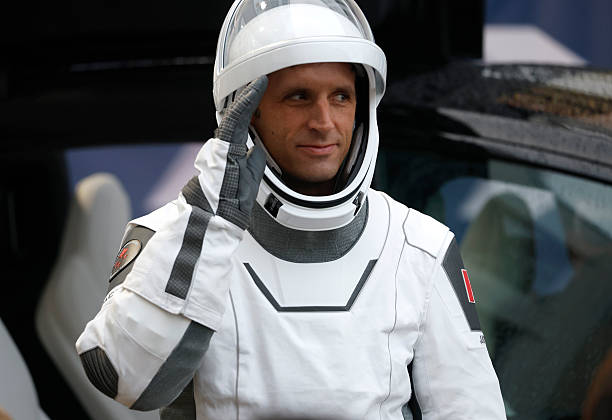
Canadian astronaut Joshua Kutryk says seeing Earth from space has been one of the most extraordinary experiences of his life, as he adjusts to living and working aboard the International Space Station (ISS) during his first space mission.
Kutryk shared his first impressions during a live conversation with Canadian journalists on October 13, 2026, nearly two weeks after arriving at the orbiting laboratory as part of the Crew-13 mission. He described the experience as unforgettable, highlighting the beauty of Earth, the excitement of the launch and the challenges of adapting to life in microgravity.
Seeing Earth From Space
One of Kutryk’s most memorable experiences has been looking back at Earth from orbit. The astronaut said the view gave him a different perspective on the planet and the challenges facing humanity.
Describing the experience, he said: “It’s one of the most amazing things I’ve ever seen.”
He was particularly struck by the curvature of Earth and the colourful northern lights, which appeared as bands of orange, yellow and pink across the planet’s atmosphere.
Growing up in northern Alberta, Kutryk was familiar with the aurora borealis. However, seeing the natural phenomenon from above offered a perspective that he said was difficult to put into words.
The view also reinforced his appreciation for the planet. From the space station, national borders and many of the divisions that shape life on Earth are not visible.
“You just see this little bit of perfection that we should really, really be trying to protect,” Kutryk said.
A Powerful and Unforgettable Launch
Kutryk launched on October 1, 2026, aboard a SpaceX Crew Dragon spacecraft carried into orbit by a Falcon 9 rocket. He travelled with NASA astronauts Jessica Watkins and Luke Delaney, alongside Russian cosmonaut Sergey Teteryatnikov, as part of NASA’s Crew-13 mission.
The Canadian astronaut described the launch as exhilarating, spectacular, powerful and violent, explaining that the experience was difficult to fully appreciate through training alone.
Once the crew completed the initial procedures and checks, Kutryk was able to unclip himself and move towards a window to look at Earth.
The moment left him trying to process the new sensations and the sight of the planet below. He explained that although astronauts train extensively for spaceflight, experiencing the launch and seeing Earth from orbit for the first time are unlike anything that can be fully replicated on the ground.
Adjusting to Everyday Life in Microgravity
While the views have been extraordinary, Kutryk said living in space also requires astronauts to relearn ordinary activities.
Eating, sleeping and moving around can become more complicated when the body is no longer subject to Earth's usual gravitational pull. Even finding a comfortable sleeping position requires adjustment.
“You have to sort of learn to do everything again, almost like you’re a child,” he said.
Kutryk is expected to spend approximately six months aboard the ISS. During that period, he will participate in scientific research, experiments and maintenance activities that support the station’s operations.
His work includes studies examining how extended spaceflight affects the human body. Astronauts can experience losses in muscle mass and bone density during long missions, making it important for researchers to understand how to reduce those effects and protect crew health.
Research Into the Effects of Long-Duration Spaceflight
Kutryk has already begun participating in research related to the physical and psychological demands of extended space missions.
During his first media conversation from orbit, he discussed concerns about the effects of spending months away from Earth, including changes in muscle and bone health.
The Canadian-led research associated with the mission forms part of broader efforts to understand how humans can remain healthy during longer journeys in space.
Such findings could help scientists develop better approaches to astronaut health monitoring, exercise, medical support and future missions beyond low Earth orbit.
Carrying a Piece of Family History Into Space
Alongside his scientific work, Kutryk brought a personal connection to his journey.
A pocket watch that his relatives carried when they immigrated to Canada from Ukraine four generations ago had been sent to the space station ahead of him. The watch sits near his sleeping area and reminds him of his family’s history.
Kutryk reflected on the contrast between the technology available to his ancestors and the spacecraft that had carried him into orbit.
The watch serves as a reminder of the remarkable changes in technology and human exploration over the past century, connecting his family’s migration story with his own journey beyond Earth.
What the Mission Means for Canada
Kutryk’s mission represents a new chapter in Canada’s participation in human spaceflight. The Canadian Space Agency said his October 1 launch marked the first mission by one of its astronauts under NASA’s Commercial Crew Program.
During his conversation with journalists, Kutryk emphasised the value of Canada’s continued involvement in space exploration. He said such missions create opportunities for Canadian researchers, universities, businesses and other organisations to contribute to scientific and technological development.
His six-month stay aboard the ISS will provide opportunities for research while allowing Canada to participate in international efforts to improve understanding of human life in space.
For Kutryk, however, the mission is also a personal achievement. His first impressions have combined the excitement of reaching orbit with the responsibility of conducting research that could contribute to future space exploration.
As he continues adjusting to life aboard the station, his reflections on Earth’s beauty have become one of the defining themes of his early days in space.