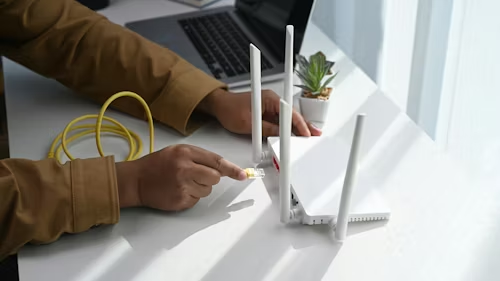
In a decisive move to protect its digital backbone, the United States has barred the sale of new foreign‑made internet routers, warning that overseas devices could serve as gateways for espionage and cyberattacks.
The Federal Communications Commission (FCC) announced the measure as part of a broader campaign to secure consumer technology and critical infrastructure. Routers now join drones on the growing list of restricted imports, underscoring Washington’s determination to reduce reliance on potentially compromised hardware.
Why Routers Are in the Crosshairs
Routers are the silent workhorses of modern connectivity, directing traffic across homes, businesses, and government networks. According to U.S. officials, vulnerabilities in foreign‑manufactured models have already been exploited by hostile actors to infiltrate systems, conduct surveillance, and disrupt operations.
High‑profile cyber incidents including Volt Typhoon, Flax Typhoon, and Salt Typhoon have been linked to groups associated with the Chinese government, fueling fears that routers could become Trojan horses in America’s digital landscape.
New Rules for Tech Makers
Under the FCC’s policy:
-
Companies must disclose ownership structures and foreign influence.
-
Manufacturers are expected to shift production to U.S. soil.
-
Exemptions may be granted only if cleared by agencies like the Department of Defense or Homeland Security.
This framework is designed to force transparency and encourage domestic manufacturing, reshaping supply chains that have long been dominated by overseas factories.
The American Exception
While most routers are built abroad even by U.S. brands like Netgear one standout is SpaceX’s Starlink router, manufactured in Texas. It represents the kind of homegrown production the FCC wants to see more of, offering a model for secure, domestically controlled hardware.
The Bigger Picture
This ban isn’t just about routers. It’s about digital sovereignty. By tightening restrictions on foreign technology, Washington is signaling that national security now extends to the everyday devices sitting in American living rooms.
For households, the change may mean fewer choices on store shelves. For manufacturers, it’s a wake‑up call to rethink where and how their products are built. And for policymakers, it’s another step in the ongoing tech rivalry between the U.S. and China.