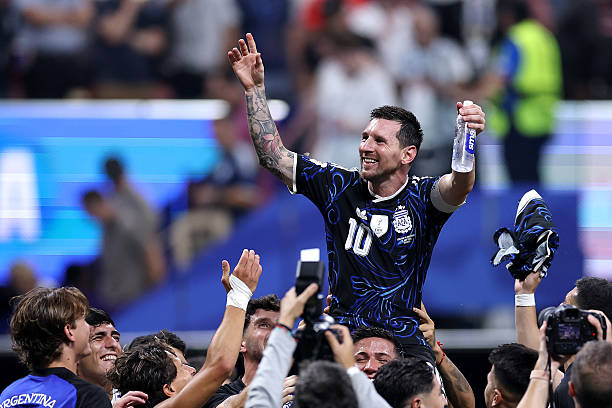
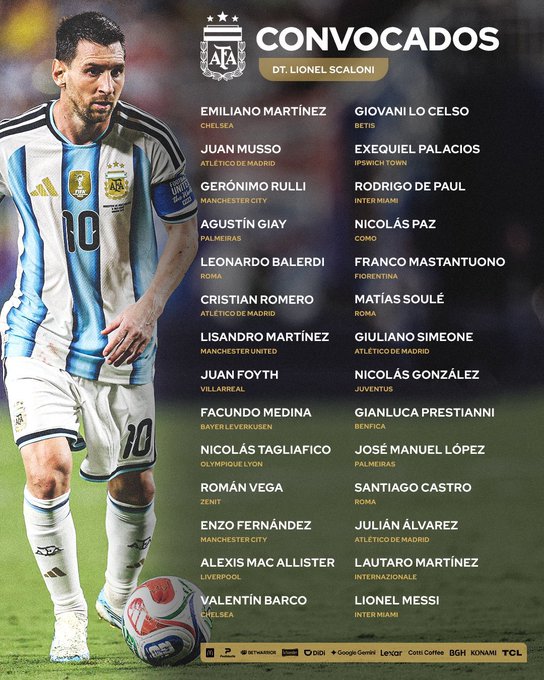
DALLAS — In a performance that will be remembered for decades, Lionel Messi etched his name even deeper into the annals of football history on Monday, June 22, 2026. As Argentina secured a 2–0 victory over Austria at the Dallas Stadium, the legendary captain surpassed the previous all-time goalscoring records to become the most prolific marksman in the history of the FIFA World Cup. The result not only provided a masterclass in championship resilience but officially cemented Argentina’s progression to the Round of 32, bolstering their defense of the global crown.
An Evening of High Drama and Historic Milestones
The narrative of the match was scripted for intensity from the opening whistle. The Dallas crowd was treated to immediate spectacle when, in only the fourth minute, a VAR intervention signaled a penalty for Argentina after Lisandro Martínez was brought down by Stefan Posch.
The stage was set for Messi to claim his place in history early. However, in a rare and humanizing moment of vulnerability, the Argentine captain dragged his spot-kick wide of the target. The reprieve acted as a bolt of adrenaline for Ralf Rangnick’s Austrian side, who immediately seized the initiative. Led by the creative engine of Marcel Sabitzer and the defensive composure of David Alaba, Austria began to press with clinical intensity, forcing Argentina to retreat into a defensive shell for much of the opening half.
The Record-Breaking Breakthrough
Despite Austria’s territorial dominance, Argentina’s identity as a tournament team lies in their ability to strike when it matters most. As the first half neared its conclusion, the South American champions reclaimed their composure.
The breakthrough came via the man of the hour. Following a sequence of patient, building play, Facundo Medina delivered a low, probing cross that sliced through the Austrian defense. Messi, timing his run to perfection, side-footed the ball into the back of the net. The goal—his 17th in World Cup history—was more than just a lead; it was a psychological turning point that quelled the Austrian momentum and shifted the burden of the match firmly onto the shoulders of the European contenders.
Read Also: Argentina Poised to Reclaim Top Spot in FIFA World Rankings
A Test of Championship Mettle
The second half evolved into a test of resolve rather than a contest of flair. Austria emerged from the locker room with renewed vigor, determined to disrupt the Argentine flow. They pushed Emiliano Martínez to his absolute limits, forcing the goalkeeper into a series of crucial saves. The most defining moment of the second period came when Sabitzer unleashed a venomous free-kick that appeared destined for the top corner, only to be denied by a spectacular, lunging stop from the Argentine keeper.
As the intensity peaked, the match descended into a physical battle. Austria’s tactical aggression resulted in a stop-start rhythm that fragmented the game. While this strategy successfully hindered Argentina’s fluid passing movements, it simultaneously prevented Austria from building the sustained pressure needed to breach a disciplined Argentine backline, anchored by the resilience of Cristian Romero and Lisandro Martínez.
The Final Blow: Securing the Legacy
As the clock ticked into stoppage time, the atmosphere in Dallas was electric. Austria pushed forward with desperate ambition, leaving gaps in their defensive structure. Nico González had come agonizingly close to doubling the lead earlier with a powerful header, but it was the captain who provided the final, decisive blow.
In the dying moments of the match, amidst a frantic goalmouth scramble that tested the nerves of both sets of supporters, the ball fell to Messi. With the instinct that has defined his illustrious career, he smashed home his second of the evening. The goal was a fitting exclamation point on a night of historic significance, ending the match at 2–0 and confirming Argentina’s place at the top of their group.
Implications for the Tournament
For Argentina, the victory is a statement of intent. The result extends their formidable unbeaten streak at the World Cup to eight matches and marks their ninth consecutive win across all competitions. They remain a side that possesses the unique ability to absorb pressure and deliver a knockout blow when the stakes are highest.
For Austria, the result is a bitter pill, ending their own impressive run of form. However, under the tutelage of Ralf Rangnick, the side remains tactically sophisticated and dangerous. Despite the defeat, they remain firmly in contention for the knockout stages, with their qualification hopes set to be determined in a high-stakes final group fixture.
As Argentina looks toward the Round of 32, the focus remains singular. With Messi at the helm—now the undisputed leading goalscorer in tournament history—the Albiceleste continue to look like the side to beat. The road to the trophy is long, but after tonight’s performance in Dallas, it is clear that Lionel Messi’s quest to defend his crown is far from over.