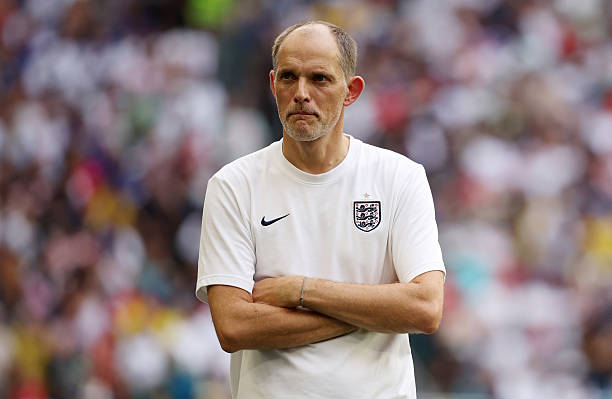
MIAMI, UNITED STATES — In the immediate aftermath of one of the highest scoring knockout fixtures in modern football history, England manager Thomas Tuchel addressed the international media to defend his squad's performance and structural progression. Following a chaotic 6-4 victory over France in the FIFA World Cup 2026 third-place play-off at the Hard Rock Stadium, the German tactician expressed his hope that his players would eventually recognize the historical significance of their achievement, despite the intense disappointment of missing out on the tournament final.
The high-scoring match in Florida secured England’s best overall finish at a World Cup finals since their iconic tournament victory on home soil in 1966. By capturing the bronze medal, Tuchel’s squad established a new benchmark for English football on foreign soil.
However, the post-match briefing highlighted the complex psychological landscape of elite international football, as the coaching staff and playing group navigate the tension between historical milestones and unmet tournament expectations.
Navigating the Bronze Medal Paradox: Pain vs. Historical Pride
For an English national setup that has spent decades attempting to replicate the success of the 1966 generation, a third-place finish represents a major step forward. Yet, the immediate atmosphere around the camp remains heavily impacted by their narrow 2-1 semi-final loss to Argentina just days prior.
Tuchel acknowledged this emotional conflict, noting that the competitive drive within the squad makes it difficult to celebrate a bronze medal immediately after their primary objective slipped away:
"It's the first medal for 60 years, the best World Cup on foreign soil. So I hope that the players can be proud of that in some time. We are fiercely competitive, so like we almost don't allow ourselves to be proud of the third place because 18 months ago we set ourselves the highest goal: to make it to the final and win the World Cup. So it's very, very painful if you miss out. The pain will stay for a while."
[ England National Team: Historical World Cup Milestones ]
─────────────────────────────────────────────────────────────
Tournament Edition         Final Position        Host Nation Location
─────────────────────────────────────────────────────────────
England 1966               Champions             United Kingdom (Home)
Italy 1990                 Fourth Place          Europe
Russia 2018                Fourth Place          Europe
United States 2026         Third Place (Bronze)  North America (Foreign Soil)
─────────────────────────────────────────────────────────────
The manager’s analysis highlights the structural evolution of the national team's ambitions. While past semi-final exits in 1990 and 2018 were met with widespread public celebration, the current group's reaction to finishing third reflects a deeper shift in expectations, with the squad now viewing tournament victory as a realistic baseline rather than a distant dream.
Answering the Media Backlash: Rebounding on the Pitch
The significant media pressure surrounding the English camp ahead of the third-place play-off added an extra layer of tension to the match in Miami. Tuchel had faced sharp criticism from domestic sports journalists following the semi-final defeat against Argentina. Pundits and commentators heavily criticized his second-half tactical changes, accusing the manager of adopting an overly cautious, defensive low-block system after taking an early lead.
Tuchel used the post-match press conference to address this media narrative directly, highlighting the disconnect between outside criticism and the internal realities of tournament football:
"The press conference yesterday felt as if we went out in the group stage without a win, to be very honest. The best thing you can do as a collective is react on the pitch and get the next win. Everything else is just talking, and talking doesn't get you points, and talking doesn't get you a win. I'm glad that we showed a definitive reaction today. We wanted that specific response, and it's very impressive from the group."
The tactical response against France was emphatic. Shifting away from the conservative structure seen against Argentina, England played with an aggressive, vertical attacking style. The team exploited gaps in the French defense to score four goals in the opening 45 minutes, validating Tuchel's pre-match structural adjustments.
The Bukayo Saka Dilemma: Managing Injury and Tactical Selections
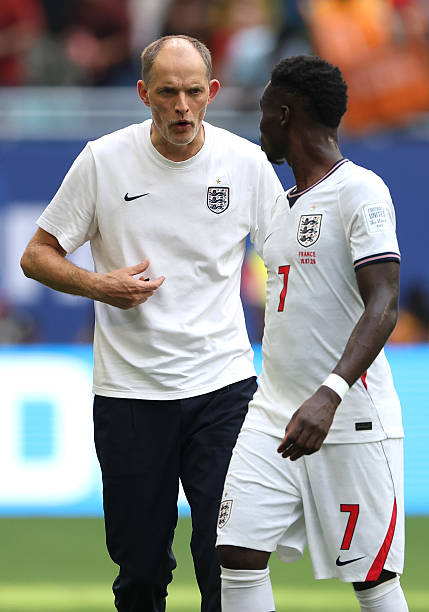
The standout individual performance of the bronze-medal match came from Arsenal winger Bukayo Saka, whose brilliant hat-trick drove England's attacking threat. However, his dominant display inevitably led to sharp questions from reporters regarding Tuchel's decision to leave the winger out of the starting lineup during the crucial semi-final loss to Argentina.
Tuchel responded by explaining the medical and tactical reasons behind the selection, revealing that the winger had been managing a persistent Achilles injury over the final months of the domestic season:
"It was a tough decision for me to leave him out of the semi-final. I had been cautious with Bukayo because of the Achilles injury he had been managing for the last few months. I had the feeling that Morgan Rogers had something special to give to us with his physicality and his body in the match against Argentina. We had Saka warm up several times against Argentina and were ready to change, but the game became so crazy that we in the end opted for a different option."
| Tactical Profile: Attacking Options | Physical Attribute | Main Tactical Function |
| Bukayo Saka | Elusive, Quick Acceleration | Isolation Dribbling & Internal Half-Space Cuts |
| Morgan Rogers | High Physical Mass, Power | Ball Retention & Direct Central Progression |
Tuchel emphasized that the tactical rotation did not represent a drop in Saka's standing within the national team hierarchy.
"Nothing has changed during the World Cup for me," the manager clarified. "Bukayo is a fantastic teammate, a fantastic football player, and a key player for us—that will not change. He showed it again today and I'm incredibly happy for him."
Long-Term Outlook for the Transition Period
With the tournament concluded, England’s technical staff will turn their attention to analyzing the comprehensive data gathered during their eight weeks in North America. The integration of young talents like Morgan Rogers alongside established world-class players like Saka and Jude Bellingham suggests a promising path forward as the team transitions back to European qualification cycles.
For Thomas Tuchel, securing a bronze medal provides a solid foundation as he continues to implement his tactical philosophy across the national team structure. While the immediate pain of missing out on the final remains clear, the historical achievement of securing England's first World Cup medal in sixty years on foreign soil establishes a strong baseline for the squad's future campaigns.