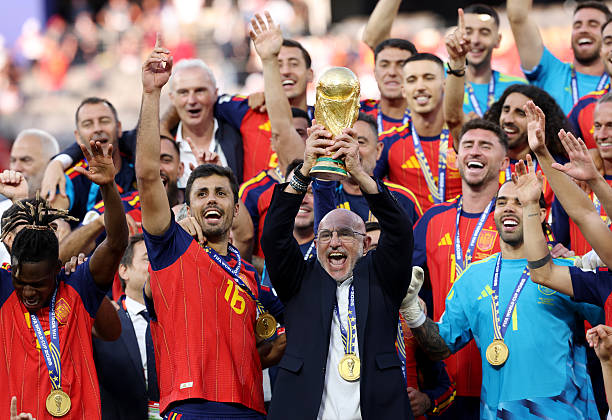
NEW YORK — A dramatic, high-stakes tactical encounter at the MetLife Stadium, an exceptionally emotional Luis de la Fuente addressed the global press corps to articulate his profound pride in the Spanish national team. The 65 year old manager successfully guided La Roja to a hard-fought 1-0 extra-time victory over Argentina in the FIFA World Cup 2026 final, securing only the second world title in the history of Spanish football.
The historic triumph, decided by a brilliant 106th-minute strike from forward Ferran Torres, completes a historic international double for De la Fuente, who previously directed this exact generation of players to continental glory at the European Championship.
Reflecting on a demanding five-week campaign across North America, the Spanish tactician emphasized that the victory represents the culmination of a long-term footballing philosophy built on collective unity, technical excellence, and an enduring sense of family.
The Power of the Collective: De la Fuente's Tribute to a Golden Generation
In his post-match address, De la Fuente consistently shifted the spotlight away from his individual tactical achievements, focusing instead on the exceptional character and collective maturity of his playing squad. Since taking charge of the senior national team, the manager has focused heavily on blending established veterans with elite young talents, building a culture that values team unity above personal accolades.
The emotional weight of the achievement was clear as De la Fuente described the deep bond that has developed within the international camp:
"I feel especially proud of this generation of footballers who have grown with this structural idea, giving us a magnificent example of a group, of a true family. They are players blessed with exceptional talent, but their greatest strength is their commitment to one another. For me, it has been an absolute honour to have accompanied them on this incredible journey."
The manager’s words highlight the unique developmental path of this Spanish squad. Many members of the current World Cup-winning group rose through the national team's youth ranks under De la Fuente's direct supervision years ago. This long-standing relationship has created an intuitive understanding of his possession-based system, allowing La Roja to maintain absolute structural composure even when facing the intense physical pressure of a World Cup final against the defending champions.
Tactical Analysis: Navigating Suffering and the Resilience of Emi Martínez
The final in East Rutherford proved to be an intense tactical battle, with Spain's highly structured passing game consistently testing Argentina's defensive low-block. While Spain controlled the tempo and created multiple scoring opportunities during regulation time, they found their attacking threat repeatedly stopped by an inspired performance from Argentinian goalkeeper Emiliano "Dibu" Martínez.
The match reached a critical disciplinary turning point during second-half stoppage time when Argentinian midfielder Enzo Fernández was issued a second yellow card for a late challenge, reducing the South American champions to ten men. Despite holding a significant numerical advantage heading into the 30-minute extra-time period, Spain had to work incredibly hard to break down a determined Argentinian defense.
De la Fuente openly acknowledged that while his team created enough quality chances to win the match within the regulation 90 minutes, the reality of elite international football requires a willingness to endure difficult moments:
"I think the game should have been decided much earlier in our favor. Dibu's great saves prevented us from winning sooner, showing exactly why he is regarded as a world-class goalkeeper. But this is a World Cup final, and even when playing against ten men at the end, you have to expect to suffer. There are no easy pathways to a world championship, and our ability to remain patient under those conditions is what ultimately rewarded us."
The patience paid off in the 106th minute when Ferran Torres anticipated a precise knockdown from Nico Williams, firing a powerful shot into the roof of the net to beat Martínez and break the grueling deadlock.
A Historic Cycle of Global Football Dominance
With the World Cup trophy secured alongside their previous European crown, De la Fuente and his squad have established a modern era of dominance that echoes the historic achievements of the 2008–2012 Spanish golden generation. The ability to win consecutive major international tournaments confirms the long-term viability of Spain's revamped footballing model, which combines traditional possession principles with direct, vertical pace on the flanks.
Looking back at the structural progression of the national team program over the past two years, the veteran manager expressed a sense of wonder at the sheer scale of their collective achievements:
"I'm very emotional when looking back at what we have gone through to reach this point. We have won everything over this competitive cycle, and that is simply wonderful. They are a generation of footballers who are a permanent source of pride for the entire nation of Spain. We have proven that when we stand together, we are significantly stronger."
This philosophy of unity has allowed Spain to extend an all-time European record, reaching an incredible 38-match unbeaten international run. By building an environment where teenage talents work seamlessly alongside experienced tournament veterans, De la Fuente has constructed a resilient tactical system capable of overcoming any style of opposition.
The Strategic Path Forward for Spanish Football
For digital sports editors and technical analysts evaluating the tournament's conclusion under elite content standards, Spain's victory offers a clear lesson in the value of structural continuity. The Spanish Football Federation’s decision to promote De la Fuente from the youth structures to the senior managerial role has yielded spectacular returns, showing that internal familiarity can be incredibly effective in international football.
As the celebrations conclude and the technical staff begins to prepare for the upcoming UEFA Nations League and continental qualifiers, the foundation established during this North American campaign will serve as the baseline for the next generation. With core young players locked into the tactical system, Spain departs the global stage not just as current champions, but as a well-structured footballing family primed to maintain its position at the absolute pinnacle of the international game.