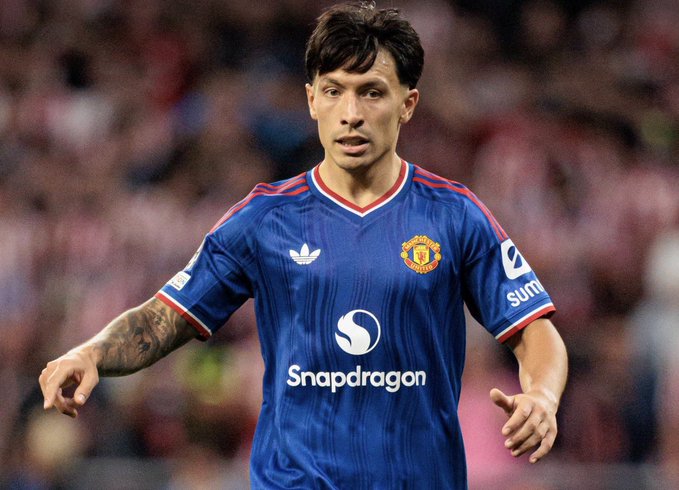
Manchester United defender Lisandro Martínez has publicly criticised the club's leadership, insisting that more investment in the first-team squad is needed if the team is to compete for the Premier League and Champions League titles.
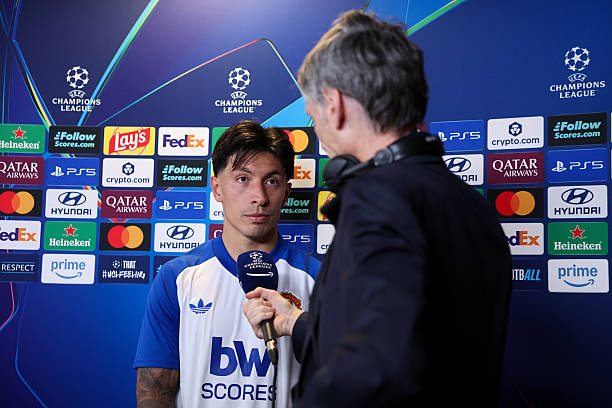
The Argentina international made the comments after Manchester United suffered a 2-0 defeat to Atlético Madrid in the Champions League on Tuesday, October 13, 2026. He questioned the club's recruitment strategy and specifically called on technical director Jason Wilcox to do more to strengthen the squad.
Martínez described United's performance as poor and suggested the defeat reflected deeper problems within the club, arguing that responsibility for the team's struggles should not rest solely on the manager and players.
His remarks have intensified scrutiny of United's transfer decisions and the leadership overseeing the club's football operations.
Martínez Calls for Greater Investment
Speaking after the defeat in Madrid, Martínez expressed frustration that United had not built sufficiently on the previous season's progress.
The defender said the club needed to recruit more players capable of helping the team compete against Europe's leading sides. He argued that other clubs had strengthened their squads during the summer while United had not done enough to improve their options across key positions.
"We had a fantastic season last season, and now we expect more from the top, from upstairs, to bring in more players to compete," Martínez said.
When asked directly whether he had expected greater investment during the summer transfer window, the Argentine responded emphatically.
"Yes, 100 per cent. I expect more from our technical director," he said.
Martínez acknowledged that the players also needed to improve, but insisted that assembling a competitive squad was an important responsibility of the club's leadership.
He added that United needed a stronger group of players to handle difficult European fixtures and challenge consistently for major honours.
Technical Director Jason Wilcox Comes Under Scrutiny
Martínez's decision to single out Wilcox made his post-match interview particularly significant.
The technical director plays a central role in Manchester United's football strategy, including recruitment and squad planning. By publicly directing his criticism towards Wilcox, Martínez shifted attention beyond the team's performance on the pitch to the decisions made by those responsible for building the squad.
The defender argued that repeatedly changing managers would not resolve every problem facing the club.
"You keep changing managers, but what about other areas?" Martínez said, questioning why the wider football operation was not receiving the same scrutiny as the coaching staff.
His comments suggested that United's difficulties required a broader response involving recruitment, squad development and the club's long-term direction.
Martínez also warned that failing to adapt could leave the team struggling again in the following season.
He said opponents study how teams play and learn their tactical patterns, making it necessary for clubs to evolve rather than rely on previous achievements.
Martínez Defends Michael Carrick
The defender also offered support for head coach Michael Carrick, suggesting that the manager had done his best despite the team's current difficulties.
Asked whether Carrick had received sufficient backing, Martínez said he did not believe the coach had been adequately supported in the transfer market.
"I don't think so. He did his best," Martínez said.
His defence of Carrick contrasted with the criticism often directed at managers when results deteriorate.
Martínez argued that holding the coach responsible without examining the quality and depth of the squad would overlook other factors affecting the team's performances.
However, he did not absolve the players of responsibility. He acknowledged that the squad needed to perform better and contribute more consistently.
The comments placed the focus on a broader question for United: whether the club's recruitment and squad-building decisions have provided the manager with the resources needed to compete at the highest level.
'This Is Not a Champions League Quality Squad'
Martínez's criticism extended beyond recruitment to the overall quality of United's current squad.
Speaking to CBS Sports, he said he did not believe the team possessed the same squad strength as some of Europe's leading clubs.
"For me, we do NOT have the best squad at the moment compared to other top teams," he said.
The defender argued that United needed greater ambition and a clearer commitment to challenging for the biggest trophies in football.
He said conversations about winning the Premier League and Champions League should be central to the club's plans rather than ambitions that repeatedly give way to discussions about rebuilding.
"We need more ambition, we need to talk more about winning the Champions League and the Premier League," Martínez said.
He also expressed frustration that similar conversations appeared to recur each season without producing the changes he wanted to see.
"If we don't say the truth, then nothing will change," he said.
The remarks reflected his belief that United needed to address structural issues alongside improving their performances on the pitch.
Defeat Against Atlético Madrid Intensifies Pressure
United's 2-0 loss to Atlético Madrid provided the immediate backdrop to Martínez's criticism.
The defeat increased scrutiny of Carrick and the team's performances, with the result extending United's winless run to five matches in all competitions, according to Reuters.
Martínez described the performance as "really poor" and said the result reflected the club's current situation.
The match also highlighted the difficulty of competing against established European opponents when mistakes and lapses in concentration prove costly.
For Martínez, however, the defeat was not simply a matter of one disappointing evening. He presented it as another example of problems that he believes have persisted over multiple seasons.
His comments suggested that United needed to improve their ability to compete against top teams while ensuring that the squad had sufficient depth and quality for demanding domestic and European campaigns.
Martínez Clarifies His Comments but Does Not Apologise
On Wednesday, October 14, Martínez issued a statement addressing the reaction to his post-match interview.
He acknowledged that anger and frustration had influenced his words following the defeat but stood by the underlying message.
"After the match, I spoke out of anger and frustration at not getting the result we all wanted," he wrote.
Martínez reiterated that his comments reflected his desire to see United return to competing for major trophies. He also accepted that the players themselves had to take responsibility for improving performances.
"I put myself at the front of that responsibility," he said, adding that the squad needed to demand more of itself and work together to help restore the club's position among the leading teams.
The statement stopped short of an apology. Instead, Martínez emphasised his commitment to his teammates, Carrick and the wider group working to move the club forward.
He said he remained convinced that progress would require unity, ambition and commitment.
Manchester United had not publicly responded to his criticism at the time of Reuters' report, although media reports indicated that Wilcox retained the backing of the club's leadership.
What the Controversy Means for Manchester United
Martínez's comments have brought renewed attention to United's approach to recruitment and the relationship between the club's football leadership and first-team squad.
His criticism raises questions about whether the summer transfer business adequately addressed the team's weaknesses and whether the club has a sufficiently strong squad to compete across multiple competitions.
It also highlights the challenge facing Carrick as he attempts to improve results while working with the players available to him.
Public disagreements between players and club executives can create additional pressure, particularly when results are poor. Martínez's subsequent statement attempted to balance his criticism of the club's leadership with an acknowledgement that the players must improve their own performances.
For United, the immediate task remains improving results and restoring consistency. The longer-term challenge is ensuring that recruitment, coaching and squad development work towards the same objectives.
Martínez has made his position clear: he believes the club must show greater ambition, strengthen the squad and take responsibility beyond the touchline if Manchester United are to challenge regularly for the Premier League and Champions League.