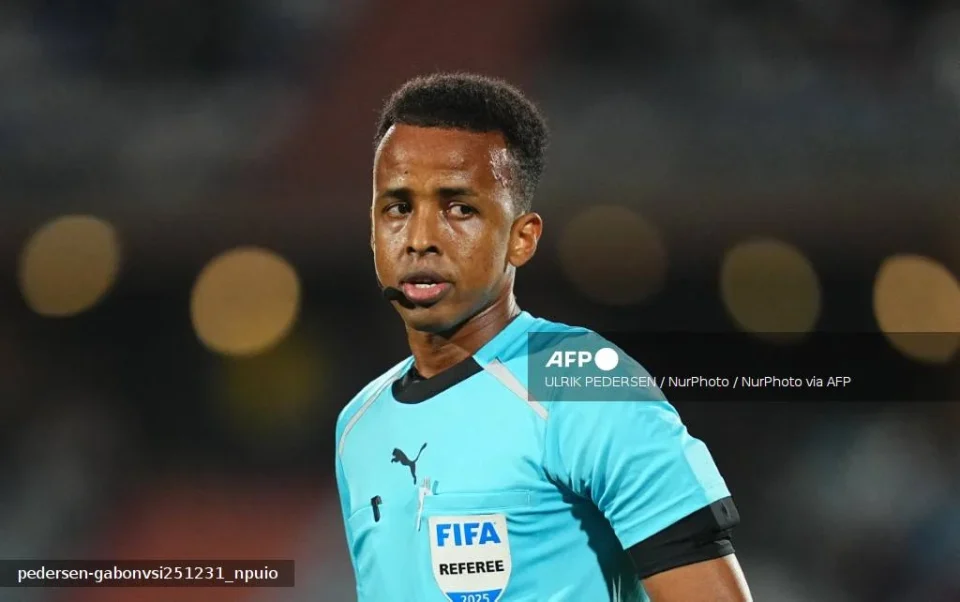
MIAMI — The dream of becoming the first Somali referee to officiate at a FIFA World Cup has been shattered for Omar Abdulkadir Artan. Speaking publicly for the first time since being denied entry into the United States, the 2025 CAF Referee of the Year expressed deep anguish over a situation that has left him excluded from the 2026 tournament.
The "11-Hour" Ordeal
In an interview with The New York Times on Tuesday, Artan detailed the harrowing experience at Miami International Airport. Despite possessing a valid tournament visa and diplomatic passport, he was subjected to an 11-hour interrogation by U.S. Customs and Border Protection (CBP) before being placed in a holding cell and eventually repatriated to Istanbul.
"I am very, very disappointed. I’m just simply a referee who’s trying to live his dream the biggest dream of my life to come to the World Cup," Artan said. "I had the right papers and everything. I had the right visa."
Nationality Under Scrutiny
While U.S. authorities have remained tight-lipped regarding the specific grounds for his inadmissibility, Artan believes his national identity was the deciding factor. Somalia remains on the list of countries subject to stringent travel restrictions under the current U.S. administration.
"I think that they have a problem with my country," he stated, reflecting on the systemic barriers he faced despite his status as a top-tier global football official.
FIFA’s Strict Requirement
The denial of entry has permanent consequences for Artan’s participation because of FIFA's rigid operational requirements. FIFA mandates that all match officials be based at a central training hub in Miami for the duration of the tournament, leaving no room for officials to work from outside the U.S.
Andrew Giuliani, head of the White House Task Force on the World Cup, has publicly defended the decision, citing "derogatory information" that justified the action taken by CBP, though he provided no specific evidence.
A Growing Controversy
Artan’s exclusion is the latest in a series of administrative hurdles that have plagued the lead-up to the 2026 World Cup. With the tournament scheduled to run from June 11 to July 19, critics and football pundits are increasingly questioning the host nation's ability to navigate the logistics of a global sporting event without creating "chaos" for participants, media, and fans.
For now, the man recognized as the best referee in Africa for 2025 is left to watch the tournament from afar, his historic opportunity lost to the complexities of international border policy.